

When the topic of IRA rollovers comes up, everyone feels a headache coming on. There are so many terms, and you hear that if you make a mistake, you could face a tax bomb, so many people just end up thinking, "Let's not touch it." However, if you brush this off, it can lead to real trouble later when you retire.
An IRA rollover is not an option but more of a necessary process. It's about resetting where your money is and how it moves according to the rules.
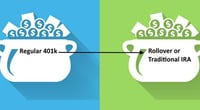
First, you need to clarify the basics. There are Direct Rollover and Indirect Rollover. A Direct Rollover is, as the name suggests, a clean method. The financial institution managing your plan, like a 401k, transfers the money directly to your IRA account without passing through your hands. The check doesn't come in your name, and there's no deposit into your account in between. This method leaves almost no room for error. There are no tax issues, and you won't later wonder, "Was this a withdrawal?"
The problem lies with the Indirect Rollover. This structure involves the funds being withdrawn in your name first. A check comes out in your name, or the money goes into your account. This is where you need to be cautious. If you don't deposit this money back into your IRA account within 60 days, it is considered a withdrawal, not a rollover. Then income tax applies. If you are younger, penalties can also be added. Approaching it with the thought, "I can just use it for a bit and put it back," can almost certainly lead to a disaster. If you miscalculate even one date, you cannot reverse it.
Still, a rollover itself is different from a regular withdrawal. If done correctly, it can proceed without tax withholding. Many people start off unnecessarily losing money to taxes because they don't know this. Therefore, it's essential to fully understand the structure of rollovers before proceeding.
Next, there's the question of why you would want to move to an IRA. Many 401k plans have set investment options. They are often composed mainly of multi-class mutual funds, which means you may not be able to manage your investments as you wish. For those who prioritize principal protection or want to later switch to a structure for lifelong living expenses, the options are limited. In such cases, an IRA rollover allows you to utilize products from other financial institutions. It becomes possible to use structures like index annuities for principal protection or even convert to an annuity aimed at lifelong living expenses.
Of course, you shouldn't just pick any product here. You need to consider the investment method, your own preferences, goals, and management costs. Many people regret their decisions after looking only at returns and getting stuck with liquidity issues. Also, if you are still employed, the plan itself may not allow rollovers. This must be confirmed with HR or the plan administrator first.
Finally, when there is a pension, many people think, "You must receive the pension as an annuity." However, that's not necessarily the case. If you look at the payout options, they are very similar to the annuitization options used in annuities. If you don't need the pension or if an external financial product offers a higher payout under the same conditions, it's worth comparing with an IRA rollover. If your living expenses are already sufficient, including social security, there's no reason to receive a tied-up pension. In that case, it's much better to enhance liquidity and shift towards asset management.
An IRA rollover is not a technique to avoid taxes; it's a process of restructuring retirement assets. If you postpone this, your options will decrease later, and one mistake can complicate your retirement. Instead of avoiding it because it seems difficult, I believe that properly understanding and organizing it is a much less painful path.






 vibranto |
 sparkling |
 oh my salami |
 saffronroute |
 You Only Live Once |
 Weekend Movie Blog |
 Beauty, Health, Lifestyle Blog |
 coloradoman |
 Superman Cat Blog |
 novapixel |
  US Embassy |
  Korean Mom |
  My NYC |
  moo moo |
  Mr Oh |
  forevergee |
  festival |
  manchester |
  constant |
  Leapfrog Move |
  Tora Tora |
  yellowbutter |
  Dolly |
  NYC saladbar |
  Finding Superfoods |
  lightyear |
  song bang |
  vexomo |
  Indiana Jones |