

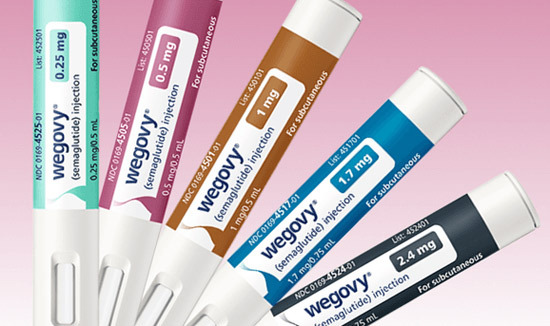
Recently, if you had to pick the hottest keyword cutting through the U.S. economy and healthcare market, it would undoubtedly be GLP-1.
These weight loss drugs, represented by Wegovy and Zepbound, are not just about losing weight; they are changing the very direction of the industry. It feels like obesity has completely shifted from being a matter of willpower to one of treatment and management.
Goldman Sachs predicts that the obesity treatment market will grow to about $100 billion by 2030. Just looking at the numbers gives you a sense of the scale. The first to benefit in this market are, of course, the pharmaceutical companies producing the drugs. Novo Nordisk has risen to the top of the European market capitalization with Wegovy and Ozempic. Recently, they have also launched an oral version that reduces the inconvenience of injections, further solidifying their market dominance.
Eli Lilly has completely erased its image as a latecomer with Zepbound. Clinical results showing stronger weight loss effects have led the stock market to evaluate it as a leading player in healthcare. They are expanding their business not just with weight loss but also into indications like cardiovascular disease and sleep apnea.
The second area benefiting is telehealth and digital health. These drugs require prescriptions and management. Combined with the unique American culture of remote interactions, the method of consulting and receiving prescriptions through apps has quickly taken hold. Platforms like Teladoc provide an experience where you can finish a consultation with just a few clicks instead of spending time in a waiting room.
Additionally, existing diet management services like Noom and Weight Watchers have launched GLP-1 specific programs. They combine protein-focused diets to compensate for potential muscle loss while taking the medication with lifestyle coaching, enhancing the value of their subscription models. Startups like Calibrate are leveraging metabolic health data to penetrate the precision management market.
The third area is the retail and insurance ecosystem. Large pharmacy chains like CVS and Walgreens see an increase in store visitors and prescription sales due to the rise in prescriptions. Given the high cost of these drugs, inventory management and supply chains become competitive advantages. Insurers are also facing deep concerns. While the immediate cost burden is significant, long-term calculations suggest that reducing chronic diseases like diabetes and hypertension could lower overall healthcare costs. Therefore, new insurance products and management strategies are changing rapidly.
The Wegovy boom is not just a simple diet trend. It signals a shift in healthcare standards. This change is quietly affecting the food, fitness, and apparel industries as well.
So, what about airlines? Surprisingly, there are indirect implications here too. Weight loss drugs may not directly boost airline revenues. However, it is hard to ignore that as health improves, more people are traveling actively. Losing weight and feeling lighter reduces the psychological burden of long flights. Especially in leisure travel, it is reported that such changes could lead to increased demand over time.







 Tora Tora |
 neroyo |
 nivex85 |
 Old English |
 nixxon |
 newyorker 101 |
 Things to Do to Buy a House |
 U.S. Weather Bureau News |
 International Court |
 Lunch and Dinner Mexican Taco |
  US Embassy |
  Korean Mom |
  My NYC |
  moo moo |
  Mr Oh |
  forevergee |
  festival |
  manchester |
  constant |
  Leapfrog Move |
  vibranto |
  yellowbutter |
  Dolly |
  NYC saladbar |
  Finding Superfoods |
  lightyear |
  song bang |
  vexomo |
  Indiana Jones |