

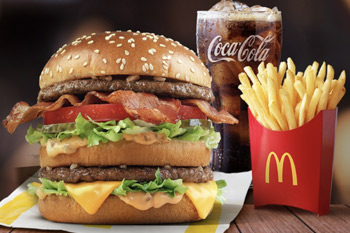
Hamburgers are a food that can be easily found anywhere in the world, but their beginnings hold a more interesting story than you might think.
Now a representative menu of fast food enjoyed by everyone, tracing its roots reveals the flow of food culture that spread from Germany to the United States and around the world. As we examine the history of hamburgers, we can see that it is not just a dish combining meat and bread, but an icon that embodies eras and cultures.
The origin of the hamburger is said to be the 'Hamburg steak' that started in Hamburg, Germany. In the late 19th century, this dish was transmitted around the world through the Hamburg port, served as finely minced beef grilled and placed on a plate. It resembled today's hamburger patty, and as German immigrants moved to America in large numbers, this food was brought along. The German immigrants who settled in America maintained their food culture while gradually adapting it to the local environment, and in that process, the Hamburg steak evolved into the hamburger we know today.
The full emergence of the hamburger dates back to the late 19th and early 20th centuries. The idea of placing minced meat between bread appeared, but it is unclear who was the first to try it. There are claims that the Menes brothers introduced it at a fair in New York, while others argue that it was Fletcher Davis in Texas who was the origin. There are various stories, but what is important is that due to this simple yet appealing combination, people quickly began to rave about hamburgers.
The hamburger became widely known across the United States in 1921 with the emergence of White Castle. White Castle led the way in popularizing hamburgers by selling small-sized burgers for just 5 cents. At that time, the concept of fast food was still unfamiliar, but due to the low price and convenient cooking method, it quickly gained popularity. Then in the 1940s, with the birth of large fast food chains like McDonald's, hamburgers became not just food but a symbolic menu representing America.
Afterward, hamburgers spread around the world. As American fast food chains entered the global market, various hamburgers tailored to the tastes and cultures of each country emerged. Examples include Korea's bulgogi burger, Japan's teriyaki burger, and India's vegetarian burger, all reflecting the local food culture. In Europe, gourmet handmade hamburgers paired with wine gained popularity, and within the U.S., various styles emerged from classic menus like cheeseburgers and bacon burgers to premium hamburgers with avocado or truffle oil.
Today, hamburgers have established themselves as a main menu item in premium restaurants, transcending fast food. They have evolved from merely filling food to dishes that express the personality of restaurants. Additionally, with growing interest in the environment and health, vegan burgers and alternative meat hamburgers using plant-based patties have also gained significant popularity. New attempts are actively being made to preserve the flavor of traditional meat patties while aiming for sustainable consumption.
Ultimately, hamburgers are a food that embodies American history and culture, while also constantly evolving in the flow of globalization. It is a simple combination of ingredients, but within it lies the lives of immigrants, the growth of popular culture, and the lifestyle of modern society. When you take a big bite, it may not just be about enjoying the taste, but also feeling the stories contained within, which might be the true charm of hamburgers.
So, the next time you have a hamburger, don't just think of it as a simple meal; consider the history and culture it embodies. You might find it to be much more special and delicious.





 Moscow Kim |
 coloradoman |
 Montgomery Mom |
 GOGO SING |
 Hajiwon Blog Hair Salon |
 Silent Sea |
 Glow Yo |
 zymit |
 Anytime Journey |
 eatontown blog |
  Korean Mom |
  My NYC |
  moo moo |
  Mr Oh |
  forevergee |
  festival |
  manchester |
  constant |
  Leapfrog Move |
  vibranto |
  Tora Tora |
  yellowbutter |
  Dolly |
  US Embassy |
  NYC saladbar |
  Finding Superfoods |
  lightyear |
  song bang |
  vexomo |
  Indiana Jones |