

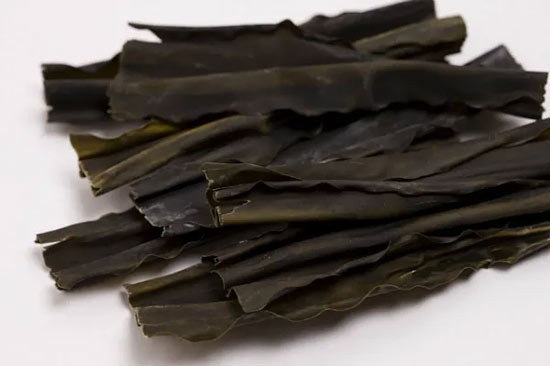
When you think of kelp, everyone usually thinks of it as just for broth or stock. But kelp is like a supporting actor that quietly sits in one corner of the pot and completely changes the flavor of the broth.
It's the same when boiling oden soup or when making a refreshing soup with oysters, and even with Neoguri ramen, right? That piece of kelp inside the Neoguri ramen bag is a game changer.
Think about oden soup. If you just boil it with radish, green onion, and oden, it feels a bit empty. But when you add a piece of kelp, right?
The broth suddenly becomes "Wow, the flavor is amazing." Even without anchovies, if you use kelp well, the broth is well-balanced. Kelp doesn't just add saltiness; it plays a role in enhancing umami. So, the oden becomes more oden-like, and the broth transforms into something that tastes like it came from a restaurant.
As for oyster soup, you might think you don't need kelp since oysters have such a strong flavor, right? But that's not true. With kelp, the oyster flavor becomes cleaner. It suppresses the unique fishy taste of oysters and brings out the sweetness. There's a reason why older generations always said to add kelp when making oyster soup.
And we can't forget about Neoguri ramen. When you open the Neoguri bag, there's kelp inside, right? Some people throw it away, but I think, "What a waste!" That piece of kelp is the key to making Neoguri taste like Neoguri. If you add it from the beginning while boiling the water, the broth flavor is completely different. The ramen broth isn't just stimulating; it becomes intriguingly deep. That's why you end up drinking all the broth even when eating Neoguri at night.
The mystery of kelp doesn't stop there. It's not just about boiling; timing is important. If you boil it too long, it becomes bitter, and you need to take it out at just the right time for the best flavor. It has a nature that says, "I've done my job," so you need to remove it quickly. That's why you always have to keep an eye on kelp when making soup.
It's also said to be good for your health. It's rich in minerals, contains iodine, and is good for the intestines. So, when you add kelp to the soup, it somehow makes you feel at ease. It feels like you're eating something proper today, and your stomach will feel comfortable. Especially as you get older, these things become important. A subtle flavor that supports rather than a stimulating one is much better.
In conclusion, kelp is an ingredient that you notice immediately when it's missing. Whether it's oden soup, oyster soup, or Neoguri ramen, it feels like something is missing without kelp. It quietly does its job in the kitchen without taking any credit. But you know, those who understand broth flavors all know. "Ah, this place has good broth," and behind that statement, there's always kelp.
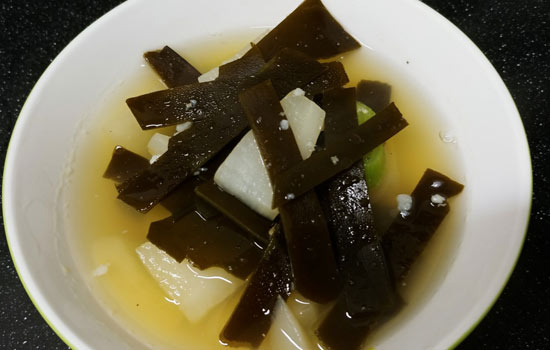
As a bonus, here's a recipe.
Kelp Radish Soup
Kelp radish soup is hard to fail as long as you follow the steps.
First, prepare the kelp. Cut it into a suitable size for eating and rinse it briefly under running water. You don't need to wash it too thoroughly. Just think of it as removing the dust on the surface.
Pour rice washing water into a pot, and start boiling it with the stock pack and kelp together.
Cut the radish into thin slices and chop the green onion diagonally. It's good to prepare everything in advance so you won't be flustered when boiling.
When the water starts to boil, after about 5 to 10 minutes, remove the stock pack first.
Leave the kelp in, and add the radish, minced garlic, and fish sauce, and boil again.
Don't adjust the seasoning too early; add salt little by little while boiling. This is the most important part of the soup ㅎㅎ Don't be greedy with the seasoning.
When the broth flavor seems to have come up, take out the kelp and cut it into bite-sized pieces. If you leave it too big, it becomes tough and hard to chew. Cut it appropriately and put it back in the pot, and boil until the radish is fully cooked.
At first, the radish is white, but it becomes transparent, right? That means it's almost done.
Finally, add the green onion and sprinkle a little pepper to finish. Turn off the heat and let it sit for a moment before eating, as the broth will become milder.
It's a soup that makes you feel comfortable and allows you to enjoy a warm bowl of rice during the cold winter.







 Moscow Kim |
 Seattle - Emerald City |
 self-evaluation |
 Sandiego Auntie |
 Karina's Blog |
 American Food Information & Calories |
 Lifestyle Information Search USA |

 What can make money? |
  Anytime Journey |
  Mrs. Duluth |
  jaxter |
  Atlanta Mama |
  Baguette Blog |
  US Embassy |
  Korean Mom |
  My NYC |
  moo moo |
  Mr Oh |
  forevergee |
  festival |
  manchester |
  constant |
  Leapfrog Move |
  vibranto |
  Tora Tora |
  yellowbutter |
  Dolly |
  NYC saladbar |