


While chatting at the hospital, a staff member said to me, "He lowkey likes her," and honestly, I was really confused.
I pride myself on having used English for quite a while, but I still get tripped up by expressions like this.
In an instant, a question mark pops up in my mind: "Does he like her or not?"
This is a slang that you won't find in textbooks; it's truly 'living' language.
This came up during a conversation about who among the staff likes whom.
"He lowkey likes her." Several interpretations came to mind.
He likes her secretly.
He likes her a little.
He likes her subtly.
All of these seem correct, yet none of them feel precisely right.
Understanding this expression by breaking down the words can actually make it more confusing. It should be taken as a whole.
The key here is not 'likes' but 'lowkey.'
If it were just "He likes her," that would be straightforward. It means, "That guy likes her."
But once 'lowkey' is added, the meaning changes.
It's not that the feelings are weak; rather, the expression is being held back.
On the surface, it seems like he's not showing it, but if you look closely, you might think, "Isn't that a bit strange?"
So, "He lowkey likes her" is best understood as:
"That guy seems to like her, even if he's not showing it."
This expression is even more interesting when a third party says it, as it feels much more natural.
The person in question thinks they are hiding it, but everyone around them has already noticed.
"He lowkey likes her."
This almost means, "He thinks he's not being caught, but everyone can see it."
It's not just a simple guess; it's an observation mixed with a degree of certainty.
One common misconception is interpreting 'lowkey' as "likes her a little." But that's an incorrect interpretation.
'Lowkey' refers to the manner of expression, not the intensity of the feelings. He might actually like her quite a lot.
Conversely, if someone is openly expressing their feelings, they would use 'highkey.'
"He highkey likes her."
This means there's no hiding it. It's all out in the open.
There's a reason Americans often use expressions like this. There's a cultural tendency to feel a bit uncomfortable making definitive statements.
If you say, "He likes you," it can feel like an overstatement or make the situation awkward.
In such cases, adding 'lowkey' softens the statement. It leaves room for error while still conveying the intended message.
It acts as a kind of buffer.
This word is used frequently beyond just romantic contexts, and the meanings can vary slightly.
When someone says, "That party was lowkey," it means it was not loud, quiet, and had a comfortable, unremarkable atmosphere.
When someone says, "I'm lowkey obsessed with this show," it means they are completely into it but want to downplay their enthusiasm.
Additionally, 'lowkey' can mean "wealthy but not showing it" or "not dressing up on purpose."
The core idea is 'not revealing.'
For example, if someone says, "He's lowkey rich," it means he has money but doesn't show it outwardly.
If someone says, "She's lowkey dressed," it means she's not poorly dressed but has a quiet and restrained style.
Ultimately, understanding 'lowkey' as a word that describes attitude rather than state is key.
'Lowkey' is used naturally not only in everyday conversation but also in contexts related to crime or police matters.
For instance, when a criminal is moving discreetly, saying "stay lowkey" means to act quietly and without drawing attention.
Conversely, police might use the phrase "keep it lowkey" during undercover investigations or secret operations.
In English conversation, 'not revealing' is a situation where this expression can fit anywhere.
'Lowkey' is frequently used in everyday language to mean "keep it a secret" or "surprisingly."
The most representative example is maintaining secrecy. Saying, "Keep it lowkey" means, "Let's keep this between us and not tell anyone else" or "Let's handle this quietly." It has a similar feel to saying 'shh!' to avoid spreading rumors.
Another interesting use is when confessing an 'unexpected preference.' When you like something that doesn't match your usual image, you might say, "I lowkey love Hawaiian pizza." This conveys the nuance of, "Actually... (even though I don't seem like it) I really like Hawaiian pizza, which is often disliked by Italians and has pineapple on it."
To summarize, 'lowkey' acts as a seasoning at the beginning of a sentence, meaning 'actually,' 'without others knowing,' or 'subtly.'
It's a very useful word for conveying your true feelings or situation while slightly hiding them, acting as a kind of 'flirting' word!







 Make My Day |
 viroma |
 eatontown blog |
 Toaster Pizza Magic Show |
 US Embassy |
 Gupabal MissKorea |
 Mental Health Psychiatrist |
 US 210 Kim Sangsa |
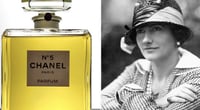
 Coco Chanel |
  road98 |
  Churros Train Conductor |
  gleeful |
  Burbank Lee |
  Olivia's Blog |
  Bushing Around Life |
  Active |
  Cherokee Rose |
  Kor. Master |
  Holey Moley |
  Conflite Teacher |
  Hodong Prince Over Flex |
  Mist inn |
  citrus pop |
  Onion Ring |
  phoenixia |
  viewtop |
  loverun |
  Kim Do Sun |
  SEVEN SEVEN |