

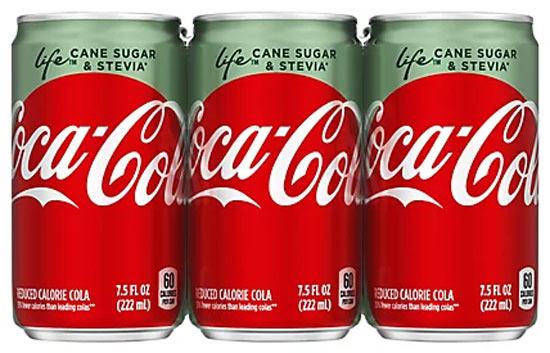
Trump mentioned earlier this year that "Coca-Cola decided to release products using cane sugar."
In fact, Coca-Cola announced through CNN that it has started selling a cane sugar version of cola in some cities.
Many Coca-Cola products sold overseas have always used cane sugar.
A representative example is Mexican Coca-Cola. It is usually sold in glass bottles and is praised for its clean taste and less sweetness.
There is even a fan base in the U.S. that seeks out this Mexican cola.
This new product will not be launched nationwide all at once, but will first be available in 'select cities'.
It seems to be a strategy to gradually expand after observing the response. Interestingly, Coca-Cola already uses cane sugar in quite a few other beverages.
Simply Lemonade, Gold Peak Iced Tea, and Costa Coffee canned products already contain cane sugar.
Due to cost issues and policy reasons, the main product, cola, has only used high-fructose corn syrup. The U.S. corn industry is very powerful. High-fructose corn syrup is cheap and widely used thanks to government subsidies.
High-fructose corn syrup is a sweetener made by breaking down corn starch with enzymes, and it is widely used in carbonated drinks because it is cheaper than sugar.
However, this ingredient is known to rapidly increase blood sugar and insulin levels, leading to a higher rate of fat conversion, which increases the risk of obesity, insulin resistance, and diabetes.
It can also interfere with the function of the leptin hormone that reduces satiety, leading to overeating. Some studies point out that high-fructose corn syrup may also increase inflammation responses and cardiovascular disease risks.
As a result, the Trump administration has recently criticized the use of high-fructose corn syrup strongly. Consumers are also becoming increasingly sensitive to 'natural sugar' or 'clean labels', prompting Coca-Cola to ride the wave of change.
This could be a sign that the U.S. food industry is slowly trying to move away from a corn-centric structure. Whether it's Trump's request or the voice of consumers, ultimately, these trends come together to create significant change.



 Peter Pan Pet |
 Nuchuhan Exploration BLOG |
 Sugar Cream Door Bulletproof Noodles |
 Moscow Kim |
 Gorama Round |
  Skydiving |
  dreamport |
  Yellow Snowman |
  Toaster Pizza Magic Show |
  velvetnom |
  Anytime Journey |
  Mrs. Duluth |
  jaxter |
  Atlanta Mama |
  Baguette Blog |
  US Embassy |
  Korean Mom |
  My NYC |
  moo moo |
  Mr Oh |
  forevergee |
  festival |
  manchester |
  constant |