

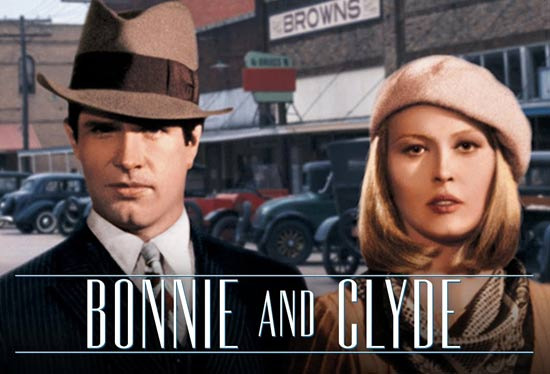
Hello, fellow movie-loving blog readers.
Today, I want to talk about an old movie that still evokes a strange sense of liberation and loneliness.
It's the 1967 film, Bonnie and Clyde, directed by Arthur Penn.
This film tells the story of Bonnie Parker and Clyde Barrow, a real-life outlaw couple who committed ruthless crimes during the Great Depression in the 1930s, primarily in Texas and surrounding states.
Starring the era's top young stars, Warren Beatty and Faye Dunaway, it perfectly captures the portrait of a beautiful yet precarious anti-hero.
Beyond being a well-crafted crime drama, it is also a pioneering work that declared the 'New Hollywood' era.
To understand the roots of the film, one must look at the desolate landscapes of Texas, which is both the hometown of the characters and the main backdrop of the movie.
Bonnie Parker was from Row City near Dallas County, and Clyde Barrow grew up in the Eagle Ford area west of Dallas County. They first met in Dallas, and northern Texas was the base where their criminal activities began.
The film broke away from the traditional Hollywood method of being confined to studio sets and was shot on location in various parts of Texas. As a result, the desolate and harsh atmosphere of 1930s Texas during the Great Depression is vividly captured on screen. Endless dusty rural roads, dilapidated farms, and isolated gas stations visually represent the economic poverty and social isolation faced by the two protagonists.
Arthur Penn did not treat this film as a mere brutal crime drama. Instead, he delves deeply into the context of why these ordinary young people felt compelled to take to the streets with guns, examining the historical pain of Texas and the structural societal issues.
During the Great Depression, banks were seen as 'devils' that mercilessly seized the homes and lands of farmers.
In a society where morality and law had collapsed, Bonnie and Clyde's actions of robbing those greedy banks provided a strange catharsis to the people. Their unrestrained actions against the system were perceived by the public as a form of 'anti-hero.' A scene in the film where a farmer who has lost his home borrows Clyde's gun to shoot a bank sign symbolizes that they were not just villains but twisted heroes born from the despair of the times.
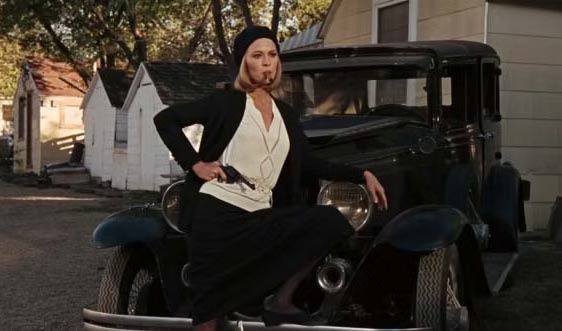
When this film was released in 1967, the shock it delivered to American society was beyond imagination.
Older generations and conservative critics fiercely criticized it for glamorizing criminals and depicting brutal violence in an aesthetically pleasing manner.
However, the tide of the times could not be stopped. Young audiences, disillusioned with the established order amid the Vietnam War and social turmoil, were thrilled by the film's sophisticated visuals, innovative direction, and boldness in shattering conventional moral standards. In particular, the film's haunting ending, where the bodies of the two protagonists are torn apart by bullets in a silent slow-motion scene, is often cited as one of the most beautiful and shocking moments in film history.
Ultimately, this work won the Academy Awards for Best Cinematography and Best Supporting Actress (Estelle Parsons) that year, achieving historic victories in both critical acclaim and box office success. It became a significant milestone of the New Hollywood era, expanding the freedom of expression in the American film industry and encouraging deeper exploration of the darker aspects of human nature.
Even after the film ends, the breath of Bonnie and Clyde still lingers heavily across the land of Texas.
Ironically, although they were always together in life, the two could not be buried together in death because Bonnie Parker's family opposed being buried next to Clyde. Today, Bonnie Parker's grave is lonely in Irving near Dallas, while Clyde Barrow's grave is located in West Forest Cemetery in West Dallas County.
If you want to witness their tragic end more vividly, the actual Ford car they were in during the ambush operation in Louisiana, with numerous bullet holes, is preserved and displayed in its original form at Whiskey Pete's Hotel & Casino, located on the California-Nevada border.
Looking at the countless bullet marks that pierced through the metal, you can feel the intense aftertaste that the film left behind. However, I heard news that Whiskey Pete's Casino is going to close down. I wonder where this car will go in the future.
 Versailles
 BurgerHunters
 RapidCore84





 Beauty, Health, Lifestyle Blog |
 Always Atlanta |
 RV Samuel's Dad |
 Ham and Cheese |
 oflare |
 NEXT ROUND |
 Best Frozen Yogurt |
 Aura-Infused WACAM |
 American Blog Forge |
 ultron78 |
  Texas Real Estate Blog |
  U.S. Retirement Pension Information |
  Seattle - Emerald City |
  Texas Migration Story |
  Unknown Dog Walk blog |
  California Dreamer |
  Bearded Strawberry Smoothie |
  JESIKYEOALBA BLOG |
  Heart Ticker |
  Jellia Angel |
  Moo Tang Clan |
  Khan Film Blog Production |
  yenne |
  neroyo |
  Peter Pan Pet |
  solvix18 |
  Next Year, Let's Become Rich |
  Investment Campus Home Ownership |
  virex |
  Yoyma |