

Hawaii is known as a paradise, but even the prettiest flowers have thorns.
Honolulu is relatively safe compared to other U.S. cities, but due to its nature as a tourist destination, there are some unique safety issues.
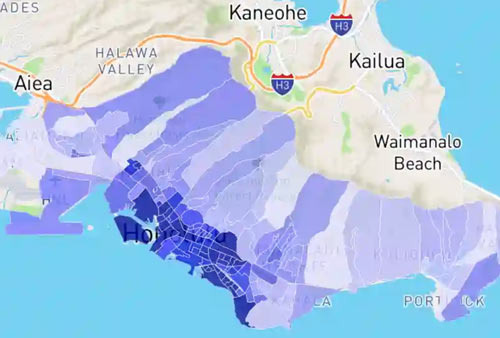
According to Honolulu police data, the most noticeable crimes are thefts. In 2024, Oahu recorded 12,577 thefts and 3,377 auto thefts.
Especially for travelers, caution is needed with rental cars. It's best to avoid leaving visible items like suitcases, shopping bags, or cameras in the car while going to the beach.
Waikiki may seem peaceful and bustling with tourists during the day, but the atmosphere changes at night. In June 2026, there were 156 reported thefts, 16 vehicle break-ins, and 37 assaults in the Waikiki area alone.
With many tourists around, there can be intoxicated individuals or homeless people causing disturbances, so it's better to stick to well-lit, populated areas at night.
Interestingly, tourists are not always the victims. With so many people visiting Hawaii each year, some visitors get into trouble by getting drunk and starting fights, trespassing, driving recklessly, or harassing wildlife.
In 2026, a tourist from the mainland U.S. was even arrested by federal authorities for throwing a large rock at the endangered Hawaiian monk seal on a Maui beach. This shows that just because it's a vacation spot doesn't mean it's a place where behavior is overlooked. Interacting with or harassing marine or wildlife can lead to serious legal issues.
In Waikiki, police conduct joint operations targeting hotels and beach areas.
They enforce regulations related to illegal street vendors, park closing hours, illegal camping, and parking violations, tailored to the characteristics of tourist areas.
Areas like parts of Chinatown, Palama, and Kalihi are not recommended for wandering alone late at night.
The atmosphere in Waianae on the west side of Oahu is quite different from Waikiki, so it's wise to check the local vibe before visiting for the first time.
Ultimately, what is needed for a trip to Hawaii is not fear, but basic vigilance.
Don't leave anything behind, avoid leaving your phone and wallet unattended on the beach, and steer clear of deserted alleys late at night.
And conversely, travelers should discard the thought that "this is a vacation spot, so it should be fine." Getting into fights after drinking or entering restricted areas, or touching wildlife could end a heavenly trip to Hawaii at the police station.
 TalkVibe
 GoldenHarbor73
 SilverBridge95







 Helpful Life Stories |

 prixon74 |

 Balancework |

 Make My Day |

 viroma |

 HAWAII Korean Church News |

 Hawaii Tourist Information |



 victoria 68 |
 ollege Mom |
 Pronunciation Yo |
 nuvex11 |
 Living in Florida |
 axelon47 |
 lumbus |
 Texas Migration Story |
 Scade Studio |
 love ya |
 biscuit90 |
 chicpo |
 Kitchen Ideas |
 Diana Blues |
 Agenda Center |
 Community Cross |
 journey |
 heeve |
 leman |