

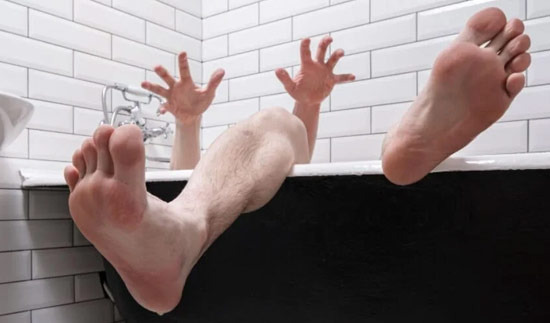
When you look at American homes, the spacious living rooms, large kitchens, and big refrigerators are all quite large.
However, when you actually get into the bathtub, even if you want to stretch out, your knees stick out and your shoulders don't fully submerge in the water.
Especially for those accustomed to the Korean bathing culture, the first thought when entering an American bathtub is likely, "Is this it?"
In fact, this is not just a simple design issue but rather a result of a mix of culture, architecture, and consumer style.
American bathtubs are not originally designed as a space for enjoying baths but are treated more as an option in the washing process.
Since this is a country where showers are the main focus, bathtubs are merely structures that support showering.
Moreover, there is another important reason that many people are not aware of, which is safety concerns.
Most people are not aware that the size of the bathtub can be connected to safety.
For example, young children can be exposed to danger even without deep water in the tub.According to a report by the Canadian Red Cross, bathtubs account for more than half of infant drowning incidents.
This means that even shallow water in a bathtub can quickly lead to an accident if a child loses their balance and their face goes underwater.
Therefore, even if the bathtub is small, children should never be left alone, and it is important for people to understand that there is no need to fill it with a lot of water.
In particular, bathtub bubbles, slippery surfaces, and toys can increase the risk, so accidents can happen the moment you take your eyes off the child.
Here, the safety risks are not only applicable to young children. Bathtubs can also pose a surprisingly high barrier for the elderly.
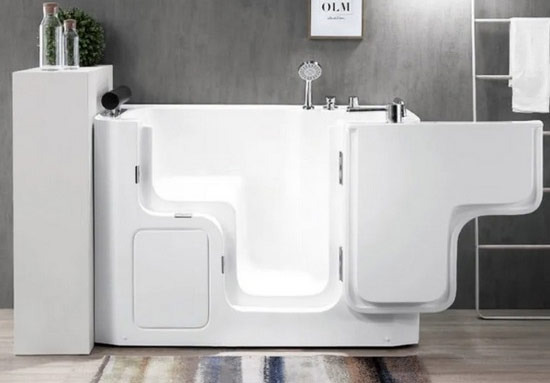
For the elderly to get into a bathtub, they have to step over a high ledge and navigate a slippery surface while maintaining their balance.
This can be a significant burden for those with weak leg strength or arthritis. In particular, the structure of American bathtubs, which are deep and have high walls, can create "bathtubs that are difficult to enter."
If balance is lost and someone falls, or if dizziness suddenly occurs, it can lead to an accident where they cannot get up inside the bathtub.
Therefore, recently in the U.S., there have been increasing cases of remodeling existing bathtubs into "walk-in types (bathtubs you enter through a door)."
Since you don't have to step over the bathtub ledge, safety concerns are greatly reduced, making it more convenient for the elderly or those with disabilities.
Additionally, when remodeling a bathroom, lowering the threshold or widening the door can make the bathroom a much more "accessible space for everyone."
Ultimately, it is worth considering that the reason American bathtubs are small can also be linked to safety issues.
What should always be kept in mind when using a bathtub is "safety."Whether it's a small bathtub or a large one, what is ultimately prioritized over comfort is the space that allows you to wash without accidents.







 Weekend Movie Blog |
 Beauty, Health, Lifestyle Blog |
 coloradoman |
 Superman Cat Blog |
 novapixel |
  dralix58 |
  Gorama Round |
  Skydiving |
  dreamport |
  Yellow Snowman |
  Toaster Pizza Magic Show |
  velvetnom |
  Anytime Journey |
  Mrs. Duluth |
  jaxter |
  Atlanta Mama |
  Baguette Blog |
  US Embassy |
  Korean Mom |
  My NYC |
  moo moo |
  Mr Oh |
  forevergee |
  festival |
  manchester |