

Hello. I am an ordinary breadwinner living in Chicago for 20 years.
As I have repaired numerous engines here in Chicago, I naturally end up discussing engine durability with customers.
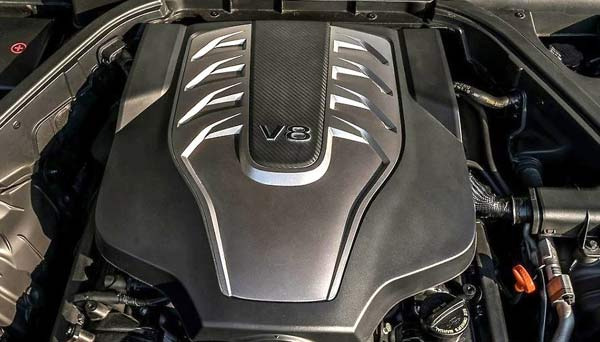
Among car enthusiasts, there is a saying that "V8 is an engine that can last a lifetime, while a 4-cylinder is a consumable that gets used up."
From my perspective as someone working in the field, this statement has sufficient mechanical reasoning to be convincing.
First, there is a structural difference. A V8 engine has more cylinders, so each cylinder bears much less load when producing the same power.
For example, when cruising at 70 miles per hour on the freeway, a V8 engine operates very smoothly at low RPMs, almost like a leisurely stroll.
In contrast, a 4-cylinder engine must maintain a relatively high RPM to keep the same speed, requiring it to work much harder.
If you imagine a situation where 8 people share a load compared to 4 people sharing the same load, it will be easier to understand.
Naturally, the fatigue on the parts will be higher for the 4-cylinder engine.
In terms of vibration, the V8 is also advantageous. With frequent combustion strokes, it produces less vibration and mitigates the shocks on the components.
The 4-cylinder, by its structure, generates more vibration, and the recently popular high-output 4-cylinder turbo engines must endure high heat and pressure in a confined space, making maintenance conditions much more demanding.
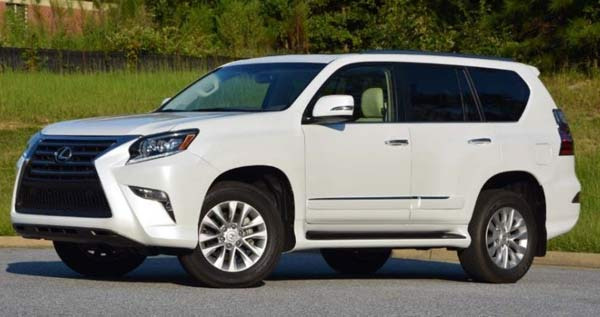
The driver's habits are also an important factor. A V8 vehicle with ample power rarely needs to accelerate hard or push the engine to its limits. The engine operates within a 'safe zone' at all times.
On the other hand, a 4-cylinder vehicle often requires squeezing out the engine's power even during routine merging or overtaking, and this accumulated load manifests as a difference in lifespan after hundreds of thousands of miles.
In fact, if you look at pickup trucks in the U.S. that easily exceed 300,000 or 400,000 miles, most of them are equipped with V8 engines.
The saying "The body may rust, but the engine remains strong" becomes a reality when the robustness of the V8 engine meets thorough routine maintenance.
Some examples of such vehicles include:
However, to be honest, looking at the current trends in the automotive industry does not make me feel very good. In the past, the most important value of an engine was "how long it lasts," but now it seems that "how efficiently and how many can be sold" has taken precedence. This has led to the emergence of what is called aging technology, where products are designed to be used moderately and then replaced.
Most of the downsizing engines that are popular these days are high-output turbo engine structures. They reduce displacement, add a turbo for increased output, but the internal structure has become much more complex. More heat is generated, pressure is higher, and various gaskets, seals, and rubber hoses that are forced to contain this have deteriorated much faster than before, resulting in shorter lifespans.
On the surface, it looks like technological advancement, but in reality, it leads to shorter replacement cycles for consumables and an increase in failure points. While repair shops benefit from this, vehicle owners face a maintenance cost explosion. To be honest, I sometimes wonder if car manufacturers are creating vehicles that do not last long to encourage more frequent replacements.
Of course, modern engine manufacturing technology has advanced dramatically. Today's 4-cylinder engines can endure over 150,000 miles due to precise machining and material innovations. Conversely, no matter how excellent a V8 engine is, if it is not maintained and oil management is neglected, it will struggle to exceed 150,000 miles. Ultimately, the final key to determining the lifespan of a machine remains the owner's careful management.







 forevergee |
 mortrix |
 cherrydino |
 victoria 68 |
 American Man in a Mask |
 Khan Film Blog Production |
 Illinois Mom |
 Rice Shop Uncle BLOG |
 allstar realty |
 Enjoyable American Life Diary |
  Tonky |
  viroma |
  cookie |
  Live and that's it |
  Alright Twain |
  eatontown blog |
  HAWAII Korean Church News |
  Amore |
  linex |
  Balancework |
  laro90 |
  MEDBIO American Doctor Blog |
  SWAT TEAM BLK |
  DREAM BIG |
  frostbite |
  330 Forever My Love |
  El Dorado |
  dralix58 |
  Gorama Round |
  Skydiving |