
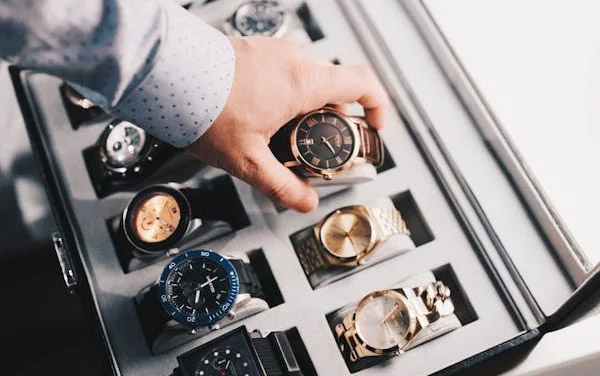
Luxury watch brands facing declining sales: causes and responses
Luxury watch brands, once symbols of luxury and prestige, are facing a new challenge of declining sales in recent years. The traditional watch market is undergoing significant changes due to challenges from new technologies like smartwatches, shifts in consumer trends, and global economic uncertainty. Today, we will examine the current state of the luxury watch industry, its causes, and the strategies brands are employing to overcome these challenges.
Globally recognized luxury watch brands such as Rolex, Omega, and Patek Philippe have been beloved for their long history and craftsmanship. However, in recent years, these brands have not been able to achieve the same strong performance in the market as before.A notable example is the LVMH Group, which owns several global luxury brands, reporting a decline in sales in its jewelry and watch sectors. The Fossil Group has also seen a decline of over 20% in sales compared to the previous year. The traditional luxury watch industry has reached a point where it can no longer rest on its past glory.
Main Causes of Sales Decline
- Economic uncertainty and consumer contraction
The uncertainty of the global economy is directly impacting the luxury goods market. In particular, as the economic recovery from the COVID-19 pandemic slows, consumer interest in high-priced products is diminishing.
- China: Accounting for about 40% of global luxury consumption, China is experiencing a decline in consumption due to economic slowdown and a crisis in the real estate market, negatively affecting luxury watch sales.
- Europe and the U.S.: Rising energy costs and inflation are further dampening consumer sentiment.
- The rise of smartwatches
The popularity of smartwatches poses a significant challenge to luxury watch brands. Technology-based companies like Apple and Samsung are setting new standards for watches with their latest wearable devices.
- Apple Watch: Offering various features beyond simple time-checking, such as heart rate monitoring, message notifications, and health management, it is replacing traditional watches.
- Young generations: Millennials and Gen Z are accustomed to smart devices and prioritize technological convenience.
- Changing consumer preferences
Today's consumers are shifting towards valuing rarity and individuality rather than just famous brands. There is a strong tendency to prefer limited editions or uniquely designed products over mass-produced luxury watches.
- Growth of independent brands: Small independent watch brands, rather than traditional large brands, are attracting consumer interest with new and creative designs.
- Expansion of the second-hand watch market
The resale market has become a double-edged sword for luxury watch brands. Many consumers are purchasing second-hand watches to save costs, which in turn reduces sales of new products.
Strategies of Luxury Watch Brands
Introduction of smart features
Some luxury watch brands are embracing technological changes by launching models equipped with smart features. TAG Heuer and Montblanc are introducing smartwatch models to target new consumer segments.Emphasis on rarity and customized products
Brands are emphasizing rarity through limited edition models and customized products. Brands like Patek Philippe and Audemars Piguet are releasing watches produced in very limited quantities to meet the demands of high-end customers.Strengthening digital marketing and online sales
With the growing importance of online shopping post-pandemic, many luxury watch brands are enhancing their digital platforms. There are increasing cases of promoting products through official websites and social media, as well as launching online-exclusive models.Emphasis on environment and sustainability
As young consumers show high interest in sustainable products, luxury watch brands are adopting eco-friendly materials and fair production methods. These changes can create a positive image for consumers and open new markets.
The Future of the Luxury Watch Market
The luxury watch industry still demands change, but there is potential for stable growth in the long term.
- Technological convergence: The fusion of traditional watchmaking techniques with modern smart features is expected to inject new vitality into the luxury watch market.
- Continued demand: Luxury watches are still perceived as symbols of wealth and success, and brands that harmonize traditional values with modern trends are likely to succeed in the market.
The luxury watch industry is facing challenges amid changes in economic, technological, and consumer trends, but there is potential to overcome these through innovative approaches and new connections with consumers. Brands must adapt to changing times while preserving tradition, and they should strive to appeal to consumers once again through new technologies and designs.
Can luxury watches become not just tools for checking time, but timeless works of art? We look forward to their future developments.








 Weekend Movie Blog |
 Beauty, Health, Lifestyle Blog |
 coloradoman |
 Superman Cat Blog |
 Noodle Noodle |
  Tonky |
  viroma |
  cookie |
  Live and that's it |
  Alright Twain |
  eatontown blog |
  HAWAII Korean Church News |
  Amore |
  linex |
  Balancework |
  laro90 |
  MEDBIO American Doctor Blog |
  SWAT TEAM BLK |
  DREAM BIG |
  frostbite |
  330 Forever My Love |
  El Dorado |
  dralix58 |
  Gorama Round |
  Skydiving |