
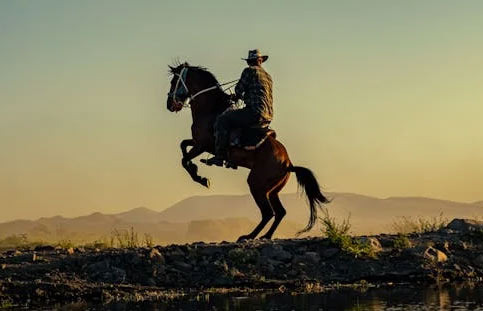
American cowboys were not just characters in movies but symbolic figures who lived during the Westward Expansion era.
In the mid-19th century, with the U.S. government's westward expansion policies and the construction of railroads, many immigrants moved west, creating a need for people to tend and manage cattle on the vast plains, leading to the birth of the cowboy profession. Cowboy culture was heavily influenced by traditional Spanish and Mexican ranching methods, with skills in horsemanship, rope handling, and clothing passed down from the Mexican vaquero culture.
The main duty of a cowboy was to move herds of hundreds of cattle over dozens of miles while protecting them. They started at dawn and cared for the cattle until sunset, patrolling grazing lands and protecting the livestock from theft or threats from wild animals. The life of a cowboy was not just hard labor but a matter of survival, requiring strong physical endurance and patience. The average lifespan of cowboys was known to be around their 40s, attributed to heavy labor, frequent accidents, diseases, and poor sanitary conditions. Compared to the average lifespan of modern individuals, this was significantly short.
A wide-brimmed hat protected against the strong sun and rain, while thick leather boots provided stability when riding. Ropes were used to catch cattle, and knives served multiple purposes. The cowboy style we consider fashionable today was actually essential tools for survival.
The cowboy songs sung during long journeys helped alleviate the monotony of labor and strengthen community spirit. Traditional events like rodeos served as competitions for cowboy skills and community festivals. Cowboys valued honesty, hard work, courage, and teamwork, which continue to be ideal virtues for Americans today.
In the early 20th century, the development of automobiles and railroads, along with the modernization of ranching, reduced the traditional role of cowboys, but their spirit remains alive.
Today, cowboys not only work on ranches but also maintain their image through rodeo competitions, country music, fashion, literature, and film. Actors like John Wayne and Clint Eastwood popularized the cowboy as a heroic symbol, and cowboy hats and boots remain icons of American culture.
Ultimately, cowboys were not just workers but representatives of the American pioneering spirit. Their lives and culture symbolize freedom, independence, and adventure, continuing to inspire people in modern society. Although their average lifespan was short, the legacy they left behind remains strong today and will continue to symbolize America in the future.








 Weekend Movie Blog |
 Beauty, Health, Lifestyle Blog |
 coloradoman |
 Superman Cat Blog |
 Awesome Blog |
  vibranto |
  Tora Tora |
  yellowbutter |
  Dolly |
  US Embassy |
  NYC saladbar |
  Finding Superfoods |
  lightyear |
  song bang |
  vexomo |
  Indiana Jones |
  meloncat |
  novapixel |
  mortrix |
  Esther 1983 |
  fortbliss |
  Moscow Kim |
  My Two Way |
  toastyfox |
  FLORIDA Acus |