
Everyone can relate to the fact that LA winters are no longer what they used to be.
Originally, winter in LA was characterized by warmth and occasional rain, but these days, it has gone beyond that.
After days of almost no rain like last year, suddenly there are major wildfires, and then it pours rain as if the sky has a hole in it, only to return to a dry season with dust flying again.
In the meantime, the mountains catch fire, and when it rains, landslides and floods hit all at once.
This is why LA winters no longer feel like an ordinary season but rather like a disaster season.
Dry winters lead directly to wildfires. In years with little rain, the grass and trees are completely dried out, and a single spark can turn the entire mountain into a sea of flames. Wildfires now feel like an annual event that appears in the news rather than an isolated incident.
If the winds pick up, the fire can quickly come down to the city. After the fire is extinguished, the air turns gray for weeks, making it uncomfortable to breathe.
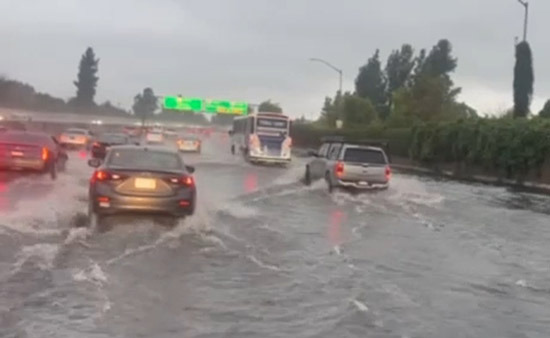
The problem comes next. One day, suddenly, heavy rain pours down on the dry ground. The land, unable to absorb the water, sweeps it away, and the burned mountainsides send mud and rocks flowing down.
Roads turn into rivers, underpasses flood, and muddy water rushes into front yards. This contradictory scene, where drought and fire occur on one side while floods and landslides happen on the other, is the reality of LA winters now.
If you ask whether this is just a simple whim of nature, many scientists would say no. They argue that it is a typical manifestation of climate change. As atmospheric temperatures rise, the air holds more moisture, resulting in extreme conditions where it either doesn't rain at all or pours down all at once. This is why LA's winter patterns are becoming increasingly extreme.
However, this story cannot be complete without mentioning human responsibility. Over the past few decades, Los Angeles has seen endless population and urban expansion. Homes have been built by cutting into mountains and valleys, and waterways have been covered with concrete. The space for water to seep in when it rains has disappeared, and the water that pours onto the asphalt flows directly into the city. This is the result of the city taking over the role that nature used to handle.
Moreover, water usage is also an issue. Even during droughts, there is a culture that insists lawns must remain green and swimming pools must be kept full. This lifestyle continuously pressures LA's water system and accelerates the disruption of nature's balance.
Thus, LA's winters now appear as a complex disaster intertwined with natural and human-made calamities. On top of the massive flow of climate change, human urban expansion and lifestyle habits are pouring fuel on the fire.
Los Angeles is still a warm and beautiful city. However, behind that beauty, it seems that more and more elements of anxiety are piling up.
It has been over 30 years since the last major earthquake... it feels unsettling.







 Weekend Movie Blog |
 Beauty, Health, Lifestyle Blog |
 coloradoman |
 Superman Cat Blog |
 novapixel |
  DREAM BIG |
  frostbite |
  330 Forever My Love |
  El Dorado |
  dralix58 |
  Gorama Round |
  Skydiving |
  dreamport |
  Yellow Snowman |
  Toaster Pizza Magic Show |
  velvetnom |
  Anytime Journey |
  Mrs. Duluth |
  jaxter |
  Atlanta Mama |
  Baguette Blog |
  Tan Sol |
  US Embassy |
  Korean Mom |
  My NYC |