

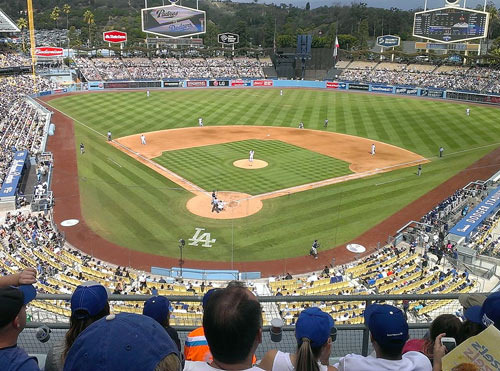
Los Angeles Dodger Stadium is one of the iconic venues in Major League Baseball (MLB), cherished by baseball fans around the world for its long history and unique architectural style.
History of Dodger Stadium
Dodger Stadium officially opened on April 10, 1962. This was part of the effort to establish a new home for the Los Angeles Dodgers after they moved from New York. The previous home, Brooklyn Park, faced limitations in expansion and modern facility demands, leading to the need for a new large stadium.
The design of Dodger Stadium was carried out by Billy Williams and the architectural firm Milner & McWhorter. The stadium featured an open design that emphasized harmony with the natural environment. This approach maximized the use of the natural terrain of the Rancho Park area where Dodger Stadium was built, providing beautiful views against the backdrop of surrounding mountains and sky.
Since its opening, Dodger Stadium has been the stage for numerous historic moments. Notably, games where the Dodgers won several World Series were held here, creating unforgettable memories for fans. For example, the game against the Phillies in the 1981 World Series and the back-to-back championships in 2017 and 2018 are deeply etched in the history of the stadium.
Additionally, Dodger Stadium is famous as a venue where various Hall of Fame players have played. Legendary players like Sandy Koufax, Clayton Kershaw, and Herb Lu have thrilled fans with their performances here.
Architectural and Design Features
The design of Dodger Stadium reflects an innovative approach for its time. Billy Williams envisioned the stadium as an integral part of the community and natural environment, not just a sports venue. To achieve this, the stadium was designed with an open structure, allowing views of the surrounding mountains and sky from within the stadium.
The design maximizes the use of the natural terrain. In particular, the outfield seats are adjacent to the surrounding mountains, allowing fans to enjoy the beauty of nature while watching the game. This design element differentiates Dodger Stadium from other venues, making the baseball experience even more special.
The exterior of Dodger Stadium features a design that maintains a classic baseball park feel while incorporating modern elements. The open structure without a large roof maximizes the charm of an outdoor baseball park and is designed to utilize natural light effectively. Furthermore, all seats within the stadium are arranged to provide optimal views, ensuring fans can comfortably enjoy the game.
Among the internal structures, a notable feature is the Dodgers logo located on the ceiling. This logo decorates the center of the stadium and serves as an important symbol of the Dodgers' identity.
Seating Capacity and Configuration
The official seating capacity of Dodger Stadium is approximately 56,000, placing it in the mid-range among Major League venues. There were slight changes during the early years, but after several renovations and expansions, it has reached its current capacity.
Dodger Stadium offers various seating options to ensure all fans can comfortably enjoy the game.
- Main Stands: Primarily composed of seats for general spectators, located in the center of the stadium for optimal views.
- Wide Outfield Seats: Located in the outfield area, these seats offer a wide view and the advantage of enjoying the game from different perspectives.
- Premium and Luxury Suites: A luxurious seating option that provides personal space along with high-quality food and beverage service, popular among fans seeking a special viewing experience.
- Sweet Spots: Premier seats placed in specific locations that offer the best views along with special benefits.
Dodger Stadium is equipped with various amenities, allowing fans to enjoy their time even outside of the games.
- Restaurants and Bars: Various restaurants and bars are available, allowing fans to enjoy a diverse menu while watching the game.
- Souvenir Shops: Souvenir shops selling Dodgers-related merchandise are located throughout, making it easy for fans to purchase items to cherish their memories.
- Family Zones: Spaces designed for family visitors, equipped with play facilities for children and comfortable seating.
- Accessibility Facilities: Dedicated seating and access routes for disabled spectators are well-equipped, ensuring all fans can conveniently enjoy the game.
World Series and Playoff Games
Dodger Stadium has established itself as a venue for important games whenever the Dodgers reach the World Series. Notably, in the 1988 World Series, the Dodgers gained significant attention by winning against the Los Angeles Lakers in a triangular match. Additionally, in the 2020s, the Dodgers reached the World Series consecutively, garnering much interest in the games held at the stadium.
Memorable Games and Famous Players
Numerous memorable games have taken place at Dodger Stadium. For instance, Carlton Fisk's legendary home run in the 1981 World Series against the Phillies and the dramatic inning with Brian Rosen in 2008 left a deep impression on fans.
Moreover, Dodger Stadium is also known as a venue where many Hall of Fame players have excelled. Legendary Dodgers players like Sandy Koufax, Herb Lu, and Clayton Kershaw have achieved numerous victories here, shining a light on the team's history.
Non-Baseball Events
Dodger Stadium is utilized for various events beyond baseball games. Concerts, festivals, and movie screenings are held, integrating the stadium into the local community and broader society. For example, concerts by Michael Jackson and BTS's world tour performances have brought joy to many audiences here.
Cultural Impact
Dodger Stadium has a significant impact on the Los Angeles regional economy. On game days, numerous fans flock to the stadium, revitalizing local businesses, and various establishments such as hotels, restaurants, and shops benefit from this. Additionally, the stadium itself contributes to local job creation, providing a stable economic foundation for residents.
Dodger Stadium transcends the role of a mere sports venue, embodying the passion and tradition of Dodgers fans. Known as the 'Sweep King,' the Dodgers have developed a unique cheering culture, with fans chanting towards the outfield seats during games. Furthermore, the traditional Dodgers uniforms and team logo instill pride in fans, leading to various fan activities both inside and outside the stadium.
Dodger Stadium has established itself as an iconic landmark in Los Angeles beyond just a sports venue. It appears as a backdrop in various media such as movies, dramas, and advertisements, further promoting Dodger Stadium to the public. Additionally, the stadium reflects the multicultural characteristics of Los Angeles, symbolically representing the diversity of the local community.







 candytip |
 Gold Bar |
 Pirate Ship Popcorn Maker |
 Montgomery Mom |
 Anjollinya Blog |
 Weekend Movie Blog |
 Beauty, Health, Lifestyle Blog |
 coloradoman |
 Superman Cat Blog |
 Sunny's Travel in America |
  road98 |
  Churros Train Conductor |
  gleeful |
  Burbank Lee |
  Olivia's Blog |
  Bushing Around Life |
  Active |
  Cherokee Rose |
  Kor. Master |
  Holey Moley |
  Conflite Teacher |
  Hodong Prince Over Flex |
  Mist inn |
  citrus pop |
  Onion Ring |
  phoenixia |
  viewtop |
  loverun |
  Kim Do Sun |
  SEVEN SEVEN |