

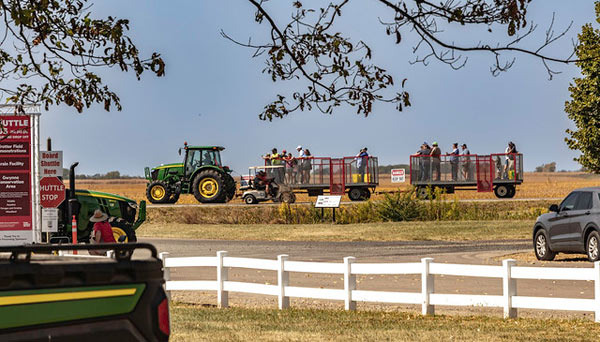
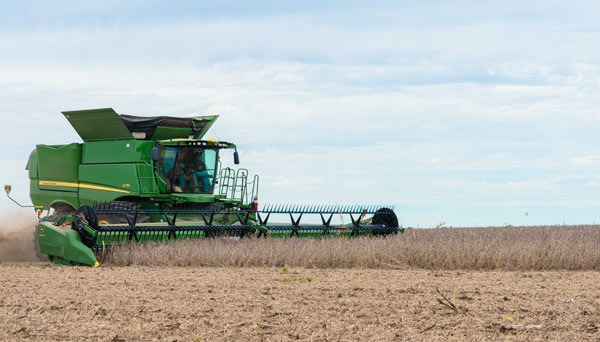
When you travel around Ohio, you see endless cornfields stretching out, with soybean fields beside them, and occasionally a red barn popping up. In fact, this is a common sight here, and honestly, it can be a bit dull. It is far from the image of a city, and there doesn't seem to be anything particularly interesting to see.
However, the people in this area may appear simple on the surface, but if you look deeper, you'll find many farmers who are quite good at making money.
Ohio is one of the top agricultural states in the U.S. The soil is stable, and there are relatively few natural disasters like extreme droughts or hurricanes, which lowers the risk of total crop failure.
When you hear stories from those who run large farms in Ohio, the numbers are quite different from what we typically think of in farming. Farms that manage thousands of acres of corn and soybeans can generate annual revenues in the millions of dollars.
However, this does not directly translate to income. After deducting costs for seeds, fertilizers, fuel, labor, and equipment payments, the net profit is only a portion of the revenue. Still, when the scale is large, the story changes. In a good year, a farm owner's personal income can reach between $300,000 and $700,000.
Therefore, farmers in this region are very good at calculations. They prefer crops that can yield similar profits each year rather than taking risks on high-stakes crops. The typical choices are corn and soybeans.
Honestly, it's not glamorous like harvesting expensive fruits or taking beautiful photos. However, with government subsidies, demand for feed, and ethanol production, as long as the scale is sufficient, cash flow remains stable.
On the surface, they may look like rural dads driving tractors, but in reality, they are people who check grain futures prices every day.
Another interesting aspect is pumpkin farming. When fall arrives, Ohio farms suddenly transform into event venues. They open pumpkin patches, create children's experience areas, set up hay mazes, sell apple cider, and invite people to come take pictures.
They don't make a lot of money from the pumpkins themselves, but rather from gathering people together to generate income. Farms closer to urban areas tend to do this well. There are cases where a small farm can earn a year's income in just two days of weekend sales.
Another staple is eggs. Not just any eggs, but free-range and organic eggs. Among Ohio farmers, there's a saying that those who raise chickens tend to be surprisingly wealthy.
When sold directly to consumers or at farmers' markets instead of through supermarkets, the price changes completely. Chickens require daily attention, but they also bring in cash almost every week. This is a rare business in farming with quick cash turnover.
And while many Koreans may not know, hay can be surprisingly profitable. Thanks to horse farms, riding clubs, and the leisure industry, demand remains steady. It's not flashy, and there's nothing to post on social media, but if contracts are well established, price fluctuations are minimal, and stress is lower. That's why hay farmers in this area tend to last a long time.
There was also a trend with CBD hemp that spread like wildfire. Many young farmers tried it and then walked away. People in this area move on without hesitation when trends pass. And they return to corn and soybeans. This is the Ohio style.
They don't push themselves too hard; they follow a method that works if the calculations add up. Although they may seem laid-back on the surface, the bank balances of these farmers are quite solid. Earning $100,000 a year is common. Of course, farming outside is hard work, but these local farmers seem to understand that it's better to earn steadily over time rather than aiming for big profits.
So, while Ohio farming may not look glamorous at first glance, it seems that there are many rural dads in Ohio who are good at math and make money.







 US Embassy |
 fortbliss |
 Folding Instructions |
 yentra |
 Cali M Law Group |
 fixed |
 Ohio Ohayoung Hello |
 MACCITON Real Estate |

 Atlanta Mama |
  Baguette Blog |
  Korean Mom |
  My NYC |
  moo moo |
  Mr Oh |
  forevergee |
  festival |
  manchester |
  constant |
  Leapfrog Move |
  vibranto |
  Tora Tora |
  yellowbutter |
  Dolly |
  NYC saladbar |
  Finding Superfoods |
  lightyear |
  song bang |