

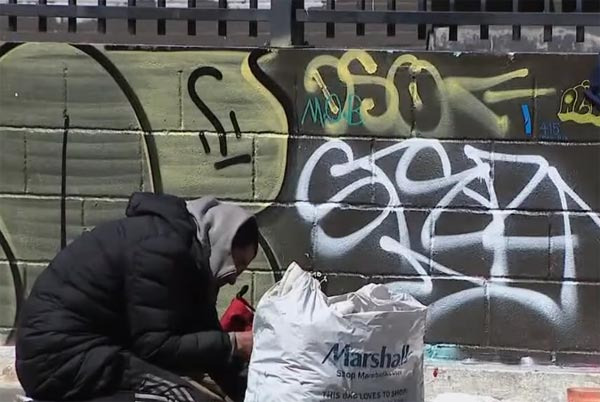
It seems that discussions about social issues in San Francisco now take precedence over stories about tourist attractions.
In the past, words like Golden Gate Bridge and Fisherman's Wharf would come to mind, but nowadays, terms like homelessness, fentanyl, and theft naturally follow.
Looking at the current atmosphere in San Francisco, it's clear that safety concerns have noticeably increased. The homelessness issue has been around for a long time, but recently, the addition of drug problems like fentanyl has made the situation much harsher.
Scenes where maintaining a normal daily life on the streets is difficult are frequently observed, and shoplifting is no longer a rare occurrence but feels like a part of everyday life. As this situation continues, it seems that Korean business owners are facing more direct impacts.
Those running retail or restaurant businesses are likely to feel this even more acutely. While declining sales are a problem, the greater issue is the sense of insecurity. They must constantly worry about when another theft might occur or whether customer numbers will drop.
Ultimately, this atmosphere is bound to affect the local economy as a whole.
Additionally, the incident involving the detention of legal permanent residents at the airport in 2025 was a significant shock to the Korean community. The fact that even those legally residing can experience unexpected situations at the airport acts as a source of anxiety.
In an environment where immigration procedures are becoming increasingly complicated, the impact on ordinary people cannot be taken lightly.
In this situation, it is meaningful that the Korean Association is stepping up to respond. They are not just pointing out problems but are actively working on safety measures and protecting rights, playing a central role in the community. Especially, communication with local authorities and responses through community organization are consistently needed, even if it takes time.
Another notable movement is the attempt to create a Koreatown near Japantown. This seems to go beyond simple commercial development, aiming to create a space where Koreans can gather more safely. While there have been areas with a high concentration of Koreans, the effort to build a more systematic community feels increasingly important in the current situation.
In fact, this trend does not seem to be unique to San Francisco. Similar changes are occurring in major cities across the U.S., and how each community responds is becoming increasingly important.
However, San Francisco seems to attract more attention due to the rapid pace of change and the significant impact felt.
From the perspective of the Korean community, the reality is that there are not many options. Leaving the area is one way, but it is difficult to easily give up the foundation built over many years.
That said, enduring without any response also has its limits. Ultimately, it seems that the only way forward is to defend themselves, connect with one another, and raise their voices.
In the end, the current San Francisco seems to be aptly described as a "city of endurance."
Change continues, and the Korean community must adapt to these changes. However, what's important is that this is not just an individual issue but a problem for the entire community.
One thing is clear: in a situation where safety, immigration issues, and community responses are intertwined, solving just one aspect will not improve the whole. Therefore, strengthening internal cohesion and realistic responses within the community is becoming increasingly important.




 Sugar Cream Door Bulletproof Noodles |
 Investment Campus Home Ownership |
 U.S. Retirement Pension Information |
 California Dreamer |
 Strawberry Pancake Warrior |
 The Emperor Must Grow |
 Nuchuhan Exploration BLOG |
 Mr. Largo |
  breezem |
  Omelet Rice for Strength |
  Vermont Capt |
  Softy |
  solid90 |
  waltz |
  Ohio Ohayoung Hello |
  parlon |
  Shoot Me |
  Michigan Enthusiast |
  festive |
  You Turn Me On |
  Supplemental Security Income (SSI) Information |
  Sams Market |
  ansdal |
  VVV 80 |
  BIODOCTOR NEWS |
  Gold Bar |
  Tamfa Fan |