


From my perspective as someone who has observed the Augusta real estate market for a long time, this city is experiencing quiet but steady changes centered around the cybersecurity industry, unlike its reputation for golf tournaments. With the establishment of the Cyber Command at Fort Eisenhower (formerly Fort Gordon) and the Georgia Cyber Center, the demand for related personnel has noticeably increased. While it may not have the national recognition of Atlanta, it is worth noting that Augusta is following a stable growth path centered around specific industries.
Looking at population trends, the Augusta-Richmond County metropolitan area is not experiencing explosive growth like Atlanta, but it is seeing a gradual net influx. The main drivers of population growth are related to cybersecurity, defense-related contract jobs, and the influx of medical personnel due to the expansion of the Augusta University Medical Center. The formation of a metropolitan living area with North Augusta in South Carolina across the river is also reflected in the demographic trends.
The industrial base is a mix of military and defense contracts, cybersecurity, healthcare, and manufacturing. Offices for related startups and defense companies are being established around the Georgia Cyber Center, and the Augusta University Medical Center is one of the largest employers in the area, providing stable jobs. In the manufacturing sector, the presence of chemical and textile factories that have maintained their employment base for a long time is also a notable feature.
Employment indicators show that the unemployment rate in the Augusta area has recently been around the mid-3% range, similar to the state average in Georgia, while income growth rates are relatively modest compared to larger cities like Atlanta. However, the wage levels for high-skilled jobs in cybersecurity are above the regional average, indicating that changes in the industrial structure are gradually being reflected in income indicators. In the healthcare sector, hiring for nursing and medical technology positions continues steadily, centered around the Augusta University Medical Center.
Infrastructure investments include the second phase expansion of the Cyber Center, improvements to the Augusta area road network, and the development of nearby industrial complexes. While attracting data centers is still in its early stages compared to larger cities, the potential for increased investment in the long term exists due to lower land costs and favorable power supply conditions. The riverfront redevelopment project in downtown Augusta is also being promoted, gradually stimulating demand for urban living. The significant increase in short-term rental demand during the annual Masters golf tournament is also cited as a unique aspect of the real estate profit structure in this area.
According to analyses from the Milken Institute and Moody's on small metropolitan areas, Augusta is generally assessed as a city that is relatively less sensitive to economic fluctuations due to its stable industrial base in defense and cybersecurity. However, the limited wage levels and population growth rate compared to larger cities are often pointed out as constraints on growth. It is also important to consider that changes in defense budget allocations still have a significant impact on the local economy.
From the perspective of Korean households, Augusta is seen as a market worth considering for those looking to balance stable residency with small-scale rental investments, due to its low entry price and lower cost of living. However, it seems more realistic to approach it with a focus on long-term holding and rental income rather than expecting capital gains at the level of larger cities.
 skycoastbuilder1954
 PinkCloud




 garlic bread |
 Sugar Cream Door Bulletproof Noodles |
 urbanmint |
 |
| 
 Premium Gas Camp |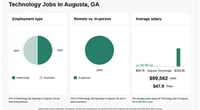
 Banana Style Life |
 Carolina border |

 Augusta Univ |
  draxen |
  gallery |
  milkyotter |
  Zoom Zoom Zoom |
  Minnesota Lakes and Clouds |
  noraro |
  tervox95 |
  vale vale |
  yentra |
  Golden life |
  andrew park |
  Peter Pan Pet |
  Balan |
  Cali M Law Group |
  neroyo |
  Dreams Come True as Desired |
  Khan Film Blog Production |
  coloradoman |
  Living Economy Information Blog |
  rustley |