

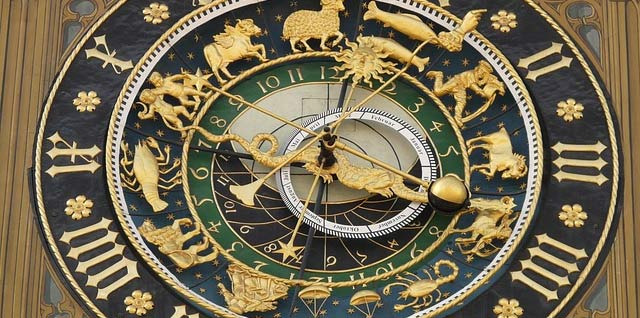
How much do Americans believe in zodiac signs, like Aries, Taurus, and Gemini?
When talking with American friends, many say, "Oh, it's just zodiac signs~ it's just for fun," yet surprisingly, many check their daily horoscope on their smartphone news apps.
So, do Americans really believe in zodiac signs? Or do they just look at them for 'fun'?
Zodiac Signs Are Already a 'Culture' in America
First, it's important to note that zodiac signs are already a part of daily culture in America. When living in the U.S., questions like "What sign is that person?" often come up during friend introductions. Why do they ask about zodiac signs in a country where they don't even ask about blood types? Because zodiac signs are seen as tools that explain personality, compatibility, and even lifestyle.
This trend is especially strong among younger Americans. Many millennials (born approximately 1981-1996) and Generation Z (born after 1997) view their zodiac sign as part of their 'identity.' According to a 2018 Pew Research Center survey, about 29% of American adults said they "somewhat believe" in astrology. This number increases among younger people, especially women and those who are religiously liberal or non-religious.
Another interesting fact: astrology-related apps have been quite popular in the U.S. for several years. The representative app 'Co–Star' recorded millions of downloads within a year of its release, and apps like 'The Pattern' and 'Sanctuary' are also gaining popularity. They are not just simple horoscope apps; they use AI to provide personality analysis, relationship advice, and dating tips. It's literally 'psychological counseling using zodiac signs.'
Why Are Americans Drawn to Zodiac Signs?
This is a really important question. Why are Americans, especially young people, drawn to zodiac signs?
First, they provide 'meaning' in uncertain times. Economic instability, job scarcity, climate crisis, pandemic... today's generation lives amidst too much chaos. In such situations, questions like "Why do I have this tendency?" and "Will I get along with this person?" arise. Zodiac signs offer a kind of 'hint' for these questions, providing comfort regardless of belief.
Second, they serve as tools for self-understanding and empathy. When someone says, "I'm a typical Virgo. I'm a perfectionist, so I get tired too," the other person can respond, "Ah~ that makes sense." Zodiac signs are used as a language of communication. Even if they are not scientifically proven facts, they serve as a connection that sparks conversation.
From a scientific perspective... well, astrology does lack academic grounding. The idea that zodiac signs influence human personality or fate is not a theory recognized in psychology or astronomy. Most researchers explain zodiac signs as an example of 'confirmation bias.' For instance, if a zodiac sign says, "You have strong leadership skills," it makes anyone feel good. It's also easy to find such traits in past experiences. Thus, people remember only the content that fits them and feel that it is 'true.'
However! That doesn't mean they are entirely useless. Many psychologists acknowledge that "zodiac signs can serve as a kind of self-reflection tool." They can be a frame for reflecting on one's tendencies or a starting point for life advice.
Nowadays, Zodiac Signs Are More 'Entertainment' Than 'Prediction'
These days, zodiac signs in America are no longer a means to predict the future. Instead, they are consumed as psychological content to understand oneself and have deeper conversations with friends. Documentaries and series related to zodiac signs often appear on Netflix, and videos like "This Month's Zodiac Horoscope" on YouTube garner hundreds of thousands of views. Twitter and Instagram are also flooded with memes like "Aquarius Relatable Memes."
Rather than seeing "fate" through zodiac signs, they provide content that allows one to observe various aspects of oneself and entertain the possibility of "maybe this could be true."
In conclusion, Americans do not absolutely believe in zodiac signs but rather accept them with a sense of fun and selectively trust them. Some enjoy it casually like a morning cup of coffee, while others seriously consider it when pondering their love life.
Even if they believe, it's not an absolute belief like religion, and even if they deny it, they might respond, "But it does seem somewhat accurate?" This is the American zodiac culture.
If you live in America, you might get asked, "What's your sign?" in your next conversation. And that question might surprisingly lead to a lot of discussions. Zodiac signs still exert a subtle yet significant influence in the daily lives of many Americans.






 HAWAII Korean Church News |
 Gorama Round |
 LIZ Legal Information Blog |
 Egg Steamed Pot |
 novapixel |
 Living in New Jersey blog |
 hoosierdaddy |
 Kim You Shin |
 Tonky |
  viroma |
  cookie |
  Live and that's it |
  Alright Twain |
  eatontown blog |
  Amore |
  linex |
  Balancework |
  laro90 |
  MEDBIO American Doctor Blog |
  SWAT TEAM BLK |
  DREAM BIG |
  frostbite |
  330 Forever My Love |
  El Dorado |
  dralix58 |
  Skydiving |