

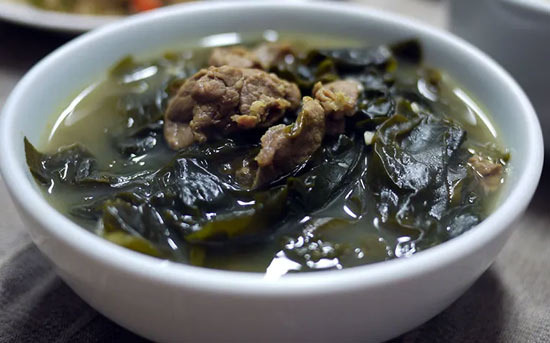
Sometimes, when I feel sluggish and low on energy, and there's nothing specifically wrong, I have days when my condition just isn't great.
On those days, I almost habitually make seaweed soup. Living in Denver, there are days when I crave Korean food even more, and especially when I'm not feeling well, seaweed soup strangely comes to mind first. After having a warm bowl and getting a good night's sleep, I often feel a bit lighter the next day.
As I live in Denver, I find that the older I get, the stronger the feeling becomes that seaweed soup is a food that comforts the body. The weather here is quite cold, with frequent snow and dry air that can make the skin feel tight and the body stiff. Additionally, Denver is a city at about 1,600 meters above sea level, which is relatively high. Newcomers often experience shortness of breath or headaches as their bodies adjust to the thinner air.
This environment can stress the body more than expected. Therefore, many people in Denver try to eat warm soups or nutritious foods during the winter. It turns out that seaweed contains a significant amount of minerals that our bodies need. Notably, it is rich in iodine. Iodine is a nutrient related to thyroid function, which affects the body's energy regulation. Supplementing these minerals when the body is tired can help with recovery.
Seaweed also contains a good amount of calcium and magnesium. These minerals help relax muscle tension. This might be why eating seaweed soup feels comforting when the body is sluggish.
Seaweed itself is also an easy-to-digest ingredient. Greasy or spicy foods can be burdensome on the stomach, but seaweed soup is relatively mild and light. With the warm broth, it's natural to feel a sense of comfort.
My method for making seaweed soup is very simple. First, I soak dried seaweed in water for about 10 minutes. This significantly increases its volume. After rinsing the soaked seaweed, I cut it into bite-sized pieces.
I add a little sesame oil to a pot and lightly sauté the seaweed first. This step is surprisingly important. Sautéing the seaweed before boiling it deepens the flavor of the broth. Once the seaweed is slightly wilted, I add water and bring it to a boil.
I usually add a bit of beef. It's fine to sauté the beef with the seaweed or to add the beef after sautéing the seaweed. Once the water starts to boil, I add a little soy sauce and minced garlic. It's best not to season too strongly, and I don't add green onions.
After simmering for about 20 minutes, the broth deepens in flavor, and the smell of seaweed soup fills the house. Just smelling it brings a sense of calm. Finally, I adjust the seasoning with a little salt, and it's done.
On days when I don't feel well, I prefer to eat a bowl of seaweed soup slowly rather than a lot of rice. When the warm broth goes down, I feel a bit more relaxed. And that night, I try to go to bed early.
Interestingly, the next day often feels much lighter than the previous one. Of course, a bowl of seaweed soup doesn't solve everything. However, eating warm, soft food and getting enough rest when the body is tired seems to aid in recovery.
So nowadays, when I'm not feeling great, I don't hesitate. I take the seaweed out of the fridge and quietly put a pot on the stove. Cooking a pot of seaweed soup strangely brings me peace of mind. And that night, I try to get a good night's sleep.
There's a reason I think of seaweed soup on sluggish days, and it seems that in our home, seaweed soup has become a kind of "recovery food."






 Kitchen Ideas |
 Yellow Snowman |
 Moscow Kim |
 Seattle - Emerald City |
 self-evaluation |
 LIZ Legal Information Blog |
 Your Curiosity Resolved |
 SWAT TEAM BLK |
 Jean Claude Bundang Blog |
 Self-Development Encyclopedia |
  sweetpepe |
  vegas mom |
  Olivia's Blog |
  cathywhite |
  heartbreaker |
  Giant Squid and Sweet Potato Soup |
  Valley Hong |
  The Gelaton |
  Twist Kim |
  berlon93 |
  Physical Laws and Science |
  good thinking |
  Solo Yolo |
  Mr Oh |
  laro90 |
  San Diego TOP Idol |
  Round and Round Children's Song Kingdom |
  American Golf Course Travelogue |
  MEDBIO American Doctor Blog |
  Hot Seat Driver |