

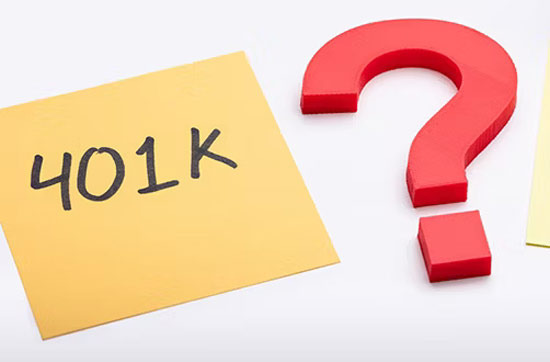
Living in the U.S., you often hear that "you must have a 401(k)."
However, not many people truly understand why it's beneficial and how to utilize it properly.
First, a 401(k) is simply a "retirement account that allows you to defer taxes while saving money."
While many companies offer it, the important point is that not all companies provide this benefit.
Since there is no legal obligation, especially small businesses or startups may not offer it at all.
In contrast, large corporations or stable small to medium-sized businesses often provide it as a standard employee benefit.
Additionally, many companies that offer a 401(k) in the U.S. also provide matching contributions.
Generally, most large companies have matching, and more than half of mid-sized companies do as well.
Overall, about 70-80% of 401(k) plans offer some form of matching.
However, small businesses often lack matching contributions or have lower conditions due to cost concerns.
Since the money put into a 401(k) is an investment, if the stock market crashes, the value will naturally decrease. The important thing is that retirement accounts are typically long-term investments of 10-20 years or more, so when the market recovers, the value usually goes back up. In fact, during downturns, you can buy more shares, which can be advantageous in the long run. The key is not to panic and withdraw in the meantime.
The structure of a 401(k) plan is simple. A certain amount is deducted from your paycheck and put into the 401(k).
This money is invested (in stocks, funds, etc.) and you do not pay taxes immediately.
Instead, you pay taxes when you withdraw the money after retirement.
This is beneficial because it allows you to defer taxes and pay them at a lower rate when your income is reduced after retirement.
What products you can invest in within the 401(k) are generally predetermined by the "company + plan administrator," and employees choose from those options.
When creating a 401(k) plan, companies select financial institutions like Fidelity Investments, Vanguard Group, or Charles Schwab.
These financial institutions set up a lineup of various funds.
But what if your company doesn't have a 401(k)? This is where an IRA comes in. It's a retirement account that individuals can set up themselves.There are forms like Roth IRA and Traditional IRA, and the tax treatment varies slightly.
The important point is that "even without a company plan, individuals can still prepare for retirement."
Now, let's move on to an important topic: self-employed individuals.
If you are a business owner aged 50, with a revenue of $400,000 and a net profit of $68,000, a 401(k) is not just an option but a strategy.
This is because this is the period when taxes are the most burdensome.
Self-employed individuals can utilize a "Solo 401(k)" or "Self-Employed 401(k)" instead of a regular 401(k).
The powerful reason for this is that one person can act as both "employee + employer" simultaneously.
As an employee, you can contribute about $23,000 annually (up to about $30,500 if you are over 50, including catch-up contributions), and as an employer, you can contribute an additional 25% of your profits.
Depending on the situation, you can contribute over $60,000 in total.
This simply means, "move the money you need to pay taxes on into a retirement account to reduce your immediate tax burden."
For example, if you put $50,000 into a 401(k), your taxable income decreases by that amount.
If we assume a tax rate of 25%, this results in a tax reduction of about $12,500.
This is already a benefit before any investment returns.
Another important point is compounding. The money in a 401(k) continues to grow without taxes.
In a regular investment account, you have to pay taxes every year, but a 401(k) grows until retirement.
The longer the time frame, the greater the difference becomes.
So, are there any downsides? Yes, there are. The money is tied up. If you withdraw before age 59.5, you will face penalties and taxes simultaneously.
Therefore, it is essential to keep your living expenses account separate from your retirement account.
In summary, employees should definitely take advantage of company matching if available.
If there is no company plan, you should prepare personally with an IRA. Self-employed individuals should actively utilize a Solo 401(k) for tax strategies.
Especially for business owners around age 50, this is the most critical timing. Income is high, and the time until retirement is limited.
How you utilize your 401(k) during this period can lead to significant differences in assets ten years down the line.
Ultimately, a 401(k) is not just simple savings but a "system that combines taxes, investments, and retirement strategies."
The difference in retirement strategies between those who understand and utilize this and those who let it pass by is substantial.
 NoodleDefense






 You Only Live Once |
 Texas Real Estate Blog |
 zentar |
 seouljung |
 AliAluAlo Blog |
 Rice Shop Uncle BLOG |

 Illinois Mom |
 Godory Life |
 Electricity Field Certification Collector |
  newyorker 101 |
  coffeee |
  |
|  Christopher |
  sylven |
  Sammy Beach |
  Bliss O |
  blue ocean |
  greenlight |
  Watanaka Karametibaksa |
  castle |
  xelton52 |
  carefree |
  vrixen73 |
  AZ Road Master |
  Victory 1988 |
  summita |
  business lim |
  Colorado Lee |
  Make My Day |