

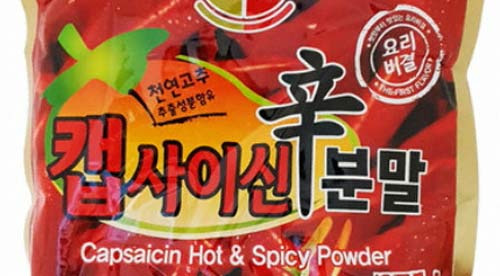
Those who have lived in the U.S. for over 20 years will know well.
In the past, the spiciest options were limited to Korean red pepper powder, the tingling Cheongyang pepper, or jalapeños sold at the grocery store. But these days, we see a flood of items like spicy tteokbokki, hell tteokbokki, nuclear fire chicken, and spicy jjambbong, and Korean grocery stores now have pure capsaicin occupying a spot in the sauce section.
So how are the trendy hell tteokbokki and nuclear chicken feet made? In fact, you can't achieve that flavor with just red pepper powder. If you add too much, it becomes thick and bitter. That's why restaurants mix in a very small amount of concentrated capsaicin sauce or powder.
And then they add a lot of sugar and corn syrup. When the brain perceives spiciness as pain, the sweetness neutralizes it, releasing dopamine. This creates an addictive quality that keeps you eating even though it's spicy.
First, what I'm most curious about is why capsaicin looks like sugar. Unlike the red fire chicken sauce we commonly see, when you extract pure capsaicin, it becomes a colorless, odorless white crystal.
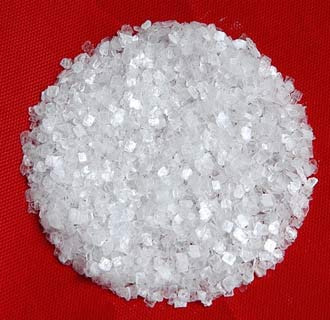
By drying and grinding the peppers, and then chemically separating and refining the spicy components, what remains at the end is this white crystal.
The red color of the pepper comes from pigments, but the spicy component itself is colorless. Just 1 gram of this white powder can produce the spiciness of dozens of kilograms of red pepper powder, making it like a super-concentrated container in logistics.
The problem comes the next day. Why do you struggle in the bathroom after eating capsaicin? Our body sees capsaicin as an irritant rather than a nutrient. So it doesn't absorb well and tries to expel it quickly.
This causes the peristalsis of the intestines to speed up dramatically. It heads straight to the colon without proper digestion. As it scrapes past the sensitive mucous membranes near the anus, it causes inflammation and dilates blood vessels. Those who already have hemorrhoids may burst, and even those who don't can experience tearing of the mucous membranes. The result is bright red blood. While endorphins are released in the mouth, the intestines are like a ticking time bomb.
When working in logistics, stress builds up, and I really crave something spicy. Sometimes, when I eat a burger loaded with jalapeños or a bowl of spicy jjambbong, I feel all my stress melt away.
But now that I'm in my 40s, I understand. The relief from yesterday's spiciness turns into today's bathroom confinement. Capsaicin can be a great seasoning when used in moderation, but too much can paralyze our digestive system, which is our body's logistics system.
To all the fellow countrymen struggling in a foreign land today, I hope you have a warm bowl of soup for dinner instead of spicy sauce to soothe your stomach. Your body needs to hold up so you can work hard tomorrow.





 Moscow Kim |
 Seattle - Emerald City |
 self-evaluation |
 Sandiego Auntie |
 Karina's Blog |
 Cherokee Rose |
 Dingho and USA News |
 Let's Be Like a Salt-like City Person |
 Gimmi207 Blog |
 moonshine 7 |
  vibranto |
  Tora Tora |
  yellowbutter |
  Dolly |
  US Embassy |
  NYC saladbar |
  Finding Superfoods |
  lightyear |
  song bang |
  vexomo |
  Indiana Jones |
  meloncat |
  novapixel |
  mortrix |
  Esther 1983 |
  fortbliss |
  My Two Way |
  toastyfox |
  FLORIDA Acus |