
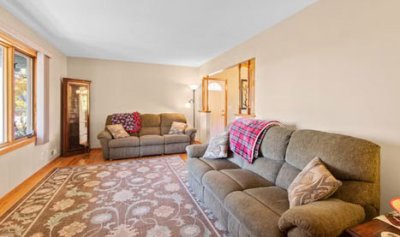
Last month, a buyer in Anchorage who received pre-approval had a credit score of 702 and was prepared with a 5% down payment. Although the approval was granted, the interest rate fell within the 6.91% range, and the monthly payment turned out to be higher than expected, ultimately requiring an adjustment to the offer price. This case illustrates how the amount of down payment not only affects approval but also impacts monthly financial burden.
The median home price in Anchorage has recently been around $428,000 over the past three months (a 3.1% increase compared to the previous year, according to Redfin as of May 2026). Based on this price, the minimum requirements for an FHA loan are $14,980 for 3.5%, $21,400 for 5%, $42,800 for 10%, and $85,600 for 20%. Starting with 3.5% or 5% reduces initial cash burden, but if the down payment is less than 20%, PMI, or private mortgage insurance, will be added to the monthly payment. Meeting the 20% threshold eliminates PMI and lowers the monthly payment, but it ties up a significant amount of cash, so this should be considered along with initial reserve funds for moving expenses.
Credit scores determine the interest rate brackets. A score above 780 qualifies for 6.59%, the 760 range for 6.66%, the 740 range for 6.75%, and the 700 range for 6.91%, affecting the average 30-year fixed rate (according to The Mortgage Report, as of July 2026). A difference of 0.3 to 0.4 percentage points can lead to tens of thousands of dollars over 30 years, so checking the credit report before making an offer is essential.
There are ultimately three ways to increase approval rates. First is DTI, or debt-to-income ratio, where conventional loans are typically accepted between 36% and 45%, and front-end DTI, which considers housing costs only, is stable below 28% (according to the Consumer Financial Protection Bureau). Second is pre-approval. In a market like Anchorage, where inventory is limited, making an offer without a pre-approval letter can often be disadvantageous. Third is to avoid new loans or job changes until closing and to maintain stable income documentation.
The effective property tax rate in the Anchorage borough is reported to be around 1.29% (according to propertytaxrates.org). For families coming from outside Alaska, it's easy to overlook that while there is no state income tax, property taxes and insurance are added to the monthly payment. The Alaska Housing Finance Corporation (AHFC) operates a Tax-Exempt and Taxable First-Time Homebuyer Program for first-time buyers and provides down payment or closing cost assistance in partnership with local agencies through AHELP. While the minimum down payment requirements are lowered, income criteria and eligibility requirements apply, so it's advisable to check with a loan officer.
Reserve funds are also a frequently checked item during the approval process. Borrowers should be able to show cash in their bank balance equivalent to several months of payments after closing, as this is often viewed as a sign of stable repayment ability by lenders. Alaska tends to have higher heating and homeowners insurance costs in winter compared to other regions, so it's wise to factor in fixed monthly expenses when determining the down payment ratio. Investors looking at rental income should also consider that Anchorage's rental demand is influenced by military population movements and seasonal factors. There is no guarantee that prices will continue to rise, so for investment purposes, it's safer to also consider vacancy rates and management costs.
In neighborhoods popular with Korean families, it's advisable to also check school district ratings. School district boundaries change frequently, so before making an offer, it's best to verify the assigned school for the address directly on GreatSchools or Niche. This article is not investment or legal advice, and it is recommended to consult with real estate professionals and loan officers before proceeding with any contracts or loans.
 MorningHarbor80
 SeaMedia








 moo moo |
 ultron78 |
 garlic bread |
 Sugar Cream Door Bulletproof Noodles |
 urbanmint |
 Alaska Salmon Buyer |
 Sunny's Travel in America |

 AL ALASKA |
  Giant Squid and Sweet Potato Soup |
  Valley Hong |
  The Gelaton |
  Twist Kim |
  berlon93 |
  Physical Laws and Science |
  good thinking |
  Solo Yolo |
  Mr Oh |
  laro90 |
  San Diego TOP Idol |
  Round and Round Children's Song Kingdom |
  American Golf Course Travelogue |
  MEDBIO American Doctor Blog |
  Hot Seat Driver |
  bryvexi |
  koala organic farm |
  riverstone |
  My Antonio |
  California Information News |