

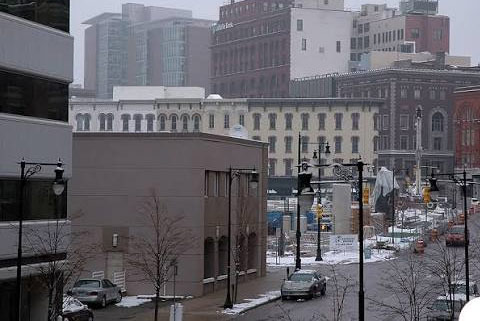
The weather in Grand Rapids, Michigan, has a unique climate strongly influenced by Lake Michigan.
Compared to inland cities at the same latitude, it receives significantly more snow in winter, while summer sees fewer extreme heat days due to the lake's moderating effect. According to data from the National Weather Service, Grand Rapids consistently ranks among the top cities in the U.S. for snowfall.
Spring (March to May) is a highly anticipated season in Grand Rapids. March often continues with winter weather, and snow can still fall. The average temperature in April is about 57°F (14°C) during the day and around 36°F (2°C) at night. By May, temperatures rise significantly, reaching an average high of about 67°F (19°C). This season is known for frequent spring rains, with precipitation levels in April and May being relatively high for the year. It is also the time when Michigan's specialty fruit trees, such as cherries and apples, bloom.
Summer (June to August) is the most pleasant season in Grand Rapids. The average temperature in July is about 83°F (28°C) during the day and around 60°F (16°C) at night, with lower humidity compared to summer in Korea and cooler nights. While temperatures exceeding 90°F (32°C) are rare due to the moderating effect of Lake Michigan, they are not completely absent. Precipitation is less than in spring, and there are many clear days, creating optimal conditions for outdoor activities. The beaches of Lake Michigan, located 30 to 40 minutes away, are popular summer getaway spots.
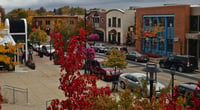
Autumn (September to November) is a beautiful season marked by fall foliage. September retains some warmth from summer, with average high temperatures around 74°F (23°C). In October, the fall colors peak, and average high temperatures drop to about 59°F (15°C). By November, temperatures drop sharply, and the first snow begins to fall. Michigan's autumn foliage is famous nationwide, and the fall colors in the forests and parks near Grand Rapids attract many visitors from afar.
Winter (December to February) is the most challenging season in Grand Rapids. Due to the 'Lake Effect Snow' phenomenon from Lake Michigan, it accumulates much more snow than other cities at the same latitude. The average annual snowfall in Grand Rapids is about 70 to 80 inches (180 to 200 cm), with the eastern suburban areas in the 'Snow Belt' receiving even more. The average temperature in January is about 30°F (-1°C) during the day and around 18°F (-8°C) at night, with the wind chill often making it feel much colder.
The annual precipitation is about 36 inches (approximately 910 mm), which is similar to or slightly above the national average. The total annual precipitation, combining rain and snow, is relatively evenly distributed throughout the seasons. It is also known as a city where fog occurs frequently, requiring caution while driving on certain days. The number of sunny days is about 155 per year, which is lower than the national average of 205 days. Particularly in winter, cloudy and snowy days tend to persist.
The weather in Grand Rapids has characteristics that are hard to gauge without experiencing it. Summers are pleasant and beautiful, but preparation for winter snow hazards is essential. Snow removal equipment, winter tires, and warm clothing are necessities for life in Grand Rapids. Residents who have adapted to the local weather often cite the distinct four seasons and winter sports culture as advantages.
 VeggieBoarder
 BingsuShow
 SnowLove



 moo moo |
 ultron78 |
 garlic bread |
 Sugar Cream Door Bulletproof Noodles |
 urbanmint |
  apricotla |
 carpflow |
 oneonly |
 icotla |
 So is multiplied by So, So Ji-sub |
  Where is a really nice neighborhood? |
  Real Estate |
  Forest Gump |
  Real Estate Investment Korean American |
  Dollydori, Lover of Movies |
  dmzline |
  travelo |
  American Food Information & Calories |
  Splendid Mission |
  sparklingo |
  Watch Walker |
  Soy Angelino |
  autumn |
  K-POP TV News |
  cortiva6 |
  Nevada Teppanyaki |
  aerion99 |
  Golado |
  Maximum Pro |
  Joyce blog |