

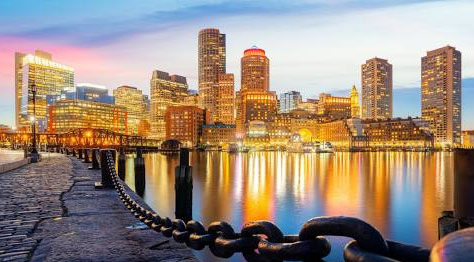
One of the biggest surprises for Koreans coming to Boston for the first time is, "Wow, there are a lot more Koreans here than I expected!" While there isn't a huge Korean town filled with signs in Hangul like in Flushing, New York, or LA's Koreatown, once you start living here, you'll find that Boston is one of the most densely populated areas of Koreans on the East Coast of the United States.
Boston is particularly unique compared to other cities. It is not just an immigrant-centered city; it has a strong presence of a 'highly educated Korean community' consisting of students, researchers, doctors, professors, engineers, and bio-researchers. With dozens of universities, including Harvard and MIT, and world-class hospitals and research institutions, new talent from Korea continuously flows in every year.
The current Korean population in the Boston metro area is estimated to be around 20,000 to 30,000. Some sources suggest that when considering the entire state of Massachusetts, the number exceeds 40,000. While it may not match the scale of New York or LA, the actual Korean network here is quite dense.
The areas where Koreans most frequently gather in Boston are Allston and Brighton.
These neighborhoods are close to Boston University (BU), making them popular among students, and they are home to many Korean restaurants, chicken shops, snack bars, cafes, and karaoke places. This is also where international students first settle upon arriving in Boston. On weekend evenings, you might hear more Korean than English in the restaurant areas.
Cambridge has a slightly different atmosphere. With Harvard University and the Massachusetts Institute of Technology located there, it has a large number of graduate students and researchers. You can easily meet Koreans working at major Korean corporations' research labs or bio startups.
Family-oriented immigrants prefer suburban areas like Lexington, Burlington, Malden, and Quincy. Lexington, in particular, is known for its excellent school district in Massachusetts, making it a popular choice for Korean families who prioritize education. Although housing prices are high, the educational environment is considered to be among the best in the country.
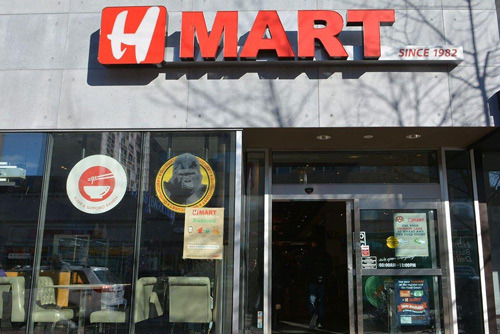
Finding Korean ingredients is not difficult at all. H Mart operates mainly in Burlington and Quincy, and there are also many small to medium-sized Korean markets scattered around. You can find most essential ingredients like kimchi, doenjang, gochujang, tteokguk tteok, and frozen dumplings. Therefore, long-term residents often say, "It's an old story that you can't find Korean food in Boston."
The Korean community is also very active. The Korean-American Association of Massachusetts organizes cultural events and volunteer activities, and each university's Korean Student Association (KSA) runs mentoring programs to help new international students settle in. Facebook and KakaoTalk open chats are filled with posts about finding housing, second-hand transactions, roommate searches, and job information every day.
The annual Boston Korean Festival is also one of the largest events in the local Korean community. It features Korean food booths, traditional performances, and K-Pop dance shows, attracting many Americans as well. This event makes it clear just how large and vibrant the Korean community in Boston really is.
Of course, the cost of living is not insignificant. Boston is considered one of the cities with the highest housing and rental prices in the U.S. In particular, Cambridge and downtown areas can demand rental prices comparable to New York. However, considering the world-class education, healthcare, research environment, safe suburban areas, and a strong Korean community, many find it to be an attractive city.
While Boston may not have a flashy Koreatown, it is surprisingly comfortable for Koreans to live in. Whether you are a student here to study, a professional working in hospitals and research institutions, or a family that has moved for children's education, you will soon meet other Koreans around you and discover familiar foods and communities. This is why many Koreans refer to Boston as "a city where a small Korean network is hidden within America."
 FlixFlex
 RubyStar
 CrazyTomato
 WebVideoPro
 HoneyBearUp
 SunnyField74

 moo moo |
 ultron78 |
 garlic bread |
 Sugar Cream Door Bulletproof Noodles |
 urbanmint |
 Tart Tart |
 tiramisu |
 bagel90 |
 lattecu |
 NO CAP LIFE |
  Korean Mom |
  My NYC |
  Mr Oh |
  forevergee |
  festival |
  manchester |
  constant |
  Leapfrog Move |
  vibranto |
  Tora Tora |
  yellowbutter |
  Dolly |
  US Embassy |
  NYC saladbar |
  Finding Superfoods |
  lightyear |
  song bang |
  vexomo |
  Indiana Jones |