

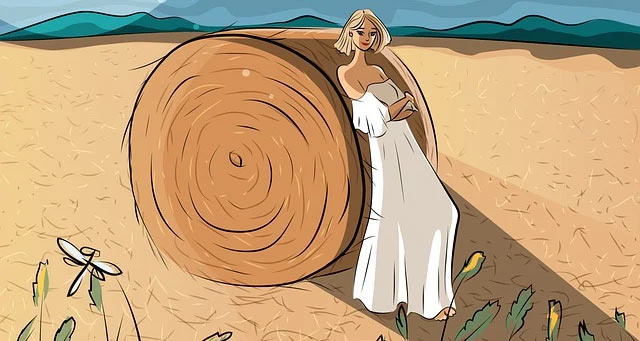
I am a graduate of Boston University College of Fine Arts.
Since I was young, I loved drawing, and when I decided to pursue art school, my father said, "You have talent, so it's okay to follow your path..." but his eyes were slightly filled with worry. And looking back now, I have to admit that his concern was not unfounded.
Majoring in Fine Art in the U.S. is, to put it frankly, the coolest yet most unstable major in the world.
Especially 30 years ago, in the 1990s or early 2000s, this path was a bit simpler than it is now. Gaining recognition as a painter was still difficult, but there were routes to enter galleries, ways to work as an artist, and systems for being hired as an illustrator by publishers or magazines.
In short, it was a time when "even if you were a non-regular worker, there was a market." But what about now? AI generation technologies have changed everything.
In the past, a 'person who could draw well' was truly a special existence. But now, AI can create landscapes, characters, and animations in a snap...
Artists like us, who are based in fine arts, have become even more ambiguous.
We lack flashy software techniques, are not commercial designers, and are not entirely conceptual contemporary artists either...
So nowadays, fine arts graduates find themselves in deep thought right after graduation.
"Can I keep doing this?"
"Is this path possible for me?"
"Am I really an 'artist', or just someone whose major is art?"
Friends who went into fine arts have very limited routes to realistically earn 'money'. They either attend artist residencies, contact galleries, participate in art fairs, or try independent sales based on social media. The problem is that all of this is far from economic stability.
In reality, many work as baristas in cafes or do freelance design while holding a brush. The situation for illustrators is somewhat better, but it's still not easy. Publishers or agencies outsource illustrations, but we are in an era competing with AI-generated images.
Clients who say, "We need your unique touch" are rare, and it's a reality that some say, "I can create a similar image with AI in 5 seconds."
Nevertheless, those who walk this path are definitely not just simple technicians. Drawing is about continuously training and expressing a perspective on the world. Ultimately, art is the 'language of the times.'
It conveys what text cannot, visually expressing human emotions, anxieties, joys, and pains.
That is still something only humans can do.
I believe the way for artists like us to survive in the future is to become image makers with our own language.
It's no longer an era where we wait for someone to choose us; we must become our own brand and build our own world to survive.
Fortunately, the tools that make this possible include social media, YouTube, online marketplaces, NFTs (which are almost dead...), and DIY exhibition culture where we can rent spaces to create our own exhibitions, which were not available before.
So, today's Fine Art majors need to become much more 'creative and flexible entrepreneurs' than in the past. The era of relying solely on a brush is over.
Of course, this isn't necessarily a good thing. In fact, it's a bit overwhelming, lonely, and an uncertain path.
Still, I want to keep drawing and express the world through my own perspective.
That stubbornness is what Fine Art majors like me possess, and perhaps it's the only strength to endure reality.


 Tart Tart |
 tiramisu |
 bagel90 |
 lattecu |
 NO CAP LIFE |
  Atlanta Mama |
  Baguette Blog |
  US Embassy |
  Korean Mom |
  My NYC |
  moo moo |
  Mr Oh |
  forevergee |
  festival |
  manchester |
  constant |
  Leapfrog Move |
  vibranto |
  Tora Tora |
  yellowbutter |
  Dolly |
  NYC saladbar |
  Finding Superfoods |
  lightyear |
  song bang |