

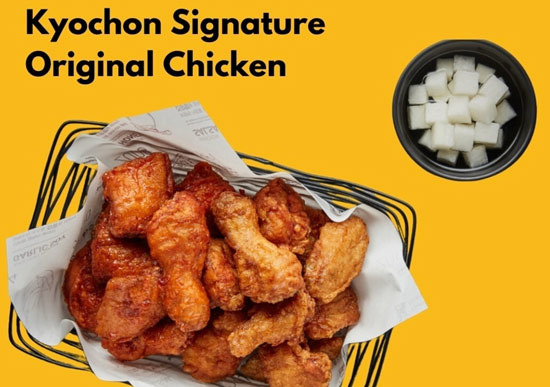
The reason why there's a joke that one in three chicken shop owners in Korea is a chicken shop owner is that it seems easy to start.
There are many franchises, and the cooking process looks simple, which makes people think, "I could do that too."
In fact, whether in Korea or the U.S., it's common to see several chicken shops clustered together. The structure requires competition in price, taste, and delivery speed, making it harder to survive than it seems. Costs like rent, delivery fees, and labor are continuously rising, making it increasingly difficult to turn a profit.
However, the reason why I fail to replicate the taste of Kyochon chicken at home or in small businesses is that it's not a recipe issue, but a system problem.
On the surface, it looks like a soy sauce and garlic sauce, but in reality, it involves ratios and processes that have been tested hundreds of times.
The frying process is not just a single step; it's a multi-step process divided by temperature and time, so you can't achieve the same texture with regular kitchen equipment.
The seasoning may look like a simple combination of soy sauce, garlic, and sugar, but it's actually more complex. It has a basic soy sauce base with various spices and sugars, and the ratios are very precisely calibrated. So, instead of just being salty and sweet, the flavors come in stages when you put it in your mouth.
First, you get the salty taste, then the sweetness, followed by the garlic aroma, and finally, the umami flavor lingers.
The reason why most home-cooked versions lean too much to one side is that they end up being either too salty or too sweet. This balance isn't something you can achieve by intuition; it's the result of hundreds of tests.
The method of applying the sauce is also not a simple process. The Kyochon style involves coating the chicken multiple times with a thin layer of sauce rather than dunking it all at once. This way, the exterior doesn't become soggy, and the crispiness is maintained. If you pour the sauce all at once like you do at home, the crispiness disappears in that moment. This is partly an equipment issue, but it also requires a certain level of skill.
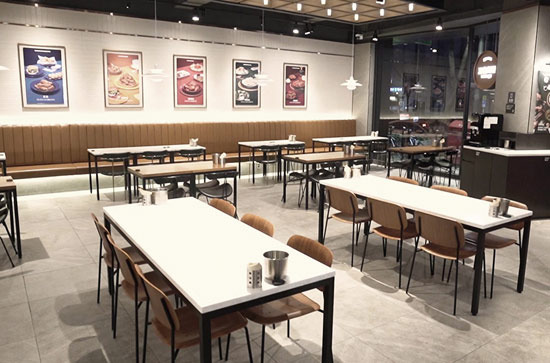
Ingredient management also makes a significant difference. The size of the chicken, its moisture content, and the degree of aging can completely change the outcome.
Franchises maintain consistent quality through a stable supply chain, but at home, the results can vary based on the condition of the chicken bought from the store that day. The same goes for frying oil. Stores filter and replace it regularly, but it's hard to manage that level at home.
Ultimately, it comes down to experience. The reason why the same recipe yields different results is precisely this aspect. The difference between someone who has fried thousands of times and someone who has only done it a few times is greater than you might think. Controlling the heat, timing, and recognizing color changes are areas that are difficult to learn and replicate just by reading.
So, it's not easy to replicate a brand like Kyochon in the U.S. It's a system that has been validated in Korea, but overseas, the rent, labor costs, and operational structures are different, making it more complicated. That's why there are often more cases of centralized operations by the headquarters or limited forms of expansion rather than individual franchises.
The conclusion is that the reason Kyochon doesn't taste the same at home is not because something is missing, but because the entire system is different.
The frying process, sauce development, coating method, ingredient management, and experience all combine to create the final product. So, while you can get a similar taste, it's actually normal that you can't achieve the exact same flavor.
Kyochon allows inquiries for starting a franchise in the U.S. online, but actual entry is often more feasible for companies with capital and operational experience rather than individual entrepreneurs. This is a strategy to maintain brand quality and operational standards, so if an individual simply thinks, "Should I try Kyochon?" it realistically isn't easy to enter the market.
In Korea, the situation is different, as the basic cost to start a Kyochon chicken franchise is around 130 million won, but with additional costs for rent deposits and rights, the total investment usually rises to between 170 million and 250 million won.
 USAToday




 My NYC |
 coloradoman |
 Living Economy Information Blog |
 Tomato Health Club blog |
 Banana Style Life |
 Toaster Pizza Magic Show |
 Baguette Blog |
 Total Beauty |
 Pirate Ship Popcorn Maker |
 ROLDU WAY |
  Tonky |
  viroma |
  cookie |
  Live and that's it |
  Alright Twain |
  eatontown blog |
  HAWAII Korean Church News |
  Amore |
  linex |
  Balancework |
  laro90 |
  MEDBIO American Doctor Blog |
  SWAT TEAM BLK |
  DREAM BIG |
  frostbite |
  330 Forever My Love |
  El Dorado |
  dralix58 |
  Gorama Round |
  Skydiving |