

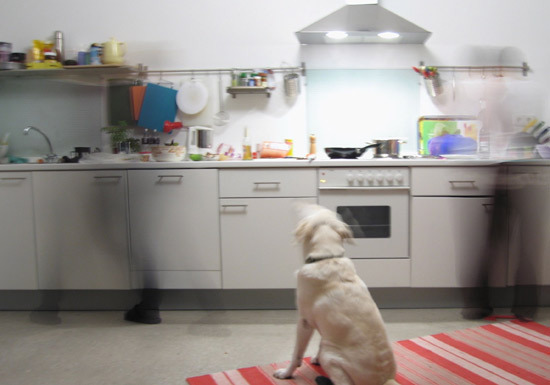
When raising a dog in the United States, you realize that the home structure is a paradise for dogs.
Most houses have an open layout connecting the living room and kitchen.
As a result, the kitchen naturally becomes the center where the family gathers, and the dog freely comes and goes there.
I used to think that our dog was just sitting alone in the kitchen, enjoying the smell of food, but since it loves being in the kitchen so much, it has become a routine to place its food bowl next to the kitchen island and fill its water bowl.
I also noticed designs where a dedicated dog food tray is placed under the island. It's like the dog's dining table is next to the human dining table.
The dog knows very well that there is food in the kitchen. Just the sound of the refrigerator door opening makes it rush over, and if food falls on the floor while cooking, it picks it up in the blink of an eye. I once had a scare when my dog swallowed a piece of onion sautéed in oil, knowing that onions are toxic to dogs.
Since then, I installed a baby gate at the kitchen entrance to restrict access while cooking. After meals, I immediately dispose of food waste in a covered container so the dog can't smell it.
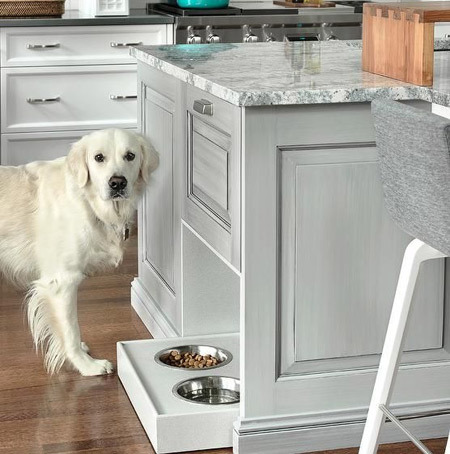
Another important thing is to 'separate' the eating space. If I feed the dog anywhere in the kitchen, it will end up begging next to me every time I eat.
So, I created a food station on the kitchen island. The water bowl and food bowl are on the same tray, and I keep the feeding times consistent. By making it recognize, "This is your spot," it doesn't leave that spot even if food falls. When people are eating, I say 'Stay,' and if the dog sits quietly, I reward it with a treat after the meal. With repeated training, the kitchen becomes a 'waiting space' for the dog as well.
These days, there are many dog-friendly kitchen designs. There are slide-out trays that can be pulled like drawers for food bowls, and even water dispensers that automatically refill. They look neat and are designed to be at the dog's height, reducing strain on their body. However, after meals, it's essential to wipe up moisture and leftover food. The kitchen is warm and humid, making it easy for bacteria to breed.
Another thing to pay attention to is kitchen hygiene. While it's natural for dogs to lick or sniff the floor, seasonings or oils that fall on the floor can be harmful to them. After cooking, I wipe the floor again and ventilate before the dog comes in. I also avoid keeping treat bags near the dining table, as even the smell of the packaging makes them try to tear it open.
Despite all this, the kitchen remains the place where the dog is happiest. It's where the family gathers, laughter fills the air, and food is made, all filled with delightful smells. The kitchen is probably the place where the dog wags its tail the most.
My dog also approaches me wagging its tail every time I open the refrigerator door, looking at me with a gaze that says, "What will you give me?" That look is so cute that when I give it a treat, it ends up waiting in the kitchen again.
In the end, I believe that managing a dog well in the kitchen means learning how to 'stay safely together' rather than 'keeping them out.' The kitchen is a place where smells, food, and family warmth come together, making it the most enjoyable place in the world for a dog.






 squidogame |
 Margarine Daebimama |
 eatontown blog |
 Living in New Jersey blog |
 Google Idea |
  US Embassy |
  NYC saladbar |
  Finding Superfoods |
  lightyear |
  song bang |
  vexomo |
  Indiana Jones |
  meloncat |
  novapixel |
  mortrix |
  Esther 1983 |
  fortbliss |
  Moscow Kim |
  My Two Way |
  toastyfox |
  FLORIDA Acus |
  tracker |
  TONTON COFFEE |
  sunrise |
  ultron78 |