
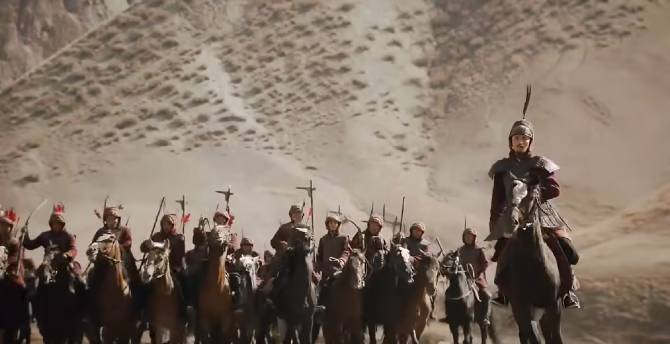
When I think of the stories from China's Warring States period, the first things that come to mind are the bloody wars and fierce power struggles.
Around 300 BC, the seven powerful states were fighting to claim the world, and that time was filled not only with the history of nations but also with the big and small stories of the people living within them. Farmers worried about their food for tomorrow, soldiers were anxious about when they would be dragged to the battlefield, and intellectuals and strategists wandered the land contemplating which lord to pledge their loyalty to. The joys and sorrows of people, not so different from us today, were contained within.
Recently, I discovered a drama on YouTube set against the backdrop of the Qin (秦) dynasty, which vividly captures the atmosphere of the Warring States period.
The most striking aspect was the computer graphics technology. The massive fortifications and grand battle scenes unfolded across the screen, and it was not just a dazzling spectacle but so intricate that it made me think, 'This era could have really been like that.' The armor and costumes worn by the actors looked incredibly realistic, as if they had thoroughly researched the details, and even the smallest decorations showed signs of careful attention.
The acting was also noteworthy. The heavy charisma of the king, the sharp gaze of the strategist, and the courage amidst the soldier's fear were naturally conveyed through the actors' expressions and dialogues. Rather than merely listing historical facts, the focus on the characters' emotions made it feel like I was peeking into the lives of people from that era, even though it was a drama.
The Warring States period is often easily summarized as the 'era of war,' but in reality, it was a time when numerous thoughts and cultures flourished.
Various schools of thought, such as Confucianism, Legalism, Daoism, and Mohism, were presenting their strategies to the kings and states, and diplomatic envoys were rushing to other countries to form alliances or plot betrayals almost daily. It was not so different from today's international political stage.
However, what I realized while watching the drama is that history is not just a record of the distant past. Even in 300 BC, people were undoubtedly living their lives. Farmers dreamed of tomorrow's harvest, generals prayed to return alive from the battlefield, and scholars wrote books to leave their names behind. And in the moment we revisit their stories through modern technology and the actors' performances, we come to realize that history is not just a collection of words but 'the stories of people who lived.'
Ultimately, the Qin dynasty unified the world, bringing the Warring States period to an end.
Yet, the countless thoughts and human struggles that accumulated during that process continue to influence us to this day.
While watching the YouTube drama, I came to understand that finding enjoyment in history comes not from learning about the past but from empathizing with the human aspects contained within it. And a good drama conveys that empathy much more vividly.




 Bacon King Blog |
 Bald Eagle Brothers |
 Seattle - Emerald City |
 PETRO Vatican Shrine |
 Real Estate Agent USA |
  Tonky |
  viroma |
  cookie |
  Live and that's it |
  Alright Twain |
  eatontown blog |
  HAWAII Korean Church News |
  Amore |
  linex |
  Balancework |
  laro90 |
  MEDBIO American Doctor Blog |
  SWAT TEAM BLK |
  DREAM BIG |
  frostbite |
  330 Forever My Love |
  El Dorado |
  dralix58 |
  Gorama Round |
  Skydiving |