

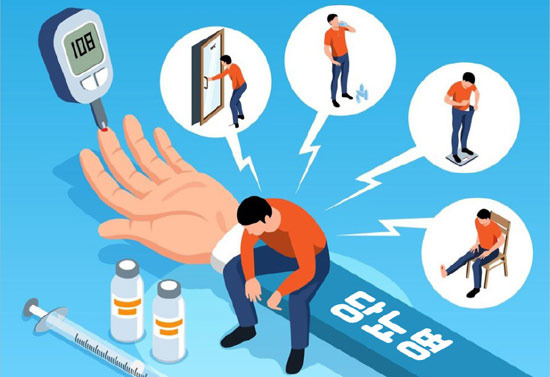
When you reach around 55, it's not just a saying that your body isn't what it used to be.
In your younger days, you could eat late-night snacks and still feel fine, and indulging in sweets didn't seem like a big deal, but now your body is starting to feel the strain.
Among the many concerns, diabetes is particularly troublesome.
Many people think of diabetes as just a condition of high blood sugar, but once it starts, the situation changes.
Once management goes awry, you have to pay attention to everything—diet, exercise, weight, sleep, and stress.
Especially when the pancreas starts to malfunction, it becomes really exhausting.
If it can't release insulin properly or if the body doesn't respond well to insulin, blood sugar quietly rises, and people realize it too late.
Type 2 diabetes occurs when the pancreas doesn't produce enough insulin or the body can't use insulin effectively, and the risk increases with age.
The CDC and NIDDK report that being over 45, obese, and lacking exercise are significant risk factors.
If you ask why diabetes is more common as we age, the answer is simpler than you might think: it's because the body ages.
The pancreas is an organ that works throughout your life, so it ages too. As you get older, it can't release enough insulin into the bloodstream, and the body's cells become less sensitive to insulin signals.
This is called insulin resistance, which simply means that the efficiency of processing blood sugar decreases.
Moreover, as you age, muscle mass decreases and belly fat tends to increase. An increase in abdominal fat worsens insulin resistance.
So even if you eat the same amount as before, your body processes it much less efficiently.
The risk of insulin resistance increases with age, and obesity and lack of activity further heighten that risk, as confirmed by various studies.
When you add lifestyle patterns into the mix, diabetes becomes an even more pressing issue.
In your 20s and 30s, you were more active, but after 50, you tend to sit more, and exercise keeps getting pushed to tomorrow.
Stress from work and life doesn't decrease; instead, it often increases, and physical strength tends to decline, making it easier for stress to accumulate.
Concerns about money, family, and health all come to the forefront at once.
There are more nights when you can't sleep deeply, leading to late-night snacks or a diet heavy in carbohydrates becoming a habit.
Your body is moving less, but sugar keeps coming in, making it hard for blood sugar to stay stable. The scary thing about diabetes is that symptoms can be delayed.
Often, there are no symptoms until it has progressed significantly.
In fact, the CDC explains that symptoms of type 2 diabetes may not be noticeable, and the risk increases with age.
The real fear comes next: the fact that high blood sugar isn't just a number.
If not managed, it can affect the eyes, kidneys, nerves, and heart.
So diabetes isn't just about eating less sugar; it's a matter that can affect the quality of life for the rest of your life.
When you reach around 55, it's not a time to be stubborn. The moment you think you can still endure like before, your body will rebel first.
According to CDC data, the prevalence of diabetes increases with age, and it's even higher in those over 65.
So the conclusion is to reduce belly fat, increase walking time, manage weight, and not put off blood sugar tests just because you feel tired.
If you're over 40 or have risk factors like obesity or lack of exercise, it's important to check regularly even if you have no symptoms.
Diabetes is much easier to manage in the early stages, and the longer you wait without knowing, the more it wears you down. When the pancreas is damaged, it's really painful.
As you age, health is not something you can rely on confidence for; it's about being proactive and managing it consistently.
 SinbadInsure







 Jimbeam 88 |
 Taco Bell Candy Note Blog |
 Splendid Mission |
 Florida Gario |
 DelphiaMo |
 American Grape Shine Muscat |
 Texas Migration Story |
 digital |
  timemachine |
  Starry Eyes |
  Desert King |
  Texas Real Estate Blog |
  U.S. Retirement Pension Information |
  Seattle - Emerald City |
  Unknown Dog Walk blog |
  California Dreamer |
  Bearded Strawberry Smoothie |
  JESIKYEOALBA BLOG |
  Heart Ticker |
  Jellia Angel |
  Moo Tang Clan |
  Khan Film Blog Production |
  yenne |
  neroyo |
  Peter Pan Pet |
  solvix18 |