

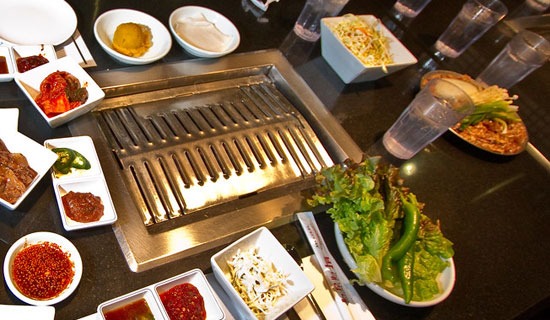
In America, especially in large cities like Philadelphia, running a restaurant targeting the Korean community is, to be honest, a survival game.
It's not uncommon to see a Korean restaurant fail within a year of opening, and I have often witnessed rental inquiries posted on restaurants that have managed to survive for a few years. Watching this repeatedly makes it clear that it's not just about the individual owner's abilities, but rather that the structure itself is too harsh.
The fundamental issue is that the market is too small. The Korean population is unlikely to suddenly increase, and in fact, there are many neighborhoods where it is decreasing.
Yet, new restaurants continue to emerge. The problem is that the opening of a new restaurant does not mean an increase in customers; rather, existing customers are just shifting from one place to another. The pie remains the same, but the forks keep multiplying. So, when you walk around Koreatown, you see a plethora of tofu soup, jajangmyeon, and chicken places. It's like a business war among owners, each trying to attract the regulars from one another, and customers ultimately make very cold judgments based on prices and service.
On top of this, generational change adds another layer. The first-generation elders who used to fill the restaurants are now dining out less and are busy with hospital visits. In contrast, the 1.5 and second generations, to be honest, are not as obsessed with Korean food as their parents were. These young people care more about the atmosphere, decor, music, and Instagrammable moments.
Spaces that are good for posting on Instagram and have a nice atmosphere for bringing friends are the criteria. If there's just a Korean menu and the staff only speak Korean, that creates a psychological distance from the moment you walk in. For the younger generation, it becomes an awkward space to enter.
What about operating costs? Since the pandemic, prices in America have become like a different world. The costs of ingredients, labor, and rent are all rising, but menu prices cannot be raised freely. In the past, families would come together to reduce labor costs, but nowadays, who works twelve hours a day at their parents' restaurant? Finding a skilled chef is like picking stars from the sky, and ultimately, the owners end up overworking themselves, damaging their backs, knees, and stomachs, and spending all their earnings on medical bills—a scenario that is all too common.
Even more critical is the failure to enter the mainstream market. There are still many restaurants that only cater to Koreans. Their English menus are lacking, allergy information is absent, and their reservation systems are outdated. Nowadays, customers rely on Google Maps, photos, and ratings. If a restaurant doesn't show up in searches, it doesn't exist. In contrast, Korean food franchises and food courts backed by large corporations push through with systems. Everything from design, marketing, flow, and menu composition is calculated, and local Korean restaurants are swept away by that tide.
Finally, the most painful point is the lack of investment in change. They mistakenly think that keeping the menu and concept the same for ten years is tradition. However, tradition and identity are not the same. If you don't research local tastes, don't market, and don't improve the space, customers will quietly disappear. One day, you open the door and find no customers, and that continues for days or months until a rental inquiry is posted.
Now, restaurants are not just places that sell food. They are places that sell experiences. They sell photos, atmosphere, service, convenience, and emotions all together. The reason Korean restaurants close is not because the food is bad, but because they fail to read the flow of the times. If they don't break free from the narrow view of only catering to Koreans and naturally blend into mainstream society, there is no solution.
Right now, you need to look at the menu from a foreigner's perspective and listen to what young customers are saying.
That is the only way to survive.






 Korean Mom |
 novapixel |
 Peter Pan Pet |
 horse |
 Sunset Oregon |
 Northeastern |
 Nationally Certified Lightning Charcoal Review |
 sparkling |
 American Grape Shine Muscat |
 U.S. Weather Bureau News |
  dralix58 |
  Gorama Round |
  Skydiving |
  dreamport |
  Yellow Snowman |
  Toaster Pizza Magic Show |
  velvetnom |
  Anytime Journey |
  Mrs. Duluth |
  jaxter |
  Atlanta Mama |
  Baguette Blog |
  US Embassy |
  My NYC |
  moo moo |
  Mr Oh |
  forevergee |
  festival |
  manchester |