
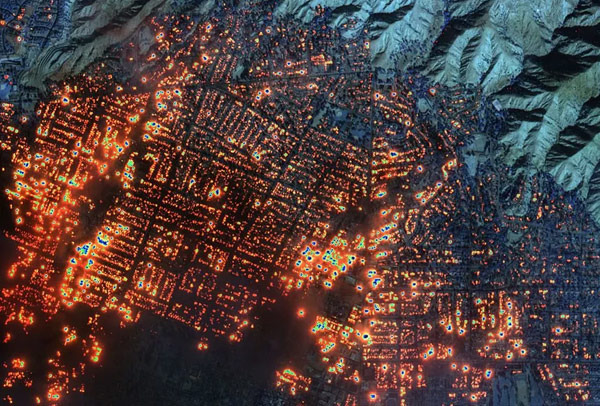
I will discuss the major wildfires that struck Los Angeles (LA), the largest city in the western United States, and the resulting insurance issues.
The recent wildfires are expected to cause astronomical damages exceeding at least $50 billion in the LA area. In particular, concerns are growing that the recovery and compensation processes will become even more difficult as it has been revealed that insurance companies have been reducing the scale of home insurance in this area over the past few years.
According to Bloomberg, major private insurers have been effectively withdrawing from California due to the cost burden from the surge in fires in recent years, even before the occurrence of these wildfires. State Farm General, California's largest private insurer, announced last March that it would not renew insurance contracts for 72,000 homes and apartments across the state. Notably, in the Pacific Palisades area, 69% of State Farm's insurance contracts were canceled, showing a significant impact.
This withdrawal of insurers is a result of the increasing wildfires in the western region due to climate anomalies, making it difficult for insurers to maintain profitability. The New York Times reported that after incurring costs equivalent to 25 years of profits due to major fires in 2017 and 2018, insurers began to reduce home fire coverage contracts.
The California authorities have taken measures such as temporarily banning private insurers from canceling insurance contracts for homeowners in wildfire-affected areas, but this has not prevented the mass exodus of insurers. According to a report from the state assembly last month, the rate of canceled home insurance contracts in California has been increasing annually since 2020, and many counties are currently recording the highest rates of insurance renewal refusals in the United States.
Homeowners who have been denied insurance contracts are being covered by the 'FAIR Plan' provided by the California state government, which is the last resort for insurance coverage. The FAIR Plan is more expensive than private insurance and has limited coverage, but as of September last year, the number of enrollments increased by 61% compared to the previous year. In particular, in the Pacific Palisades area, the number of FAIR Plan enrollments is expected to nearly double to 85% in 2024 compared to the previous year. However, Michael Wara, a senior researcher in climate and energy at Stanford University, pointed out that the FAIR Plan does not have sufficient resources, systems, or personnel to adequately compensate for the damages from the recent LA wildfires in the short term.
According to Bloomberg, the FAIR Plan's surplus cash is reported to be $200 million (approximately 291.2 billion won), and the reinsurance amount is $2.5 billion (approximately 36.41 trillion won), but experts are skeptical about whether these resources are sufficient to cover the latest wildfire damages. The FAIR Plan claimed in a statement that "it can pay all guaranteed insurance amounts through payment mechanisms, including reinsurance," but concerns about funding shortages continue to persist.
The already troubled insurance market in California is facing the possibility of even greater damage due to these wildfires. The New York Times reported that if the FAIR Plan lacks sufficient funds to pay insurance claims, it could collect funds from private insurers operating in California, which could place additional burdens on insurers that are already facing deteriorating financial health, leading to more insurers withdrawing from California.
Los Angeles is suffering significant damage from the aftermath of these wildfires, and the withdrawal of insurers and the increased burden on the state insurance system are making recovery efforts more difficult for local residents. Southern California is facing two challenges: the recent major wildfires and an unstable insurance market, and the resilience of the community and the effective response of the state government will play a crucial role in overcoming this crisis.




 Weekend Movie Blog |
 Beauty, Health, Lifestyle Blog |

 coloradoman |
 Superman Cat Blog |
 Noodle Noodle |
  Tonky |
  viroma |
  cookie |
  Live and that's it |
  Alright Twain |
  eatontown blog |
  HAWAII Korean Church News |
  Amore |
  linex |
  Balancework |
  laro90 |
  MEDBIO American Doctor Blog |
  SWAT TEAM BLK |
  DREAM BIG |
  frostbite |
  330 Forever My Love |
  El Dorado |
  dralix58 |
  Gorama Round |
  Skydiving |