

As I age, my back hurts, and while driving, I find it hard to see road signs.... My eyesight seems to be getting worse.
However, if I can't drive in Texas, it's like being confined at home, so I absolutely cannot give up driving.
Recently, two police cars showed up at my neighbor's house.
I wondered what was going on, and it turned out he had an accident at an intersection and left the scene, similar to a hit-and-run, which led to the police coming and issuing a fine, resulting in his license being suspended.
In Texas, they don't automatically take away your license just because you're elderly. But once you have an accident, the story changes.
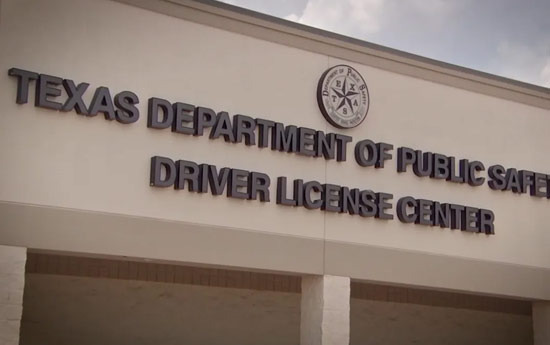
For example, if there are doubts about your fitness to drive after an accident, the Texas DPS (Department of Public Safety) can immediately require a medical evaluation.
Of course, if you recover well after the accident and handle the insurance properly, you should be fine. But what if you have no insurance and don't compensate for damages?
In that case, suspension or revocation of your license is quite possible. Especially if you leave the scene of an accident... Yes, then you have to give up your license.
These days, there is also something called a 'voluntary driving assessment.' It's not mandatory, but if your family is worried, suggesting this can be a good idea.
For instance, my father-in-law is 78 years old, and he voluntarily said, "I won't drive at night anymore."
And crucially, if a report is made that an elderly person is unfit to drive, it can become a real headache.
If the police file an 'Unsafe Driver Report' with the DPS asking, "Is this elderly person safe to drive?", a detailed investigation will follow.
In this investigation, if the conclusion is 'Hmm... this seems a bit dangerous,' restrictions may be placed on the license.
For example, conditions like 'can only drive within 10 miles of home' may be imposed.
Or it could be 'can only drive during the day.'
If you have a family member you are worried about, what should you do?
First, consulting a doctor is the best option. An objective evaluation from a third party is necessary.
And if possible, suggest a voluntary driving test. If persuasion fails, formally reporting to the DPS is also an option.
Of course, this requires a significant decision, but it's better than facing a bigger problem after an accident.
These days, I also think, "How long can I keep driving on this road?"
When I was younger, as soon as I got my license, I thought, "Now I am truly an adult!" But now, I look in the mirror and think, "My eyesight isn't what it used to be..." as a middle-aged person.
Driving in Texas is not just a means of transportation.
It is a 'way of life' and a 'symbol of freedom.'
So, to protect that freedom, we need to check ourselves and, if necessary, have our families help us.
If you are reading this and have worried parents or relatives, consider having a conversation with them.
While it's important to grip the steering wheel tightly, what's even more important is 'safety.'
In Texas, especially in cities like Houston where you can't go anywhere without a car, 'license suspension' is not just a simple administrative action; it could be the start of a prison sentence.
So, after a car accident in Texas, please stay alert and make sure to take the necessary actions.






 U.S. Weather Bureau News |
 Things to know |
 Texas Real Estate Blog |
 Premium Gas Camp |
 Texas Migration Story |
  Tonky |
  viroma |
  cookie |
  Live and that's it |
  Alright Twain |
  eatontown blog |
  HAWAII Korean Church News |
  Amore |
  linex |
  Balancework |
  laro90 |
  MEDBIO American Doctor Blog |
  SWAT TEAM BLK |
  DREAM BIG |
  frostbite |
  330 Forever My Love |
  El Dorado |
  dralix58 |
  Gorama Round |
  Skydiving |