
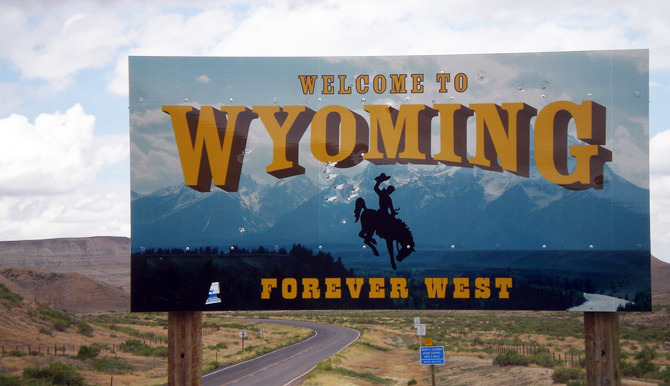
In the history of the American West, Wyoming is a land with a particularly unique character.
While many think of California, Nevada, and Arizona when they hear about the West, the true history of westward expansion lies here.
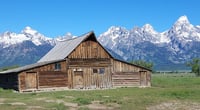
On the map of the United States, within the rectangular state borders, vast plains, rugged mountains, and wind-swept prairies coexist. Although the area is large, the population is just over 600,000, making it one of the least densely populated regions in the country. Therefore, when people talk about Wyoming, they often refer to it as "a quiet land under a wide sky."
Looking back at the history of this place, we first encounter the stories of the Native Americans. Various tribes, including the Shoshone, Arapaho, and Crow, moved across this land, living by hunting and trading. The paths they walked and the hunting grounds they used later became railroad lines and wagon trails, ultimately laying the foundation for the westward expansion of the United States.
As European settlers arrived, towns were established, train stations were built, and shops and ranches sprang up around them.
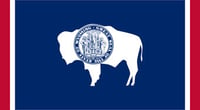
In the late 19th century, Wyoming emerged as a center for ranching. The image of cowboys herding cattle across the vast prairies remains a symbol of Wyoming to this day. The stories of settlers riding on cattle and horses across the dusty land have served as the backdrop for numerous Western films and literary works. After being organized as a territory in 1868, it was officially elevated to the 44th state of the United States on July 10, 1890, and people referred to it as "the last frontier of the West."
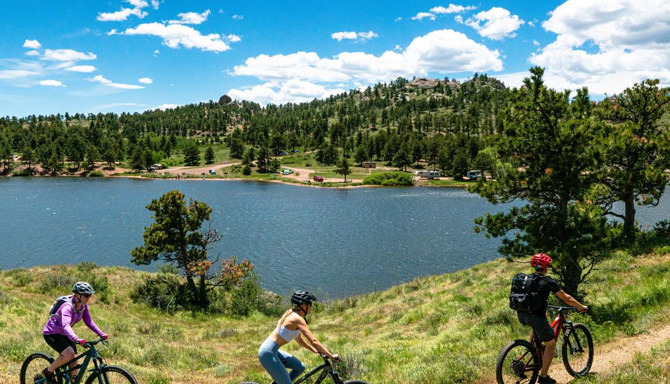
However, Wyoming has not remained merely a frontier. This state was the first in American history to grant women the right to vote. In 1869, the Wyoming Territorial Legislature passed a bill stating that "all women shall have the same right to vote as men," earning it the nickname 'Equality State.'
Home to Yellowstone National Park and numerous geysers, canyons, lakes, and hot springs, this area is also the site of the first national park in the United States and the birthplace of the conservation movement. Rich in coal, natural gas, and minerals, it was a major transportation hub during the railroad era and is now moving towards wind and renewable energy development.
Today, Wyoming is one of the least populated states in the U.S., with a focus on a relaxed rural lifestyle rather than urbanization. The Asian and Korean population is only a few hundred, making up a very small percentage of the total population.
As a result, when Koreans meet in Wyoming, a natural atmosphere of greeting each other is formed. Koreans mainly reside near college towns like Cheyenne or Laramie, with most engaged in small businesses or professional occupations.
Ultimately, Wyoming can be said to be the place that has preserved the spirit of the American West the longest. Here, traces of pioneering, the spirit of equality, and a life lived in harmony with nature are all intertwined.



 Real Estate |
 yenne |
 MAX009 BLOG |
 FROM Wyoming |
 logger |
  citrus pop |
  Onion Ring |
  phoenixia |
  viewtop |
  loverun |
  Kim Do Sun |
  SEVEN SEVEN |
  yentra |
  Make My Day |
  Victory 1988 |
  Tonky |
  viroma |
  cookie |
  Live and that's it |
  Alright Twain |
  eatontown blog |
  HAWAII Korean Church News |
  Amore |
  linex |
  Balancework |