
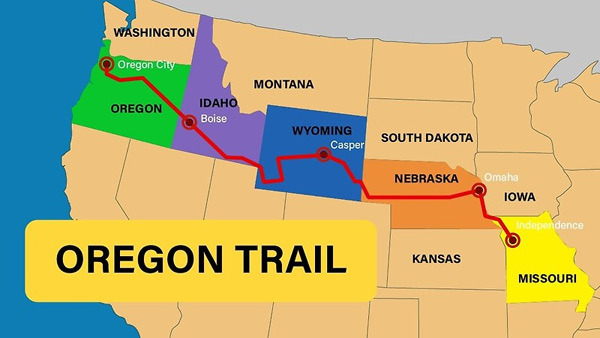
The section of the Oregon Trail that pioneers found most challenging was Wyoming.
Starting from Missouri and crossing the plains of Nebraska, the shadow of the Rocky Mountains appears as a symbol of entering the 'West', and from that point on, the real hardships began. Endless prairies, desolate hills, and rocky mountain paths made every day feel like a battle. During the day, the sun blazed, and at night, temperatures dropped sharply, leading to a cycle of being soaked in sweat during the day and freezing at night.
The Wyoming region was windy and water was scarce. Fragrant shrubs known as 'sagebrush' grew, but beneath them lay only dry soil and rocks, making it difficult to find even a sip of water. Even when rivers were present, the currents were often strong or deep, leading to many wagons being swept away. Crossing the North Platte River and the Sweetwater River was particularly dangerous, as wagon wheels could get caught in the current, resulting in lost supplies or families being swept away by the river.
Another major trial was the mountain passes. The 'South Pass' in central Wyoming was a key route over the Rocky Mountains, which rises over 2,000 meters above sea level. Once snow began to fall, the path could become blocked, and if the timing was off, travelers could become trapped in the mountains. In fact, many perished from freezing or starvation while attempting to cross that pass. Nevertheless, people encouraged each other, saying, "Just a little further and we will reach Oregon."
Days continued with strong winds that could blow tents away, and it was difficult to even start a campfire. When food ran low, they resorted to hunting buffalo or rabbits, or even scraping together leftover flour from abandoned wagons to make porridge. Children feared the cold more than hunger, while adults worried every night about the next day's journey. Yet, they persevered for the sake of their families. With the hope of providing a better future for their children in a new land, they crossed the rugged Wyoming terrain.
Today, as you travel through Wyoming, you can see signs for the 'Oregon Trail' set between vast prairies and lonely hills. It may seem like a barren wasteland to anyone, but the path is soaked with the footsteps and tears of countless people. Now, it takes just a few hours to drive through, but in the past, it was a road where lives were at stake. Thus, the winds of Wyoming still seem to carry their breath, and it feels as if their voices saying, "Just a little further to go" are mixed in with the breeze.





 nixxon |
 Real Estate |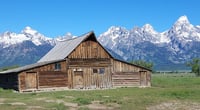
 logger |
  Tora Tora |
  yellowbutter |
  Dolly |
  US Embassy |
  NYC saladbar |
  Finding Superfoods |
  lightyear |
  song bang |
  vexomo |
  Indiana Jones |
  meloncat |
  novapixel |
  mortrix |
  Esther 1983 |
  fortbliss |
  Moscow Kim |
  My Two Way |
  toastyfox |
  FLORIDA Acus |
  tracker |