

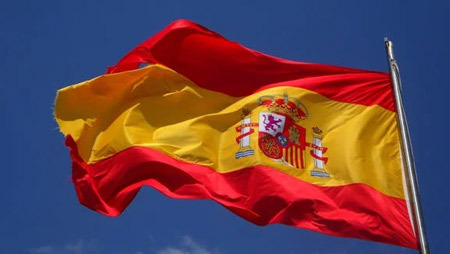
The history of Spain's colonization of America is truly dramatic, filled with stories like a grand novel.
Starting from the late 15th century with Columbus's 'discovery' of the New World, this history is not just a record of voyages but significantly changed the fate of Europe and the Americas.
In 1492, Christopher Columbus crossed the Atlantic with the support of Spain. Until then, people knew the Earth was round, but they knew almost nothing about the New World. Columbus arrived in America but believed until his death that he was near India (the irony of history!).
Spain began to actively claim the lands 'discovered' by Columbus, and the Treaty of Tordesillas (1494) signed at that time is very important. In simple terms, it was a treaty that established a boundary between Spain and Portugal over the New World. Thanks to this treaty, most of the Americas, except for Brazil, came under Spanish influence.
Afterward, Spain pushed for colonization throughout the Americas. Notably, the conquest of the Aztec Empire by Hernán Cortés in Mexico and the downfall of the Inca Empire in South America by Francisco Pizarro are famous events. During this period, Spanish conquerors were called 'conquistadors.'
One of the governing systems established by Spain in the Americas was called 'encomienda.' It was a system where colonial rulers or individuals were granted a certain area and the labor of the local indigenous people, in exchange for providing them with religious education and protection. In reality, it was a way to exploit the labor of the indigenous people. As a result, indigenous people had to work under harsh conditions, and many lives were lost due to disease and mistreatment.
Another characteristic of Spanish colonies was the active involvement of Catholic missionaries. Orders like the Jesuits and Dominicans spread religion to the indigenous people and established schools and hospitals, bringing about various changes, but at the same time, it led to the destruction of the indigenous culture and traditions.
As Spanish colonial rule continued, a complex mix of populations emerged across the Americas, including people from Europe (from Spain or their descendants), indigenous people, and those brought as slaves from Africa. The influence of this mix remains today, forming a unique culture in Latin America based on Spanish language and Catholic traditions.
Of course, over time, the American colonies began to resist Spanish rule and launched independence movements. In the early 19th century, countries like Mexico, Colombia, Venezuela, and Argentina declared independence one after another, leading to the decline of Spain's colonial empire.
In summary, the history of Spain's colonization of America was a forced exchange that began under the name of 'discovery,' marked by large-scale conquest and domination. While this process led to the fusion of new cultures, it inflicted great sacrifices on the indigenous people, and the scars and legacies of colonial rule continue to this day.
When Mexico Gained Independence from Spain
Mexico became a Spanish colony in the early 16th century when Hernán Cortés conquered the Aztec Empire. Subsequently, a vice-royalty called 'Nueva España' (New Spain) was established, and it remained under Spanish rule for a long time. However, the long-standing ethnic and class grievances, combined with the chaos in Spain after Napoleon's invasion in 1808, ignited the flames of independence.
On September 16, 1810, in a small town called Dolores in central Mexico, priest Miguel Hidalgo y Costilla declared the start of the independence war with the 'Grito de Dolores.' This event is still considered one of the most symbolic moments in Mexican history. Although the initial uprising led by Hidalgo was soon suppressed, and he was executed, leaders like José María Morelos continued the independence movement.
Crucially, in the 1820s, the system in Spain was greatly shaken, and conflicts intensified between the officials appointed by the Spanish crown (peninsulares) and the local-born criollos. In this situation, figures like Agustín de Iturbide ultimately led to independence. The Treaty of Córdoba, signed on August 24, 1821, effectively recognized Mexico's independence by Spain, and Mexico officially gained the status of an independent nation.






 Magic Cabbage School of Martial Arts |
 Vacation on Hawaii |
 morvex37 |
 Ari Songhan American Immigration Life |
 Bearded Strawberry Smoothie |
 squidogame |
 Margarine Daebimama |
 eatontown blog |
 cloudyday |
 Google Idea |
  DREAM BIG |
  frostbite |
  330 Forever My Love |
  El Dorado |
  dralix58 |
  Gorama Round |
  Skydiving |
  dreamport |
  Yellow Snowman |
  Toaster Pizza Magic Show |
  velvetnom |
  Anytime Journey |
  Mrs. Duluth |
  jaxter |
  Atlanta Mama |
  Baguette Blog |
  Tan Sol |
  US Embassy |
  Korean Mom |
  My NYC |