
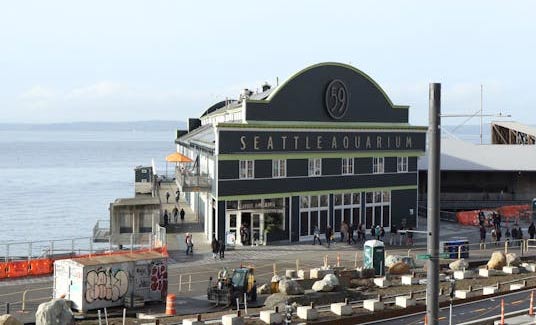
Storms are one of the natural disasters that frequently occur in Seattle's winter weather.
While not common, storms and floods caused by climate change worldwide should always be approached with caution.
Due to its proximity to the Pacific Ocean, Seattle often experiences strong storms and heavy rainfall.
Major storm events in the Seattle area have been accompanied by strong winds, heavy rain, and tsunamis, significantly impacting the city and its surroundings.
1962 'Columbus Day Storm'
On October 12, 1962, the 'Columbus Day Storm' struck the Northwest region, including Seattle, and is recorded as one of the most powerful storms in American history. This storm brought winds and rain comparable to hurricanes and typhoons, with maximum winds exceeding 100 miles per hour (160 km/h) in the Seattle area. It caused significant damage to Seattle's power grid and buildings, uprooting many trees and damaging homes and roads. Over 500,000 people experienced power outages, and infrastructure damage amounted to millions of dollars.
1993 'Inaugural Day Storm'
On January 20, 1993, the 'Inaugural Day Storm' brought strong winds and heavy rain to Seattle and Washington State. This storm hit Seattle with hurricane-level winds, resulting in power outages for over 600,000 people. Winds exceeding 60 miles per hour (96 km/h) blew across Seattle, causing flooding and traffic congestion. Numerous trees fell, leading to traffic accidents and landslides. This event highlighted the importance of storm preparedness and infrastructure strengthening in Seattle.
2001 'Christmas Eve Storm'
On December 24, 2001, the 'Christmas Eve Storm' struck Seattle, occurring just before Christmas and causing significant inconvenience for many residents. This storm brought strong winds, heavy rain, and blizzards, leading to traffic paralysis and power grid failures. Winds of 100 miles per hour (160 km/h) were recorded in Seattle and surrounding areas, causing trees to fall and power lines to break. Approximately 400,000 households had to spend Christmas without electricity. This storm emphasized the need for improvements in Seattle's storm preparedness and power restoration systems.
2015 'Windstorm of 2015'
On December 9, 2015, the 'Windstorm of 2015' hit Seattle and its surrounding areas, bringing strong winds and heavy rain that caused extensive damage. Winds of 100 miles per hour (160 km/h) passed through Seattle, resulting in many power lines being downed, trees uprooted, and roofs blown off. Power outages lasted for more than three days, affecting over 300,000 Seattle residents. This storm was noted as a reflection of the increasing intensity of storms due to climate change.
Seattle's Storm Preparedness
Seattle is making significant efforts in preparation and response to natural disasters like storms. The Seattle city government and private companies operate systematic systems to prepare for storms and raise awareness among citizens.
Seattle strives to minimize storm damage through earthquake-resistant designs and buildings that can withstand wind pressure. In particular, high-rise and commercial buildings are designed with storm-resistant windows and structures to reduce damage.
Seattle continuously conducts storm preparedness education for its citizens. In addition to earthquake preparedness, training for storm-related evacuations and emergency responses is also a crucial part of the program. This provides citizens with guidelines on how to respond during storm events.
To minimize storm damage related to the power grid, Seattle has established an underground wiring system and strengthened the supports and insulators for power lines. Additionally, improvements to the power restoration system are being made to reduce outage times.
The Future of Storms and Response
Seattle anticipates that the intensity of storms will gradually increase due to climate change, and continued preparedness is necessary. Powerful storms resulting from climate change may have a greater impact on Seattle and its surrounding areas, making citizen education on storm preparedness and infrastructure strengthening ongoing critical challenges.




 Bald Eagle Brothers |

 Bacon King Blog |
 PETRO Vatican Shrine |
 Seattle - Emerald City |
 Real Estate Agent USA |
  Tonky |
  viroma |
  cookie |
  Live and that's it |
  Alright Twain |
  eatontown blog |
  HAWAII Korean Church News |
  Amore |
  linex |
  Balancework |
  laro90 |
  MEDBIO American Doctor Blog |
  SWAT TEAM BLK |
  DREAM BIG |
  frostbite |
  330 Forever My Love |
  El Dorado |
  dralix58 |
  Gorama Round |
  Skydiving |