
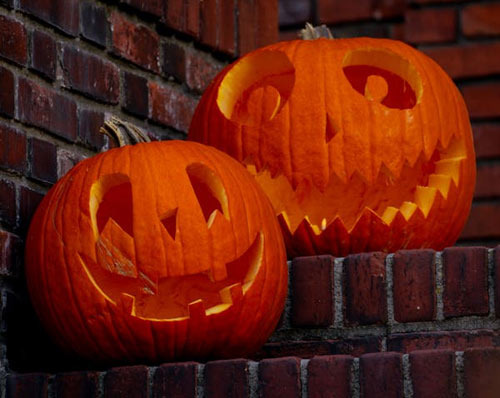
One of the symbols of Halloween, the Jack-o'-lantern, has become a representative decoration for Halloween in the United States, but its origins began in the traditions of Ireland and Scotland.
Origin: Celtic Traditions
The origin of Halloween comes from the Celtic festival of Samhain.
- Samhain celebrates the end of summer and the beginning of winter (October 31), believing that the souls of the dead return to the living.
- To ward off spirits, people lit fires around their homes or created decorations to chase away spirits.
The Celts primarily carved turnips or beets, placing candles inside and carving faces into them. These lanterns were used to ward off evil spirits and wandering souls.
The Legend of Jack-o'-lantern
- The origin of the Jack-o'-lantern comes from the Irish folk legend of "Stingy Jack."
- Jack was a wicked and cunning man who tricked the devil into not taking his soul to hell.
- After death, rejected by both heaven and hell, Jack had to wander in darkness, lighting his way with a small light.
- The lantern Jack carried was the "Jack-o'-lantern" made from a turnip with a candle inside.
The Emergence of Pumpkins
- 19th Century Irish Immigrants brought the tradition of Jack-o'-lanterns to America.
- In the United States, pumpkins began to be used instead of turnips for the following reasons:
- Pumpkins are larger and easier to hollow out, making them suitable for carving.
- Pumpkins are harvested in the fall, symbolizing a bountiful harvest and celebration.
Modern Halloween Pumpkins
Since the 20th Century, Jack-o'-lanterns have become an essential element of American Halloween culture.
- Families carve pumpkins with various faces and designs, evolving into a creative activity.
- Cities like Campbellsville, KY, hold annual pumpkin carving contests, which have become local festivals.
Jack-o'-lanterns are now recognized not just as tools to ward off spirits, but as a symbol of Halloween and decorations representing the autumn atmosphere.
Cultural Diffusion and Influence
- Commercialization: Pumpkin farms become very popular during the Halloween season, with families visiting to buy pumpkins for making Jack-o'-lanterns.
- Entertainment: Pumpkins are prominently featured in movies like "Jack Skellington" and "Halloween Town", holding an important place in popular culture.
- Environmental Perspective: Recently, eco-friendly campaigns have been initiated to recycle carved pumpkins or use them as fertilizer.
Halloween pumpkins have evolved into a unique symbol that began in ancient Celtic traditions, merging Irish legends and American agricultural culture.
In the United States, pumpkins represent Halloween and Thanksgiving, produced in large quantities in major agricultural areas.
The top 5 pumpkin-producing regions in the U.S. are as follows.
1. Illinois
- Characteristics: The largest pumpkin-producing state in the U.S., accounting for about 40% of the national production.
- Main Areas: Peoria and Morton are the central areas, with Morton known as the "Pumpkin Capital of the World."
- Production: Over 500 million pounds annually.
- Uses: Primarily used for processing, becoming the main ingredient for canned pumpkin products.
2. California
- Characteristics: Ranks high in fresh pumpkin production, growing various pumpkin varieties.
- Main Areas: Near Los Angeles and Sacramento.
- Uses: Widely used for fresh consumption and decoration, gaining great popularity during Halloween.
3. Ohio
- Characteristics: One of the major pumpkin-producing states in the Midwest, producing both fresh and processing pumpkins.
- Main Areas: Around Toledo and Columbus.
- Special Products: Many pumpkin festivals and programs for direct purchases from farms contribute to local tourism.
4. New York
- Characteristics: The largest pumpkin producer in the Northeast, with active farm experiences linked to autumn tourism.
- Main Areas: Finger Lakes and Hudson Valley regions.
- Uses: Plays a significant role in fresh consumption, decoration, and local festivals.
5. Pennsylvania
- Characteristics: Grows various pumpkin varieties and is an important production area in the Eastern U.S.
- Main Areas: Near Philadelphia and Pittsburgh.
- Special Products: Fresh pumpkin sales are active at farmers' markets, and processing pumpkins are also produced.
Additional Information
- Total U.S. Pumpkin Production: Over 2 billion pounds annually.
- Most Common Varieties:
- Jack-o'-lantern pumpkin
- Sugar pumpkin: for pies and cooking.
- Uses: Decoration, cooking (pies, soups), processed products (canned pumpkin, puree), etc.
Illinois, California, Ohio, New York, and Pennsylvania are the leading pumpkin-producing regions in the U.S. These areas grow various pumpkin varieties and significantly contribute to the American pumpkin industry through fresh consumption, processing, and cultural uses like festivals.





 Weekend Movie Blog |
 Beauty, Health, Lifestyle Blog |

 coloradoman |
 Superman Cat Blog |
 novapixel |
  Tonky |
  viroma |
  cookie |
  Live and that's it |
  Alright Twain |
  eatontown blog |
  HAWAII Korean Church News |
  Amore |
  linex |
  Balancework |
  laro90 |
  MEDBIO American Doctor Blog |
  SWAT TEAM BLK |
  DREAM BIG |
  frostbite |
  330 Forever My Love |
  El Dorado |
  dralix58 |
  Gorama Round |
  Skydiving |