

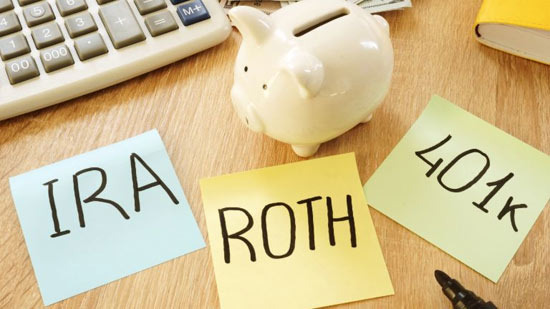
When living in the U.S. while working or being self-employed, terms like IRA, Roth, and 401k come up frequently.
At first, it may feel like content only financial experts would understand, making it overwhelming to even try to explain.
We can't just brush it off thinking, "It must be good since it's needed for retirement," especially when our hard-earned salary is at stake!
So today, I will break down these three concepts in a very easy and fun way, all in one go.
First, let's talk about 401k. Think of a 401k as a retirement plan set up by your company.
If you're an employee, a certain amount is automatically deducted from your paycheck and deposited into this account. The biggest advantage is taxes. You don't pay taxes right now. If your salary is $100,000 and you contribute $20,000 to your 401k, the IRS calculates your income for the year as $80,000. You pay taxes later when you withdraw the money after retirement. Another crucial point is company matching. If your company contributes a certain percentage, you must take advantage of it. This is not investing or saving; it's just free money. Not taking this is like intentionally throwing away part of your salary.
Next is the IRA. An IRA is a retirement account that individuals create themselves.
You open it at a bank or brokerage, independent of your employer. The structure is similar to a 401k. You receive tax benefits when you contribute, and you pay taxes when you withdraw. The difference is the freedom of choice. With a 401k, you must choose from the products your company offers, but with an IRA, you can select from a much wider range of stocks, funds, or ETFs.
Now, let's discuss Roth. This is the most confusing part, but with a Roth, you contribute money that has already been taxed.
However, when you withdraw the money after retirement, you pay $0 in taxes. You pay taxes once and that's it. This is advantageous for those with lower current income but higher future earning potential. You pay taxes now when rates are low, and later, when your assets have grown, you take everything out tax-free.
To summarize, 401k and traditional IRA reduce your taxes now and you pay taxes later. Roth means you pay taxes now and don't pay later.
So, what you choose depends on your age and salary. If your current income is high and your tax rate is high, it's better to reduce taxes now with a 401k or traditional IRA. If you are still young and have a high potential for income growth, a Roth is more beneficial. This is also why Roth is recommended for early immigrants or young professionals.
Finally, there is one crucial thing to remember. The real danger in retirement funds is not the products but time. One dollar started at age 25 and one dollar started at age 45 will make a significant difference by retirement. They say there is nothing worse than being old and broke. Developing the habit of quickly growing your money through compound interest will help you avoid struggles as you age.
If you plan to retire and live in the U.S., I believe these three options are not just choices but necessities.






 vibranto |
 sparkling |
 oh my salami |
 saffronroute |
 You Only Live Once |
 Dreams Come True as Desired |
 Dakota Man Blog Thanks |
 dralix58 |
  Gorama Round |
  Skydiving |
  dreamport |
  Yellow Snowman |
  Toaster Pizza Magic Show |
  velvetnom |
  Anytime Journey |
  Mrs. Duluth |
  jaxter |
  Atlanta Mama |
  Baguette Blog |
  US Embassy |
  Korean Mom |
  My NYC |
  moo moo |
  Mr Oh |
  forevergee |
  festival |
  manchester |