
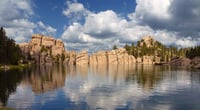
Rapid City, the central city of western South Dakota, is located at the eastern foothills of the Black Hills mountain range and is known as the 'Gateway to the Black Hills.'
As the name suggests, a stream called 'Rapid Creek' runs through the middle of the city, and the sound of its water gave the city its name. During the gold rush boom in 1876, many miners and merchants flocked to the area after gold was discovered in the Black Hills, leading to the establishment of Rapid City.
Initially a simple supply base for mining, the city developed into the economic center of western South Dakota as railroads were connected and commerce expanded. In the 1880s, not only gold but also silver, copper, and coal were mined, allowing it to thrive as a 'small gold rush town,' and remnants of that era can still be seen in the city's architecture and historic streets.
As the mid-20th century approached, Rapid City transformed from a mining hub to a center for tourism and military industry. Nearby Ellsworth Air Force Base was established in the 1940s and continues to play a significant role in the local economy. Thousands of military personnel and their families reside here, maintaining a steady demand for housing and contributing to the growth of local businesses. Additionally, Rapid City serves as a gateway to famous tourist destinations such as Mount Rushmore, Badlands National Park, and Custer State Park, leading to significant growth in the tourism industry. Every summer, tourists from around the world flock here, energizing hotels, restaurants, and transportation services, transforming the city into a massive tourism hub.
In recent years, Rapid City's economy has shown growth not only in mining, military, and tourism but also in healthcare and education. Local healthcare institutions like Monument Health and South Dakota Mines account for a significant portion of regional employment. Thanks to this stable industrial base, Rapid City is considered one of the cities in South Dakota with a steadily increasing population. As of 2025, approximately 80,000 residents live here, and when combined with the surrounding Black Hills County, the metropolitan population exceeds 150,000.
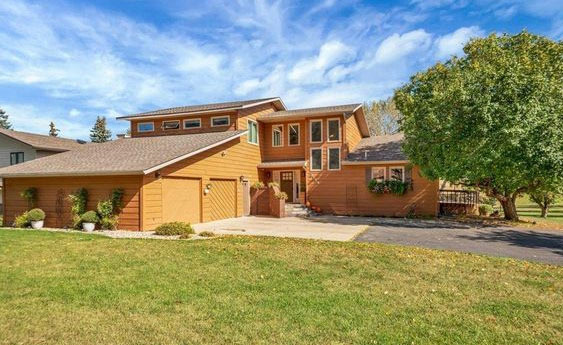
The real estate market has also been steadily rising. After the pandemic, the Midwest has gained attention for its relatively stable living environment and low tax rates, leading to increased interest from external investors and migrants in Rapid City. As of 2025, the median home price is around $370,000 to $400,000, which is slightly higher than the South Dakota average.
Particularly, emerging residential areas at the foothills of the Black Hills or on the outskirts of the city are popular for their beautiful natural scenery and well-established living infrastructure. The rental market is also stable, with monthly rents for 2-bedroom apartments ranging from $1,200 to $1,600. Areas near Ellsworth Air Force Base have low vacancy rates due to demand from military families, while downtown areas see steady demand from young professionals and those in the tourism sector.
In terms of cost of living, Rapid City is much more affordable compared to major cities in the U.S. There is less burden from property taxes and income taxes, and the cost of living is about 10% lower than the national average. For these reasons, it is a popular city for retirees and remote workers looking for a new place to settle.
Moreover, the city as a whole has a 'small but solid local economic model.' While there are not many large corporate headquarters, local-based construction, tourism, and agricultural processing industries support employment, and the community's self-sufficiency is high.
Ultimately, Rapid City has evolved from a gold mining town of the western frontier era into a balanced city where tourism, education, healthcare, and military industries coexist. It is a place surrounded by nature, where mountains and plains meet, equipped with modern urban infrastructure, and possessing both a stable real estate market and growth potential—this is today's Rapid City.



 Dreams Come True as Desired |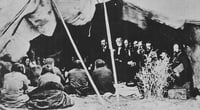
 Dakota Man Blog Thanks |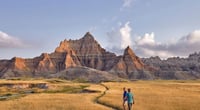
 dralix58 |
  Gorama Round |
  Skydiving |
  dreamport |
  Yellow Snowman |
  Toaster Pizza Magic Show |
  velvetnom |
  Anytime Journey |
  Mrs. Duluth |
  jaxter |
  Atlanta Mama |
  Baguette Blog |
  US Embassy |
  Korean Mom |
  My NYC |
  moo moo |
  Mr Oh |
  forevergee |
  festival |
  manchester |