
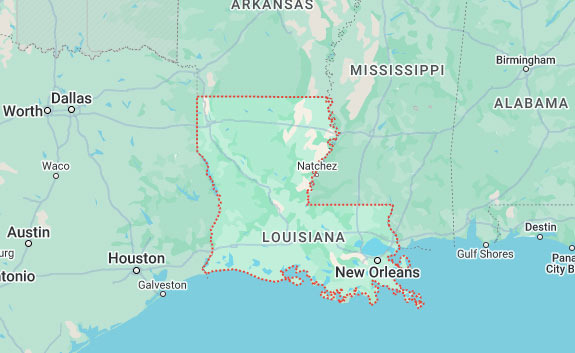
Louisiana is a state located in the southeastern United States, home to major cities like New Orleans and Baton Rouge, where various industries and cultures coexist. The highway (freeway) system in Louisiana efficiently connects major cities within the state and neighboring states, providing essential transportation infrastructure for both commuters and travelers. Below, we will detail the major highways in Louisiana and useful traffic-related tips.
Major Highways (Freeways)
I-10 (Interstate 10)
- Description: I-10 is a major highway that crosses from the southwestern to the southeastern United States, passing through Louisiana and connecting New Orleans.
- Main Route: Starting from Houston, it crosses the Gulf of Mexico and passes through New Orleans before continuing to Florida.
- Features:
- New Orleans Entrance: I-10 directly connects to downtown New Orleans, providing excellent access to the city center.
- Toll Gates: Some sections charge tolls, and using E-ZPass is convenient.
- Traffic Congestion: Traffic congestion can occur around New Orleans, especially during rush hours and tourist seasons.
I-20 (Interstate 20)
- Description: I-20 is a highway that crosses the southeastern United States, passing through Louisiana and connecting Bella Vista and Shreveport.
- Main Route: Starting from Texas, it passes through Louisiana and continues to Georgia.
- Features:
- Shreveport: It connects Shreveport, a major city in northwestern Louisiana, serving as an economic hub for the area.
- San Jose Interchange: An important interchange where I-20 meets I-49, playing a crucial role in logistics and transportation.
- Main Rest Areas: Various rest areas and service facilities are available for long-distance drivers.
I-49 (Interstate 49)
- Description: I-49 is a highway primarily connecting Louisiana and Arkansas, linking major cities in northern Louisiana.
- Main Route: It starts in Shreveport, Louisiana, and continues through Shepherd and Verdun to Arkansas.
- Features:
- Verdun Interchange: A point where I-49 meets I-20, serving as an important hub for logistics and transportation.
- Developing Sections: Some sections are still under development, with ongoing expansion and improvements.
- Traffic Flow: This route is frequently used by commercial vehicles, resulting in heavy transportation traffic.
I-55 (Interstate 55)
- Description: I-55 is a major highway connecting the Midwest to the Southeast, passing through the western region of Louisiana.
- Main Route: It starts in Illinois, follows the Mississippi River through Louisiana, and continues to the Gulf of Mexico.
- Features:
- Benton Interchange: An important point where I-55 meets I-10, essential for accessing New Orleans.
- Summer Congestion: Traffic congestion can increase during vacation seasons and summer due to travelers heading to the Gulf of Mexico.
- Rest Areas and Services: Various rest areas and gas stations are well-equipped for long-distance drivers.
I-12 (Interstate 12)
- Description: I-12 is a highway that runs east-west across the southeastern part of Louisiana, connecting New Orleans to Baton Rouge along the coast.
- Main Route: It starts in New Orleans and continues to Hutchinson and Baton Rouge.
- Features:
- Connection between New Orleans and Baton Rouge: Directly connects these two major cities, providing a convenient route for commuters and travelers.
- Mix of Commercial and Personal Vehicles: A mix of commercial and personal vehicles can lead to various traffic situations.
- Road Conditions: Some sections are widely expanded, but conditions may vary based on road maintenance.
Traffic and Driving Tips
Toll Management
- Many sections of Louisiana's major highways charge tolls. Using electronic payment systems like E-ZPass allows for automatic toll payments, saving time at rest areas or toll gates.
- There are also toll-free sections, so it's advisable to check for toll charges when planning your travel route.
Avoiding Traffic Congestion
- Rush Hours: Traffic congestion can occur on major highways during weekdays between 7 AM and 9 AM and 4 PM and 6 PM. If possible, it's best to avoid driving during these times.
- Holiday Seasons: During summer and holidays, the increase in travelers heading to the coast can lead to congestion on major highways. Consider this when planning your trip and identify alternative routes in advance.
Using Rest Areas
- It's important to frequently use rest areas during long drives to take breaks and replenish food and drinks.
- Major highways like the Garden State Parkway have well-equipped rest areas for convenient use.
Checking Weather and Road Conditions
- Louisiana has a subtropical climate, and natural disasters such as heavy rains and hurricanes can occur in summer. Check the weather and road conditions before departure, and prepare chains if necessary.
- Be cautious as roads may become slippery due to heavy summer rains.
Newark Interchange
- Description: An important interchange where I-95 and I-78 cross, providing excellent access to downtown Newark and Newark Liberty International Airport.
- Features: This area frequently experiences traffic congestion, especially during rush hours.
Mustang Interchange
- Description: The point where I-287 and I-80 meet, connecting northern and central Louisiana.
- Features: It passes through various commercial facilities and residential areas, serving as an important connection for commuters.
Pierpont Interchange
- Description: The point where I-95 and Garden State Parkway intersect, playing a crucial role when traveling along the New Jersey coast.
- Features: A major route to coastal cities, which can become congested during summer due to tourists.
The highway system in Louisiana efficiently connects major cities and neighboring states, enhancing transportation convenience.







 Certified Authentication Blog Page |
 ORAVEZIN Oppa |
 melon90 |

 White bunny |
  dralix58 |
  Gorama Round |
  Skydiving |
  dreamport |
  Yellow Snowman |
  Toaster Pizza Magic Show |
  velvetnom |
  Anytime Journey |
  Mrs. Duluth |
  jaxter |
  Atlanta Mama |
  Baguette Blog |
  US Embassy |
  Korean Mom |
  My NYC |
  moo moo |
  Mr Oh |
  forevergee |
  festival |
  manchester |