

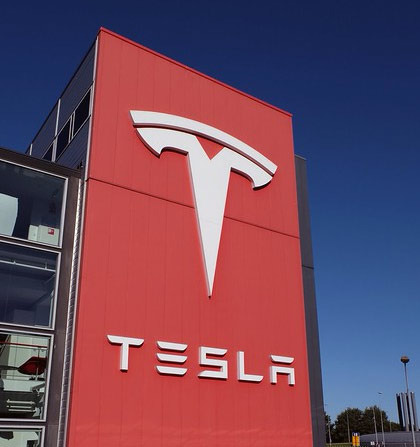
Tesla is not just an electric vehicle company.
Looking into Tesla's revenue structure reveals that it is a massive corporation encompassing energy, software, data, and financial services beyond just automobiles. In other words, Tesla has already completed a structure where it enters through hardware (cars) and makes money through software.
The largest source of revenue is still electric vehicle sales. As of 2024, about 80% of Tesla's total revenue comes from car sales. However, this does not simply include the vehicle price. For example, all vehicles, including the Model 3, Model Y, Model S, Model X, and the recent Cybertruck, come equipped with sensors and chips for autonomous driving as standard.
Tesla does not just sell a vehicle and be done with it; it is designed to allow for software upgrades later. In other words, it has a structure that continues to generate revenue through additional software sales after selling the hardware.
A typical example is the sale of FSD (Full Self-Driving) packages. By adding about $12,000 as an option when purchasing a vehicle, it can be activated, and it can also be used through a subscription model for $99 to $199 per month. This 'software subscription model' is a revenue structure that is almost non-existent in traditional car companies. In fact, Tesla earns over 10% of the average revenue per vehicle from FSD, OTA (Over-the-Air) updates, and connected services.
The problem here is software bugs, assembly defects, quality controversies, and the fact that the driver must take responsibility in case of accidents. Above all, Elon Musk's exaggerated promises and unexpected actions also tarnish the company's image. While it sells dreams to investors, it is essentially selling experimental technology to consumers at a high price.
The second most important source of revenue is regulatory credits (carbon credits). Since Tesla only produces eco-friendly cars, it can sell carbon credits to other car manufacturers that have high carbon emissions. For example, if companies like GM or Stellantis exceed emission standards, they buy credits from Tesla to meet legal requirements. As of 2023, Tesla has earned over $1.5 billion from this transaction alone. This is pure profit that comes without selling cars.
The third is the energy business. Tesla produces solar panels (Solar Roof) and battery storage systems (Powerwall, Megapack) and operates large-scale energy storage projects for power companies. For example, Tesla's battery systems are connected to large power grids like the Hornsdale project in Australia. This energy sector revenue accounts for 10-15% of the total but is increasingly becoming more profitable. There are analyses suggesting that from 2025 onwards, the energy sector will grow faster than electric vehicles.
Another revenue structure is the Supercharger network. Tesla operates over 20,000 super-fast chargers across the United States and opened them to other brand vehicles starting in 2024. This means that GM, Ford, and Hyundai electric vehicles will pay a fee every time they use Tesla charging stations, and this revenue is steadily accumulating. There are not many companies that own charging infrastructure, so it creates a stable cash flow in the long term.
Another area Tesla is focusing on recently is insurance (Tesla Insurance) and data services. Tesla collects driving data in real-time to analyze driving habits and calculates insurance premiums based on this. Safe drivers are charged lower premiums, while risky drivers pay more. This method is much more sophisticated than traditional insurers and is competitive because it utilizes sensor data unique to Tesla vehicles. In some states in the U.S., Tesla is already selling car insurance directly.
Additionally, Tesla is preparing for a robotaxi business. Once the autonomous driving feature is completed, vehicle owners can register their cars on the Tesla network for others to use, sharing the profits. If this model becomes a reality, Tesla will evolve from a "car company" to a mobility service platform.
In summary, Tesla's revenue structure can be broadly categorized into five areas.
- Electric vehicle sales (hardware-centric revenue)
- Software upgrades and subscription services (FSD, OTA updates, etc.)
- Sale of carbon credits (pure profit-centric)
- Energy and charging infrastructure business (Powerwall, Megapack, Supercharger)
- Data-driven insurance and future robotaxi network
In other words, Tesla is not just a car manufacturer but a 'tech company' that combines data, energy, infrastructure, and software.
It collects data while selling cars, uses that data to improve insurance and autonomous driving algorithms, and simultaneously expands into the energy market. Therefore, Tesla's real competitiveness lies not in 'batteries' but in platforms and data. Ultimately, this company is a massive technology platform disguised as a car company, and that is the real way Tesla makes money.



 Rhode Island Good People |

 USALATU BLOG |
 pixelhaven |
 Jazz Queen |
  round1 |
  Way to easy |
  musicque |
  road98 |
  Churros Train Conductor |
  gleeful |
  Burbank Lee |
  Olivia's Blog |
  Bushing Around Life |
  Active |
  Cherokee Rose |
  Kor. Master |
  Holey Moley |
  Conflite Teacher |
  Hodong Prince Over Flex |
  Mist inn |
  citrus pop |
  Onion Ring |
  phoenixia |
  viewtop |