

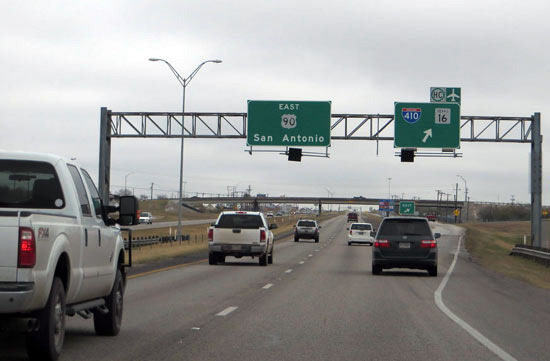
Living north of San Antonio, Texas, while commuting, I've noticed something has changed recently.
At first, I thought, "Why is the flow so slow today?"
There are no accidents ahead, and it's not a construction zone, yet everyone is driving unusually leisurely.
The reason is, haha, the gas prices.
With news of the war in Iran causing oil prices to fluctuate, even in our neighborhood where gas was cheap, premium prices jumped from the $3.30 range to $4.60.
In percentage terms, that's nearly a 40% increase all of a sudden.
This has completely changed the atmosphere on the roads.
BMW, GMC, Lexus SUV models, Cadillac Escalades, and Lincoln Navigators are very common cars in our area.Fuel tanks typically hold 22-24 gallons. Based on premium prices, filling up a full tank costs:
$3.30 days: about $73-$80
$4.60 now: about $101-$110
If you fill up twice a month, that's a difference of $60-$70 a month.
The saying that "people who drive luxury cars don't care about gas prices" is half true and half false.
Only a very few can afford not to care. The rest quietly do the math.
These days, if you drive on I-10 North or 281 North, you'll notice many cars cruising at 65-70 mph.Cars that used to take off immediately when the light turned green now start off smoothly. Sudden acceleration and braking have decreased.
The overall flow has slowed down a notch. This isn't an individual choice; it's a change in collective behavior.
This is a real-time example of the price signal discussed in behavioral economics.
Even without any government campaigns, when prices rise, people adjust their behavior accordingly.
I had the mindset of, "Texas is a cheap gas area, so what?" Now, I consciously try not to exceed 65.
I knew that a 10 mph difference could lead to a 10-15% difference in fuel efficiency, but I ignored it when gas was $3.30.
Now that it's $4.60, I can't ignore it anymore.
Interestingly, fuel efficiency information has always been available. What changed behavior was not the information but the price.
Texas has traditionally had lower gas prices than the national average. With refineries nearby and relatively low state taxes,there was a psychological buffer of "this place is a bit different." That buffer has thinned significantly now.
While $4.60 for premium gas isn't quite at the $6 or $7 levels seen in California, it's still quite high by Texas standards.
The northern neighborhoods, often referred to as high-income zip codes, are no exception.
Just because the cars are expensive doesn't mean the gas prices don't hurt. In fact, cars that require premium fuel have no other options.
They must use the $4.60 gas. So, prices don't lie. No matter what politicians say or how experts analyze it — driving patterns on the road are the true thermometer of the economy.
Right now, the roads north of San Antonio are saying, "People are tightening their belts."
If tensions in Iran ease or oil prices drop again, the atmosphere on the roads will change too. Then everyone will likely be speeding over 80 again.
The conclusion is that in front of money, BMWs and pickup trucks are all equal.







 American Hardcore Band |
 Rice Shop Uncle BLOG |
 Baguette Blog |
 solvix18 |
 novapixel |
 Coding Elf |

 action blog 101 |
 alamo |
  coloradoman |
  lumora |
  Valley Bang |
  pravix22 |
  Cohesive Kong |
  werehere |
  problemo |
  galaxy88 |
  breezelove |
  Minnesota Sonata N |
  hazelnut |
  Korean News American Blog |
  AH LALA |
  Savion |
  pintos |
  Good Good |
  oh my salami |
  Lemonade Cider Planning Director |
  Way to easy |