

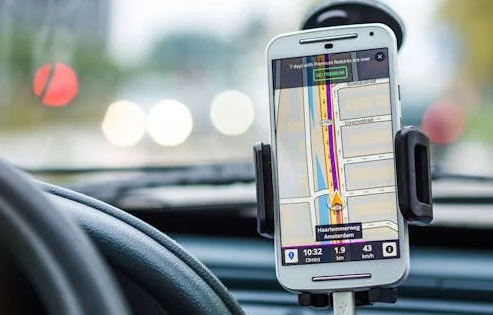
The GPS navigation system has become an essential technology in modern society, and we will look at its history, development process, and future prospects.
The foundation of GPS (Global Positioning System) began in the 1970s as a military system in the United States. The early GPS systems were developed to support location tracking and accurate navigation based on military needs. This system consists of 24 satellites, allowing real-time tracking of almost any location on the Earth's surface.
In the mid-1980s, the U.S. government began the commercialization of GPS, and in the early 1990s, it lifted restrictions for civilian users to receive GPS signals. This allowed GPS technology to be utilized for commercial purposes. In the late 1990s, automotive navigation systems were introduced, and particularly Japanese car manufacturers were the first to equip vehicles with GPS-based navigation systems, leading to significant changes.
1990s - Early 2000s
From the late 1990s to the early 2000s, GPS navigation systems began to grow rapidly in the automotive industry. Initially, they were very expensive, and text-based maps and voice guidance were basic features. However, with advancements in technology, high-resolution maps became possible, and features expanded to include real-time traffic information.
Mid-2000s - The Rise of Smartphones
In the mid-2000s, the emergence of smartphones dramatically changed the GPS navigation environment. Navigation apps based on smartphones, such as Google Maps and Apple Maps, began to be widely used, challenging traditional vehicle navigation systems. The GPS functionality of smartphones was provided for free, eliminating the need to purchase separate devices, allowing users to easily update and reflect real-time traffic conditions.
2010s - Integrated Technology
In the 2010s, GPS navigation systems installed in vehicles gradually evolved into integrated forms. Infotainment systems and navigation functions merged into a single platform, providing various information and services on one screen. Additionally, features such as real-time traffic information, voice recognition, and automatic route changes became included, and integration with smartphones like Apple CarPlay and Android Auto became important.
GPS Navigation Options in Cars
Currently, GPS navigation has become a standard option in cars. Most modern vehicles come equipped with built-in GPS systems, and many offer the ability to connect smartphones to the vehicle system. Key features include:
- Real-time traffic information: Reflects traffic conditions in real-time to guide optimal routes.
- Voice recognition: Allows users to set destinations or change routes using voice commands without using their hands while driving.
- Lane change and navigation guidance: Visually or audibly informs about important intersections and road information.
- Integration with Google Maps and Apple Maps: Allows real-time updates by connecting smartphone-based navigation apps to the vehicle system.
- Route and arrival time prediction: AI-based prediction systems analyze road conditions to provide estimated arrival times.
Currently, GPS navigation systems are standard in almost all cars, and many users connect them with smartphones. Apps like Google Maps, Apple Maps, and Waze continue to evolve, providing users with more accurate and real-time updated traffic information. Additionally, advancements in technologies related to autonomous vehicles significantly impact GPS navigation systems. Autonomous vehicles integrate various technologies such as GPS, sensors, and cameras to navigate and drive automatically without driver intervention.
Future Prospects
The future of GPS navigation is expected to evolve further. In particular, the development of autonomous vehicles and AI-based navigation systems will play a crucial role. Some key directions for future development include:
- Integration of autonomous vehicles and GPS: Autonomous vehicles will combine GPS with advanced sensor technology to enable fully autonomous driving without human intervention. This will play a significant role in optimizing traffic flow and reducing accidents.
- Precision maps and 3D maps: GPS navigation will move beyond simple flat maps to provide 3D maps and precision maps that reflect real-time high-resolution road conditions.
- Augmented reality (AR): Navigation systems combined with AR technology will display virtual routes on actual roads, helping drivers find their way more intuitively.
- AI-based route optimization: AI will provide the ability to predict road conditions and change routes in real-time. Additionally, vehicle-to-vehicle (V2V) communication will allow real-time sharing of traffic information to optimize routes.
GPS navigation has now become a core function of vehicles, going beyond simple route finding. With advancements in technology, GPS navigation is evolving into a more sophisticated and smarter system, and its integration with future technologies like autonomous vehicles is anticipated. In the future, drivers will be able to move more safely and efficiently through more precise and intuitive navigation systems.







 Baguette Blog |
 Khan Film Blog Production |
 dermoon |
 hoosierdaddy |
 sun walker |
 Winter bear |
 Living in New Jersey blog |
 morninpo |
 silverleaf |
 Tonky |
  viroma |
  cookie |
  Live and that's it |
  Alright Twain |
  eatontown blog |
  HAWAII Korean Church News |
  Amore |
  linex |
  Balancework |
  laro90 |
  MEDBIO American Doctor Blog |
  SWAT TEAM BLK |
  DREAM BIG |
  frostbite |
  330 Forever My Love |
  El Dorado |
  dralix58 |
  Gorama Round |
  Skydiving |