

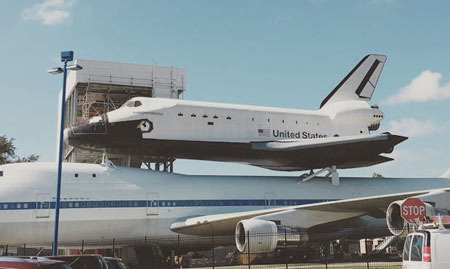
Located in Houston, NASA's Lyndon B. Johnson Space Center (JSC) has been a significant site leading humanity's adventures in space exploration, discovery, and achievement for over 50 years. This center has played a crucial role in guiding our country into the 21st century through technological innovation and scientific discovery.
Established in 1961, NASA Johnson Space Center was originally used as a major hub for the "U.S. Manned Space Flight Program." In the early 1960s, as the need arose for facilities where astronauts could train, this center was built in Houston, Texas. Subsequently, in 1969, several important space missions, including the Apollo 11 moon landing, were managed and coordinated from here.
JSC has been the center of astronaut training in the United States, responsible for training astronauts from the early programs Mercury and Gemini to the Apollo missions, and the Space Shuttle and International Space Station (ISS) programs. It features a Neutral Buoyancy Lab that simulates a zero-gravity environment and a Mission Control Center that coordinates space flight missions, where numerous space missions have been managed.
One of the most significant events in JSC's history is the Apollo Program. Notably, the Apollo 11 mission in 1969 is one of the most iconic events in space history, as the world watched astronauts Neil Armstrong and Buzz Aldrin land on the moon. The famous phrase "Houston, we have a problem" became widely known thanks to the mission control at JSC that resolved the crisis during the Apollo 13 mission.
After Apollo, JSC played a vital role in managing the Space Shuttle Program. Through numerous Space Shuttle missions, it supported the construction and operation of the International Space Station (ISS), significantly contributing to advancements in space science and technology. The ISS is an important facility conducting research and experiments for sustainable human activities in space, and it continues to operate in international collaboration.
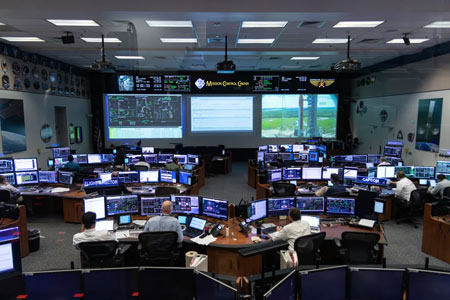
Space Center Houston is a popular destination where visitors can experience the history and future of space exploration. It features exhibits such as the Apollo 17 Command Module, Space Shuttle Independence, and Starship Gallery, showcasing models of future spacecraft.
The Johnson Space Center is open to the general public, offering various tourist attractions and experiences.
Mission Control: The "Mission Control" that managed the Apollo 11 moon landing is an important place in the history of space exploration. Visitors can actually visit this site and imagine the scenes where astronauts coordinated space missions.
Astronaut Training Facility: Visitors can tour the astronaut training facility and see the training tools and equipment used by astronauts.
Rocket Park: The Johnson Space Center features "Rocket Park," where actual rockets and spacecraft are on display. Here, visitors can see Apollo rockets, Space Shuttles, and other spacecraft up close.
Space Exploration Exhibit: Visitors can view various exhibits related to space exploration and learn about innovative technologies related to the future of space exploration.
Interactive Experiences: Through various interactive experiences related to space exploration, visitors have the opportunity to experience space flight or perform space missions using virtual reality (VR).
Nasa's Lyndon B. Johnson Space Center is not just a historical site but a symbol of humanity's dreams and quest for knowledge. From the early days of space exploration to future missions, this place continues to tell the story of space exploration and inspires many. For anyone interested in space exploration, this is a must-visit destination.






 candytip |
 Gold Bar |
 Pirate Ship Popcorn Maker |
 Montgomery Mom |
 Anjollinya Blog |
 U.S. Weather Bureau News |
 Things to know |
 Texas Real Estate Blog |

 action blog 101 |
  Finding Superfoods |
  lightyear |
  song bang |
  vexomo |
  Indiana Jones |
  meloncat |
  novapixel |
  mortrix |
  Esther 1983 |
  fortbliss |
  Moscow Kim |
  My Two Way |
  toastyfox |
  FLORIDA Acus |
  tracker |
  TONTON COFFEE |
  sunrise |
  ultron78 |
  uplifted |
  Folding Instructions |