

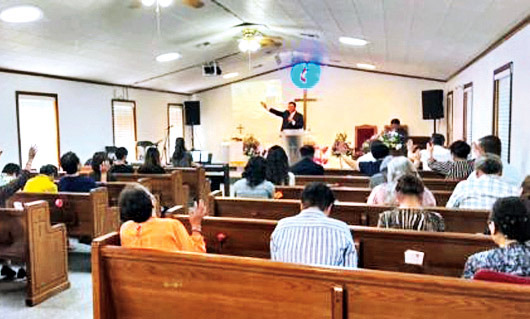
Looking at Korean churches in the U.S., the hair of those who gather every Sunday is increasingly gray, and the seats where young people should be sitting are becoming empty.
The church built by the first generation of immigrants through hard work is now being asked to change in the face of time. The problem is that while everyone knows this, how to solve it is still not clearly visible.
The biggest reason Korean churches are aging is generational change. For the first generation who came to the U.S. in the 70s and 80s, the church was not just a place for worship but a piece of Korea. In a land where both language and culture were unfamiliar, the church was a gathering place to share hometown food, a community where 1.5 generation could get job information, and a place to socialize.
However, since the mid-2000s, as the second generation has begun to emerge, the situation has changed. They are more familiar with American society and comfortable with English, so there is less need to fill their cultural needs through the church. They can enjoy the roles that the church used to provide within society. However, the church's operation is still centered around the first generation, and the atmosphere of the pastor's sermons and meetings is strongly Korean.
This becomes a barrier for the second generation. They want to worship in English and live their faith in a more relaxed atmosphere, but the first generation cannot easily let go of traditional frameworks.
As a result, the gap widens, the younger generation leaves, and the church ages. So, is there no way to address this?
First, we need to build a bridge connecting language and culture. We should actively expand English ministry and create a structure where second generation can participate in leadership, not just having separate English worship. Worship, praise, and Bible study should all be possible in both languages, and community programs that allow generations to mingle are also necessary.
Second, we need to redefine the role of the church. While it used to be essential for immigrants to gather and help each other, now a new vision that encompasses generations and cultures is needed. Movements like community service and multi-ethnic solidarity are examples of this. In fact, some churches are finding new paths through multi-ethnic worship.
Third, there needs to be a change in leadership. If all the pastors, elders, and deacons are from the first generation, change will inevitably be slow. The younger generation needs to participate in decision-making within the church and feel respected to develop a sense of attachment. This should be seen not just as a generational change but as an investment in the future.
Fourth, we need to modernize faith education. Today's youth are part of the digital generation. Bible study and worship should be newly created by combining video, music, discussion, and service activities. The church must change its image of being boring and outdated to attract the younger generation back.
If the church does not provide meaning in personal lives and lacks love and care within the community, the younger generation will inevitably seek other paths.
While the aging of Korean churches is undoubtedly a sad reality, it is also a new opportunity. It is now time to pass the baton, and I believe the church's greatest task is to open the way for the second and third generations to take over.
Ultimately, the church is a community where people gather and live together. Change is not easy, but if we do not fear it, the church can still shine in America.



 Weekend Movie Blog |
 Beauty, Health, Lifestyle Blog |
 coloradoman |
 Superman Cat Blog |
 novapixel |
  US Embassy |
  Korean Mom |
  My NYC |
  moo moo |
  Mr Oh |
  forevergee |
  festival |
  manchester |
  constant |
  Leapfrog Move |
  vibranto |
  Tora Tora |
  yellowbutter |
  Dolly |
  NYC saladbar |
  Finding Superfoods |
  lightyear |
  song bang |
  vexomo |
  Indiana Jones |