

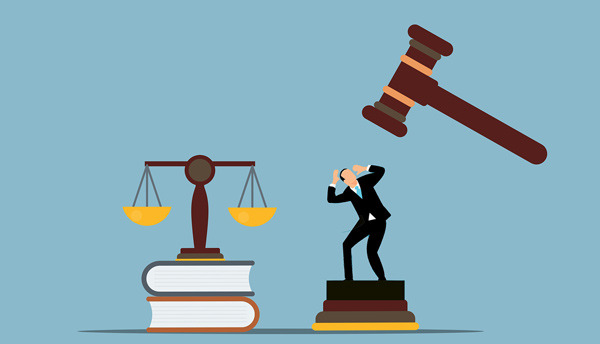
The U.S. is known for its high number of lawsuits, but class actions are a true nightmare for corporations.
When an individual files a lawsuit, it can often be settled for a few thousand dollars, but when hundreds or thousands of people who have suffered the same harm come together to file a lawsuit, the situation changes completely.
For example, if an automobile company is caught hiding a defect in airbags, they might settle with one or two individuals, but if a class action is filed, they could be facing tens of millions, or even billions of dollars in damages.
This is why the legal teams of major U.S. corporations are always concerned about whether a situation might escalate into a class action.
In the U.S., when a class action lawsuit is initiated, it doesn't simply start with the plaintiffs saying, "We are going to file a lawsuit together." The court must go through a process called 'Class Certification' to determine whether the case is suitable for a class action. This involves examining whether the victims share common legal issues and whether a class action would be more efficient than individual lawsuits. If the court does not recognize this, the class action itself will be dismissed.
Once class certification is granted, the formal lawsuit process begins. At this stage, the discovery process is crucial. The corporation must disclose internal documents, emails, and technical data, while the victims will use this information to prove the corporation's wrongdoing. This process can be lengthy and costly, leading to many attempts at settlement.
The next step is settlement or trial. Typically, corporations choose to settle to minimize damage to their image and costs. Once a settlement is reached, the court reviews whether the terms are fair to the victims and whether attorney fees are excessive before granting approval.
At this point, victims receive notifications via mail or email stating, "You are included as a class member, so please file a claim." As a result, it is common for victims to receive a few dollars or compensation in the form of coupons.
If a settlement is not reached, the case moves to trial. If the plaintiffs win, the court will determine the amount of damages, and in some cases, punitive damages may also be imposed. Following this, an appeals process may occur, and final judgments must be made before compensation is executed.
However, in reality, the biggest beneficiaries are not the victims but the attorneys.
About 25% to 35% of the class action settlement goes to the law firms.
If the case involves hundreds of millions of dollars, attorneys can pocket tens of millions in one go, while victims often receive only $10 or $25.
I once applied for a class action lawsuit against Verizon or kitchenware false advertising, and the check I received later was around $10 or $20.
This is why there is much criticism that "class actions only enrich the lawyers."
Even more amusing is the coupon settlement, where victims receive discount vouchers instead of cash, while attorneys take home hundreds of thousands in cash. Victims are left wondering, "Why should I buy from that company again?" while attorneys happily rush to the bank.
However, class actions cannot be viewed solely as tools of greed.In fact, this system has played a significant role in self-regulation within American society.
Environmental pollution cases and pharmaceutical side effect lawsuits are similar. It is nearly impossible for individuals to fight against large corporations, but because of class actions, companies have been held accountable and have changed their practices.
Thus, in the U.S., class actions are referred to as "weapons that gather small voices to create great power."
While it is true that attorneys benefit financially, it is also true that their greed has opened a path for ordinary people to stand up against large corporations.
That is why attorneys are sometimes referred to as "private attorneys general."
Moreover, class actions are intertwined with the punitive damages system, making corporations even more fearful.
Not only do they have to pay for the damages, but if intentional concealment or wrongdoing is revealed, the court can impose punitive damages that are many times the original amount.
When news of the lawsuit spreads through the media and social networks, the brand's image can also be shattered.
Therefore, in American society, class actions can be seen as both a system that enriches lawyers and a social safety net that keeps corporations in check, representing two sides of the same coin.






 Fun Flex Life |
 MacMorningBlog |

 Gongs Blog |
 Tora Tora |
  Cherokee Rose |
  Kor. Master |
  Holey Moley |
  Conflite Teacher |
  Hodong Prince Over Flex |
  Mist inn |
  citrus pop |
  Onion Ring |
  phoenixia |
  viewtop |
  loverun |
  Kim Do Sun |
  SEVEN SEVEN |
  yentra |
  Make My Day |
  Victory 1988 |
  Tonky |
  viroma |
  cookie |
  Live and that's it |