
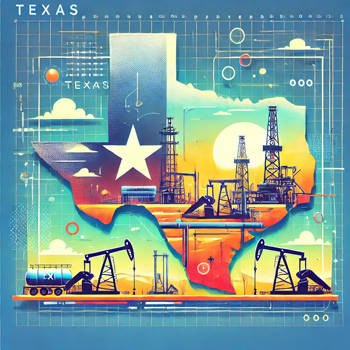
Texas is a leading oil and gas producing region in the U.S., playing a pivotal role in the country's energy industry. The discovery of the Spindletop oil field in 1901 sparked an oil boom, making Texas a vital engine for the economic development of the United States. Today, major energy companies operate headquarters or large facilities in Texas across various sectors, including refining, chemicals, and natural gas.
Early History and Growth
- Spindletop Oil Field:
- The discovery of a large oil field in southeastern Texas in 1901 dramatically changed the history of the U.S. oil industry.
- The sight of oil gushing (a 'gusher') captured global attention, marking the beginning of the Texas oil boom.
- Boomtown Culture:
- Each area where oil was discovered formed a 'boomtown,' leading to a rapid population increase and swift development of commerce and services.
Major Companies and Industry Structure
- Major Oil Companies:
- Global energy companies like ExxonMobil, Chevron, and ConocoPhillips have their headquarters or key facilities in Texas.
- There are also many specialized companies in refining and chemicals, such as Valero Energy based in San Antonio.
- Downstream (Refining & Marketing):
- Large refining and petrochemical complexes are located along the Texas coast (Gulf Coast), where the production of petroleum and chemical products is active.
- Shale Revolution:
- Since the late 2000s, large-scale production of shale oil and gas in areas like the Eagle Ford and Permian Basin has significantly changed the landscape of the U.S. energy market.
Economic Impact
- Contribution to State GDP:
- Thanks to the oil and gas industry, Texas has become the second-largest economy in the U.S., following California.
- The oil and chemical sectors are a major part of Texas exports and contribute to job creation.
- Infrastructure Development:
- Developments in pipelines, refineries, and port facilities have established a foundation for transporting and exporting crude oil and gas both nationally and internationally.
Future Trends
- Energy Transition:
- As global demand for renewable energy increases, Texas companies are also expanding into solar and wind energy projects.
- However, the oil and gas industry is expected to remain a cornerstone of the Texas economy for the foreseeable future.
- Environmental Issues:
- Greenhouse gas emissions and water and soil pollution from resource development and production continue to be subjects of social and policy discussions.
- Large companies are strengthening their ESG (Environmental, Social, and Governance) management and investing in carbon reduction technologies.
- Global Market Influence:
- As the largest oil-producing region in the U.S., the price of Texas crude oil (WTI, West Texas Intermediate) can fluctuate significantly based on international oil prices and OPEC trends.
- As the U.S. establishes itself as a net energy exporter, Texas oil production also has a considerable impact on the global market.
The Texas oil industry has been a key driver of the U.S. economy and energy market since the discovery of the Spindletop oil field in 1901. Even now, with increased production from the shale revolution in areas like the Permian Basin, Texas's oil and gas sector maintains its global competitiveness. Even as the transition to green energy accelerates, Texas's abundant resources and industrial infrastructure are expected to continue playing a central role in both the U.S. and global oil markets for the foreseeable future.







 xylora |
 Aura-Infused WACAM |
 wendra |
 There Are Such Things in the World |
 Texas Migration Story |
  Anytime Journey |
  Mrs. Duluth |
  jaxter |
  Atlanta Mama |
  Baguette Blog |
  US Embassy |
  Korean Mom |
  My NYC |
  moo moo |
  Mr Oh |
  forevergee |
  festival |
  manchester |
  constant |
  Leapfrog Move |
  vibranto |
  Tora Tora |
  yellowbutter |
  Dolly |
  NYC saladbar |