
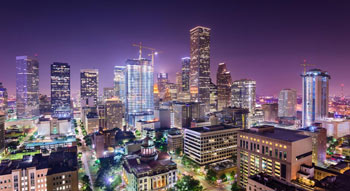
Houston is the largest city in Texas and a multicultural city where various immigrant communities coexist.
Among them, the area where Koreans naturally gather is commonly referred to as 'Koreatown Houston.' While it does not have official signage like Los Angeles or New York, the commercial and residential areas centered around Bellaire Blvd have created a distinct Korean living space.
Koreatown Houston extends along the southwestern Bellaire Blvd from the South Galleria area to near Beltway 8. It was formed in the 1970s and 80s as Korean immigrants settled around churches and businesses, and now it boasts a vibrant commercial area with various establishments such as Korean restaurants, markets, beauty shops, hospitals, and banks.
This area features large Korean grocery stores like H Mart and Zion Market, along with numerous Korean restaurants, bakeries, and cafes. Korean ingredients and food are easily accessible, and on weekends, it is bustling with family visitors. Community facilities such as churches, temples, and cultural centers are well-operated, fostering networking and cultural exchange among the Korean community. The Houston Korean American Society hosts Korean cultural festivals, volunteer activities, and traditional performances, playing a role in promoting Korean culture in the local community.
The educational environment is also stable. There are a variety of private and public schools nearby, as well as SAT prep centers and institutions for arts and sports education. Korean churches and cultural centers hold Korean language schools on weekends, allowing community children to learn the language and culture. This educational infrastructure is one of the key reasons why Korean families prefer Houston.
In terms of living conditions, housing costs have been steadily rising even within Texas, but they remain much more reasonable compared to major cities like California or New York. There are various options from single-family homes to apartments, and it is easy to enjoy suburban living with spacious homes and yards. However, Houston has a hot and humid subtropical climate, so adapting to the summer heat and humidity is necessary.
Public transportation in Houston is limited, so most residents use personal vehicles. The city covers a vast area with a developed road network, making driving an essential part of daily life. On the plus side, the proximity to the Houston Port and George Bush Intercontinental Airport makes travel to other states or countries convenient.
Economically, the energy (oil and gas), healthcare and biotech, aerospace, and logistics industries are well-developed, providing job opportunities not only for Koreans but also for various immigrants. In particular, there are many professionals near the Houston Medical Center and NASA Johnson Space Center.
Ultimately, Koreatown Houston is not a 'tourist-oriented Koreatown' defined by large signs or specific streets, but rather a 'community focused on practical living and interaction.' With stable job opportunities, reasonable housing costs, and a warm Korean network, it is regarded as a very attractive city for Korean immigrants to settle in.




 U.S. Weather Bureau News |
 Things to know |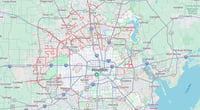
 Premium Gas Camp |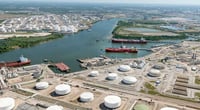
 Texas Real Estate Blog |
 action blog 101 |
  Korean Mom |
  My NYC |
  moo moo |
  Mr Oh |
  forevergee |
  festival |
  manchester |
  constant |
  Leapfrog Move |
  vibranto |
  Tora Tora |
  yellowbutter |
  Dolly |
  US Embassy |
  NYC saladbar |
  Finding Superfoods |
  lightyear |
  song bang |
  vexomo |
  Indiana Jones |