
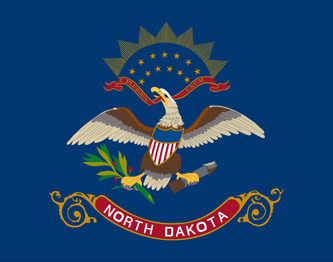
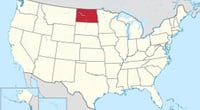
North Dakota is a state located in the north-central United States, and its history is truly fascinating as you explore it.
In the past, Native American tribes such as the Mandan, Hidatsa, and Arikara lived on this land, farming, hunting, and trading. By the 18th century, the Lakota tribe migrated here, becoming famous for their horse-riding culture.
In 1803, the United States acquired this land through the Louisiana Purchase, and in 1804, the Lewis and Clark Expedition began its exploration. During this time, a Native American woman named Sacagawea provided tremendous assistance as a guide. Subsequently, the fur trade flourished, and European immigrants began to settle one by one.
In 1861, the Dakota Territory was created, and on November 2, 1889, North Dakota and South Dakota became states in the United States. No one knows which of the two was promoted to statehood first. Agriculture was the main industry, and European immigrants, particularly those of German and Norwegian descent, significantly advanced wheat farming.
In the 20th century, agriculture faced difficulties. During the Dust Bowl of the Great Depression in the 1930s, farmers struggled immensely. However, in 1951, the discovery of oil in the Williston Basin diversified the economy.
Today, agriculture and energy are at the heart of North Dakota's economy. Thanks to oil and natural gas, there has been significant development, and the traditions of Native Americans, along with the cultures of German and Norwegian immigrants, are still well preserved.
Population
As of 2022, the estimated population of North Dakota is about 776,874, which is an increase of approximately 0.456% compared to 2021.
The capital, Bismarck, and the largest city, Fargo, are the main population centers.Racial Composition
The racial composition of North Dakota is as follows:
- White (non-Hispanic): 83%
- American Indian and Alaska Native: 4.41%
- Black or African American: 3.2%
- Mixed (two or more races): 3.2%
- Asian: 1.6%
This composition reflects the state's history and immigration patterns, particularly the relatively high proportion of the Native American population.
Median Income
As of 2022, the median household income in North Dakota is $73,959, which is an increase of 8.55% from the previous year.
The history of North Dakota tells a story of dynamic changes in the north-central United States, with a rich cultural, economic, and social background.



 persiste |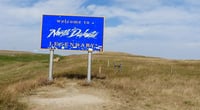
 buddydakota |
 North Dakota Ragdoll Cat Owner |

 My Love Sandra |
  dralix58 |
  Gorama Round |
  Skydiving |
  dreamport |
  Yellow Snowman |
  Toaster Pizza Magic Show |
  velvetnom |
  Anytime Journey |
  Mrs. Duluth |
  jaxter |
  Atlanta Mama |
  Baguette Blog |
  US Embassy |
  Korean Mom |
  My NYC |
  moo moo |
  Mr Oh |
  forevergee |
  festival |
  manchester |