

These days, the atmosphere surrounding marijuana policy in the United States feels more driven by political slogans than by science and common sense.
Personally, I am against the legalization of marijuana in the U.S.
As someone who has studied chemistry, I understand how substances should be viewed.
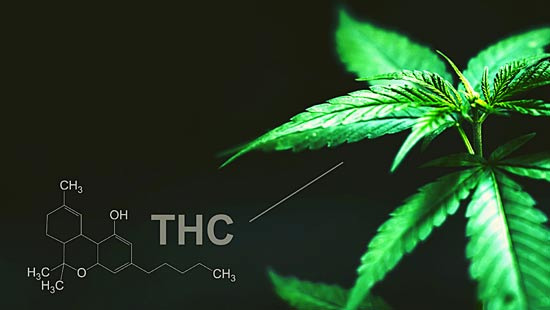
THC, to be precise, tetrahydrocannabinol, is the primary active component of marijuana.
It is often referred to as a "substance that makes you feel good," but chemically, it is not something to be taken lightly.
The molecular formula of THC is C21H30O2. It is a typical organic compound made up of 21 carbon atoms, 30 hydrogen atoms, and 2 oxygen atoms.
At first glance, the elements may not seem special, but the issue lies in how these elements are arranged structurally.
Looking at the structure of THC, it consists of an aromatic ring, a long hydrocarbon chain, and a ring structure that includes oxygen. Because of this structure, THC is poorly soluble in water but dissolves well in fats.
From a chemistry perspective, this aspect feels particularly dangerous. Substances that dissolve well in fats do not easily exit the body once they enter.
In fact, THC accumulates in fatty tissues rather than in the blood, which means it has a long retention time in the body. This indicates that it is not simply a matter of "smoke once and it's over."
The reason this molecule is problematic is that it fits structurally well with our body's endocannabinoid system.
It specifically binds to the CB1 receptors in the brain. This binding causes phenomena such as mood changes, impaired judgment, and distorted sense of time.
At the molecular level, it fits together like a key and a lock. Chemically, this compatibility means that it can interfere with natural neural signals.
Proponents of marijuana often use the phrase "a substance from nature."
As someone with a background in chemistry, I find this expression to be quite dangerous. Just because something exists in nature does not mean it is safe.
There are countless toxic substances that exist in nature. For example, some poisonous mushrooms contain deadly toxins that can kill you with just a small amount. The important factor is not the source but the mechanism of action and long-term effects.
THC directly intervenes in brain function, and its effects on adolescents in their growth phase or on frequent users are far from trivial.
It is also necessary to address the potential for synthesis. THC is theoretically a synthesizable molecule. In fact, synthetic THC and similar substances have been studied in laboratories and pharmaceutical research for a long time.
However, this is only discussed in high-level organic chemistry environments, under strict controls and for specific purposes.
It is not as simple or safe as the average person might think. The stereochemical structure must be precisely matched, and incorrect analogs can have even stronger and more unpredictable effects.
This is where the U.S. marijuana policy appears to be more dangerous. The policy is increasingly leaning towards "allowance" rather than "management." However, THC is not a simple recreational product like alcohol. Chemically, it is an active substance that directly affects brain receptors.
It is irresponsible to release such substances to the public with the attitude of "we'll deal with problems when they arise."
From a conservative standpoint, this is not just a matter of personal freedom but a question of risk management for society as a whole.
Impaired judgment, decreased reaction times, and long-term cognitive changes ultimately translate into social costs beyond the individual.
These can lead to real-world issues such as traffic accidents, decreased labor productivity, and increased healthcare costs. As someone knowledgeable in chemistry, I feel that policies that ignore these possibilities are decisions that turn a blind eye to science.
In summary, THC may appear to be an ordinary organic molecule made of carbon, hydrogen, and oxygen, but its structure and effects are anything but ordinary.
Whether it is produced naturally or synthesized, the impact of this substance on the human brain and behavior is clear.
I believe we need to reconsider marijuana not just as a cultural or political issue but seriously from the perspective of chemistry and biology.
In the trend of legalization spreading like a fad in the U.S., it is crucial to first understand exactly what this substance is.







 Baguette Blog |
 Khan Film Blog Production |
 dermoon |
 hoosierdaddy |
 sun walker |
 persiste |
 buddydakota |
  North Dakota Ragdoll Cat Owner |

 My Love Sandra |
  Atlanta Mama |
  US Embassy |
  Korean Mom |
  My NYC |
  moo moo |
  Mr Oh |
  forevergee |
  festival |
  manchester |
  constant |
  Leapfrog Move |
  vibranto |
  Tora Tora |
  yellowbutter |
  Dolly |
  NYC saladbar |
  Finding Superfoods |
  lightyear |
  song bang |